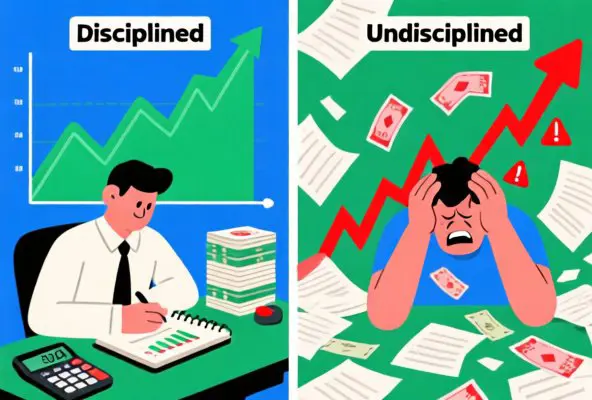
Split-screen comparison of chaotic undisciplined betting vs organized disciplined bankroll management
Essential Guide

Bankroll Management in Betting: The Complete Guide to Protecting Your Funds

Jump to section

Why Most Bettors Fail

You start with $1,000. Weekend's coming up, you've done your research, and you're feeling good about five games. Why not put $200 on each? Go big or go home, right?

Three losses later, you're staring at a $600 hole and that sick feeling in your stomach kicks in. Instead of calling it a weekend, you spot a "sure thing" on the late game—a lock to get you back to even. When that flames out, your entire bankroll is gone in under 48 hours.

I've seen this story play out hundreds of times. The crazy part? It's completely preventable. The bettors who make it aren't necessarily better at picking winners—they're better at bankroll management sports betting.

Think of bankroll management as the business plan for your betting operation, even if it's just a weekend hobby. No successful business runs without budget controls and financial planning. Same deal here. Whether you're casually betting football Sundays or treating this seriously as an investment, understanding sports betting money management isn't optional—it's the difference between staying in the game and busting out.

Let's walk through everything you need to know about protecting and growing your betting funds, from proven bankroll strategy techniques to the mistakes that wipe out most new bettors.

2025

Bankroll management may be the most important discipline needed to be a successful sports bettor.

Action Network Educational Team

What Is Bankroll Management?

Bankroll management is just smart allocation of money you've set aside specifically for betting. That's it. Your bankroll should be completely separate from rent money, bill money, grocery money—any money you actually need for life.

This separation does two things. First, it protects your actual financial security. Second, it lets you make rational decisions without the stress of betting money you can't afford to lose.

Why Most Bettors Fail: It's Not What You Think

Here's a stat that'll wake you up: only about 2% of traditional sportsbook users are profitable long-term. But check this out—betting exchanges like BettorEdge? 40% of users are profitable there. That gap? That's the house "vig" (commission) eating your bankroll alive.

Most recreational bettors don't fail because they're bad at picking games. They fail because their money management is terrible. You could be solid at analyzing matchups and spotting value, but without proper bankroll management? You're still probably going to end up in that 98% of losers.

To understand the deeper reasons why bettors lose, including psychological traps and cognitive biases, it's important to recognize that the house edge is just one piece of the puzzle.

The Three Pillars of Bankroll Management

Effective bankroll management comes down to three things:

  1. Unit Sizing: Figuring out how much to bet on each game relative to your total bankroll
  2. Discipline: Sticking to your bet sizes whether you just won or just lost
  3. Emotional Control: Making decisions based on your strategy, not your feelings

2021

Keeping your bets within 2-5% of your bankroll is likely more important than whether you bet the same amount every time.

ESPN Rookie Bettors Camp Guide

Understanding Your Bankroll: Starting With the Right Foundation

Before you pick any bankroll strategy, you need to figure out what your actual bankroll is. And no, it's not just whatever money is sitting in your sportsbook account.

Setting Your Initial Bankroll

Your starting bankroll should be money you're totally fine losing. Responsible gambling folks recommend putting about 1-2% of your monthly income toward betting.

Income-Based Starting Bankroll Recommendations:

Income Level Monthly Budget Range Starting Bankroll
Under $3,000 $30-60 $300-600
$3,000-$5,000 $40-100 $400-1,000
$5,000+ $100-200 $1,000-2,000

The Concept of Emotional Bankroll

Here's something most bettors completely miss: your emotional bankroll is often smaller than your monetary bankroll.

"Your bankroll is how much you'd be willing to lose before you're out of the gambling business."
— Stanford Wong, via Unabated

Maybe you've got $5,000 you could technically afford to lose. But you know damn well that a $1,000 losing streak would have you rage-quitting? Your effective bankroll isn't $5,000—it's $1,000. Understanding this difference keeps you from betting more than your brain can handle.

Betting Unit Sizing: The Universal Rule Explained

Every expert source, professional bettor, and responsible gambling organization agrees on one thing: bet between 1-5% of your bankroll on each wager.

This isn't some random number someone pulled out of thin air. It's mathematically designed to protect you from variance while still letting your bankroll grow when you actually have an edge. Here's how the different approaches shake out:

Conservative Approach (1-2% per bet)

  • Best for: Beginners, people who hate risk, or anyone with a decent-sized bankroll
  • Pros: Maximum protection, losing streaks don't hurt as much
  • Cons: Slower growth, might feel like you're not betting enough when you're confident

Moderate Approach (2-3% per bet)

  • Best for: Average bettors with some experience under their belt
  • Pros: Good balance between growth and protection
  • Cons: More ups and downs than the conservative approach

Aggressive Approach (3-5% per bet)

  • Best for: Smaller bankrolls or experienced bettors who can handle big swings
  • Pros: Faster growth when you're winning
  • Cons: Way higher risk of going bust, losing streaks will absolutely wreck you emotionally

Sample Unit Sizes by Bankroll:

Bankroll Conservative (1%) Moderate (2%) Aggressive (5%)
$500 $5 $10 $25
$1,000 $10 $20 $50
$2,500 $25 $50 $125
$5,000 $50 $100 $250
$10,000 $100 $200 $500
Visual comparison of three betting approaches showing unit sizes as different sized betting chips or stacks with Conservative (small stack), Moderate (medium stack), and Aggressive (large stack) labels
Unit sizing approaches: Conservative, Moderate, and Aggressive

Unit size should not exceed 5% (1 unit = 1% of bankroll) of your total bankroll. Your bankroll should be an amount that you are willing to lose without issue.

Reddit r/sportsbook Community Consensus

The Mathematics of Breaking Even: Understanding Your Target

Before we dive into specific strategies, you need to understand what "winning" actually looks like. A lot of beginners think they need to hit 60% or more of their bets to make money. That's not how it works.

At standard -110 odds (betting $110 to win $100), your breakeven point is 52.38%. So here's reality:

  • Hitting 52% at -110 makes you a small profit
  • Consistently hitting 55%? That's exceptional—and extremely profitable
  • Anything above 57% long-term is basically unicorn territory

Understanding these numbers helps set realistic expectations. You're not trying to win every bet. You're trying to stay above breakeven while managing your money so the inevitable losing streaks don't wipe you out.

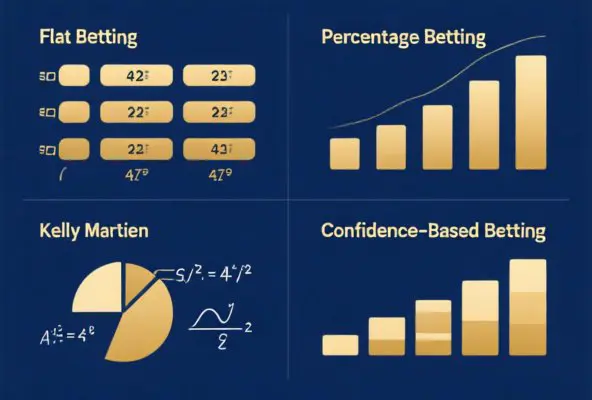
Comparison of four bankroll management strategies: Flat Betting, Percentage Betting, Kelly Criterion, and Confidence-Based Betting with visual elements representing each approach
Four proven bankroll management strategies compared

Proven Bankroll Management Strategies

Strategy 4: Confidence-Based Betting

How it works: Adjust your bet size based on how confident you are in each wager, usually using a scale (like 0.5 units to 2 units).

Implementation:

  • Rate each bet on a confidence scale (1-10 or 1-5)
  • Assign more units to bets you're more confident in
  • Stay within your maximum unit range

Example:

  • 0.5 units: Low-confidence plays or longshot wagers
  • 1 unit: Standard bets
  • 1.5 units: Above-average confidence
  • 2 units: Maximum confidence (use this rarely)

Best for: Experienced handicappers who are good at honestly assessing their picks

Why it works: When done right, this approach maximizes value on your strongest bets while reducing exposure on weaker ones.

The danger: Most people overestimate their confidence and way too many bets become "max bets." This takes exceptional self-awareness and discipline.


**Related: Understanding form vs variance vs luck in sports betting can help you make more accurate confidence assessments for your bets.

One of the worst things bettors can do is change their unit size based on how well or how poorly they're doing.

Action Network
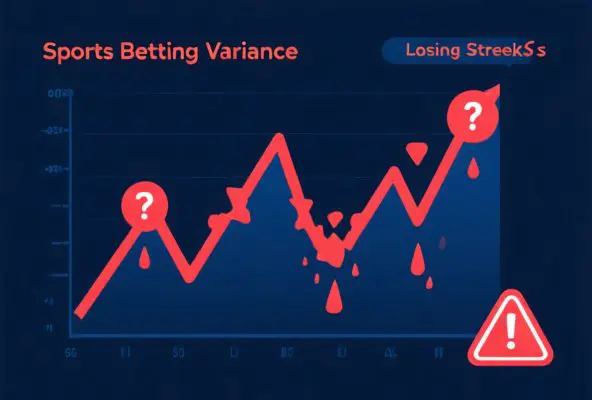
Visualization of variance and losing streaks in sports betting showing downward jagged line graph representing typical losing streak patterns with warning indicators
Understanding variance: Even disciplined bettors face losing streaks

Understanding variance is crucial because it's exactly what leads disciplined bettors to break their own rules. When you're in the middle of a losing streak, it feels like the math has stopped working—but it hasn't. This is where most bettors abandon their strategy and start making the mistakes that will destroy their bankroll.

The 10 Deadly Sins of Bankroll Management

4. Emotional Betting

The mistake: Betting on your favorite teams, outcomes that are "due," gut feelings, or trying to get revenge on a team that cost you last week.

Why it's deadly: Emotional bettors ignore value and odds, betting based on feelings instead of actual analysis. This is often driven by cognitive biases like the favorite-longshot bias, where bettors are drawn to underdogs despite poor value.

The solution: Take team names out of the equation when you're analyzing games. Focus on numbers, not narratives. If you can't bring yourself to bet against your favorite team when the value is there, you probably shouldn't bet on them either.

2023

Days and weeks are arbitrary time constraints. Keep your betting units consistent, and don't try to make it all back in one bet.

Kody Malstrom, Action Network

The difference between these two approaches couldn't be more stark. One bettor survives and thrives through discipline, while the other self-destructs through emotional decisions. The visual below shows exactly what this looks like in practice—steady growth versus catastrophic collapse.

Three risk profile archetypes: Conservative bettor with shield and small bets, Moderate bettor with balanced scale and medium bets, Aggressive bettor with rocket/growth symbol and larger bets
Choose your approach based on risk tolerance and experience

Tailoring Bankroll Management to Your Risk Profile

Everyone shouldn't approach bankroll management the same way. Your strategy needs to match your experience, risk tolerance, and goals.

The Conservative Approach (Risk-Averse Bettors)

Profile: Treats betting as entertainment, wants to last over profits, wants to keep stress low.

Recommended Strategy:

  • Unit size: 1-1.5% of bankroll
  • Maximum daily risk: 5-7% of bankroll
  • Stop-loss: 15-20% of bankroll
  • Approach: Flat betting or fixed unit system
  • Bet types: Mostly straight bets, avoid parlays

Real-World Example:

  • Bankroll: $1,000
  • Per bet: $10-15
  • Daily maximum: $50-70 (3-5 bets)
  • Stop-loss: $150-200 loss and you're done for the day

Why this works: Conservative bettors can survive long losing streaks without freaking out, keeping betting fun and sustainable.

The Moderate Approach (Balanced Bettors)

Profile: Some experience, okay with moderate variance for better returns, takes betting seriously but not professionally.

Recommended Strategy:

  • Unit size: 2-3% of bankroll
  • Maximum daily risk: 10-15% of bankroll
  • Stop-loss: 25% of bankroll
  • Approach: Percentage betting or confidence-based (1-2 units)
  • Bet types: Mix of straight bets and occasional 2-3 team parlays

Real-World Example:

  • Bankroll: $1,000
  • Per bet: $20-30
  • Daily maximum: $100-150
  • Stop-loss: $250 loss and it's time to reassess

Why this works: Moderates balance growth potential with reasonable protection, accepting that bigger variance comes with the territory.

The third approach is for experienced bettors who understand the risks and have the stomach for serious volatility.

Editorial illustration showing three risk archetypes: Conservative bettor with shield protection and small secure stack, Moderate bettor with balanced scale and medium stack, Aggressive bettor with upward arrow/growth symbol and larger stack. Split composition with team colors, stylized betting elements, educational illustration style, not photorealistic, digital art
Three risk profiles: Conservative, Moderate, and Aggressive approaches

The Aggressive Approach (High-Risk Bettors)

Profile: High risk tolerance, experienced, wants maximum growth, comfortable with big swings.

Recommended Strategy:

  • Unit size: 3-5% of bankroll
  • Maximum daily risk: 15-20% of bankroll
  • Stop-loss: 30-35% of bankroll
  • Approach: Kelly Criterion (fractional) or aggressive confidence-based
  • Bet types: All types including props and futures

Real-World Example:

  • Bankroll: $1,000
  • Per bet: $30-50
  • Daily maximum: $150-200
  • Stop-loss: $300-350 loss means it's time for a major reassessment

Warning: "If you overbet relative to your edge, you run the risk of eroding your entire bankroll when bad variance strikes." — Unabated

Practical Bankroll Management in Action

Theory is fine, but seeing bankroll management in real scenarios drives it home. Let's look at three examples: one success, one struggle, one disaster.

Success Story: The Disciplined Percentage Bettor

Setup: $2,500 starting bankroll, 2% percentage betting, 3-5 bets per day maximum

Week 1 Performance:

  • Start: $2,500, Unit = $50
  • Day 1: 4 bets × $50 = $200 risked, go 3-1, +$140 profit
    • New bankroll: $2,640, New unit: $52.80
  • Day 2: 3 bets × $53 = $159 risked, go 1-2, -$53 loss
    • New bankroll: $2,587, New unit: $51.74
  • Day 3: 5 bets × $52 = $260 risked, go 2-3, -$68 loss
    • New bankroll: $2,519, New unit: $50.38

Week Result: +$19 (0.76% return)

Key Success Factors:

  • Consistent percentage-based sizing
  • Took small losses without getting emotional
  • Trusted the process despite variance

Warning Example: The Undisciplined Chaser

Setup: $1,000 bankroll, no predetermined strategy, chasing losses

Day 1:

  • Starts with $1,000
  • Bets $50 on 3 games: goes 1-2, loses $55 total
  • Tries to "win it back": bets $100 on late game, loses
  • Day 1 result: -$155

Day 2:

  • Bankroll now $845
  • Decides to "double down" to recover: bets $100 on 2 games
  • Goes 0-2: loses $200
  • Places desperation $200 bet to "make it back"
  • Day 2 result: -$400

Day 3:

  • Bankroll now $445
  • Bets entire $445 on "sure thing"
  • Result: BUST in less than 72 hours

Mistakes Made:

  1. No predetermined unit size
  2. Chased losses aggressively
  3. Bet when emotional
  4. No stop-loss limits
  5. Increased bets after losses (the cardinal sin)

The contrast between these two approaches is stunning. One bettor survives and profits through discipline, while the other destroys their entire bankroll in 72 hours through emotional decisions.

Split-screen editorial illustration comparing disciplined vs undisciplined betting. Left side: calm bettor with notebook tracking bets, steady upward trending line graph, organized betting slips, green positive indicators. Right side: stressed bettor with scattered betting slips, jagged volatile line graph crashing downward, red warning indicators, chaotic scene. Sports magazine illustration style, not photorealistic, digital art
The difference between discipline and disaster

Recovery Story: Implementing Discipline After Losses

Setup: Bettor who lost $800 chasing, now rebuilding with proper management

New Approach:

  • Remaining bankroll: $200
  • Strategy: Conservative flat betting, 1% units
  • Unit size: $2 per bet
  • Strict 3-bet daily maximum
  • 20% stop-loss ($40)

Week 1 Performance:

  • Day 1: 3 bets × $2, go 2-1, +$1.80
  • Day 2: 3 bets × $2, go 1-2, -$2.20
  • Day 3: 2 bets × $2, go 2-0, +$3.60
  • Day 4: 3 bets × $2, go 1-2, -$2.20
  • Day 5: Hit $40 stop-loss, takes 2-day break

Week Result: -$4 (2% of bankroll)
Progress: Still betting, still learning, still in the game

Lesson: Starting small with discipline beats starting big and busting.

Advanced Bankroll Preservation Techniques

Once you've got the basics down, these advanced techniques can help protect your funds and optimize growth.

1. The "To Win" vs. "To Risk" Decision

When you're betting favorites, you've got a choice: risk the same amount every time, or adjust your stake to win the same amount.

Example: Betting -150 favorites

  • To Risk: Bet $100 every time (win $66.67)
  • To Win: Risk $150 to win $100 every time

Recommendation: Use "to win" for favorites (protects your bankroll during cold streaks) and "to risk" for underdogs (maximizes returns during hot streaks).

2. Stop-Loss Implementation

Set automatic stopping points:

  • Daily Stop-Loss: Maximum loss per day (say, 3 units or 10% of bankroll)
  • Weekly Stop-Loss: Maximum loss per week (maybe 15% of bankroll)
  • Session Stop-Loss: Walk away after 3 consecutive losses

3. Take-Profit Strategies

Just as important as limiting losses is locking in gains:

  • Set withdrawal targets (like withdraw at 50% profit)
  • Take profits periodically instead of letting everything ride
  • Avoid the common mistake of giving back winnings

These first three techniques focus on protection—stopping losses and locking in gains. The next three techniques are about optimization and smart decision-making.

Editorial illustration showing advanced bankroll protection tools. Shield with stop-loss indicators, lock icon for take-profit strategies, magnifying glass for line shopping, clock for volume management, calendar for variance by sport. Clean infographic style with icons arranged around central bankroll symbol. Sports betting education illustration, not photorealistic, digital art
Advanced bankroll protection tools and techniques

Advanced Optimization Techniques

4. Line Shopping

Having accounts at multiple sportsbooks and finding the best odds:

  • Reduces the vig you pay
  • Can turn a losing bettor into a profitable one
  • "Every point and cent matters" in the long run

5. Volume Management

Limiting how many bets you place:

  • Most pros recommend 2-5 bets per day maximum
  • Fewer bets = fewer commission payments to sportsbooks
  • Focus on your best opportunities, not all of them

6. Understanding Variance by Sport

Different sports have different variance profiles:

  • College basketball: Noted as particularly "variance-heavy"
  • NFL: Lower variance, bigger sample size of games
  • MLB: Extremely high variance due to daily games and short seasons

Adjust your unit sizing down for higher-variance sports to account for the extra volatility.

The Emotional Side of Bankroll Management

Math and strategy matter, but the psychological side of bankroll management is just as important. Here's how to master the mental game.

Understanding Loss Aversion

Human psychology is wired so that losses hurt about twice as much as equivalent wins feel good. This "loss aversion" explains why bettors make irrational decisions when they're down. This psychological phenomenon is closely related to cognitive biases in betting, which can sabotage even the most well-planned strategies.

Practical application: When you've had a terrible day, remember your actual skill level is somewhere between your best and worst performances. Don't change your strategy based on outliers.

The Danger of Tilt

"Tilt" is a poker term that applies perfectly to sports betting: making irrational decisions because you're emotional. Common tilt triggers:

  • Extended losing streaks
  • Bad beats (losing on late, unlucky plays)
  • Winning streaks (feeling invincible)
  • Life stress outside betting

Tilt prevention strategies:

  • Set hard loss limits and stick to them
  • Take breaks after significant losses
  • Don't bet when you're emotional, tired, or under the influence
  • Recognize tilt symptoms and step away immediately

Disassociating from the Money

One of the best things about proper bankroll management is it helps you look at bets mathematically instead of emotionally.

When each bet is only 1-2% of your bankroll, you can make decisions based on value and odds rather than fear or greed. This disconnection is critical for long-term success.

The Value of Patience

In a world of instant gratification, bankroll management means embracing delayed gratification. The goal isn't to get rich quick—it's to stay in the game long enough for your edge (if you actually have one) to show up over hundreds or thousands of bets.

Most bettors dramatically underestimate how long it takes for variance to even out. A 54% bettor might still lose over 100 bets. Only over 500-1,000+ bets does real skill become apparent.

You're never as good as your best day, and you're never as bad as your worst day.

Kody Malstrom, Action Network

Tools and Resources for Better Bankroll Management

You don't have to manage your bankroll alone. Plenty of tools and resources can help you stay disciplined and track performance accurately.

Tracking Tools

  1. Spreadsheets: Simple, customizable, free option for tracking bets, ROI, and performance
  2. BettorEdge: Automated tracking with analytics and social features
  3. Unabated: Professional-grade tools for serious bettors
  4. Action Network App: Real-time odds, tracking, and educational content
  5. 8rain Station: Odds comparison and Kelly Criterion calculators

Calculators Every Bettor Needs

  • Kelly Criterion Calculator: Figures out optimal bet sizes based on edge and odds
  • Parlay Calculator: Helps you understand true odds vs. offered odds for parlays
  • Unit Size Calculator: Quickly converts bankroll to appropriate bet sizes
  • Risk of Ruin Calculator: Estimates probability of losing your entire bankroll

Educational Resources

  • Action Network Education Section: Free articles and videos on betting fundamentals
  • Unabated Articles and YouTube: Advanced strategy content for serious bettors
  • RG.org: Responsible gambling resources and guidance
  • PGA TOUR Responsible Gaming Guides: Industry-leading responsible gambling content

Responsible Gambling Resources

If you or someone you know is struggling with gambling:

  • National Council on Problem Gambling: 1-800-Gambler (24/7 helpline)
  • State-specific exclusion programs: Self-exclusion from regulated sportsbooks
  • Self-assessment tools: Honestly evaluate your gambling behaviors
  • Bank-blocking services: Prevent gambling transactions on your accounts

Frequently Asked Questions About Bankroll Management

Q: Can I start with a bankroll smaller than $1,000?

A: Yeah, but understand that smaller bankrolls limit your ability to weather variance. With $200-300, you'll need to bet tiny amounts (1-2% = $2-6 per bet) and might run into minimum bet issues at some sportsbooks. A lot of pros recommend starting with at least $1,000 for meaningful bankroll management.

Q: How often should I recalculate my unit sizes?

A: Most experts recommend recalculating when your bankroll changes by 20% or more. Some percentage bettors recalculate daily, while others use weekly or monthly adjustments. The key is consistency—pick an approach and stick with it.

Q: Should I ever bet more than 5% of my bankroll?

A: Generally, no. Betting more than 5% dramatically increases your risk of ruin. The only exception might be professional bettors with quantifiable edges using fractional Kelly, but even then, they rarely exceed 3-4% per bet.

Q: What's the difference between traditional sportsbooks and betting exchanges for bankroll management?

A: Betting exchanges like BettorEdge remove or seriously reduce the house vig, which massively impacts bankroll longevity. Data shows about 20x higher profitability rates (40% vs. 2%) on no-vig exchanges, which shows how much commission affects your bottom line.

Q: Can bankroll management prevent me from losing money?

A: No. Bankroll management can't make a losing bettor profitable—if you consistently make -EV (negative expected value) bets, you'll lose money long-term no matter how you manage your money. Bankroll management helps you lose slower and protects you from going bust, but it can't fix bad betting decisions.

Q: How many bets should I place per day?

A: Most experts recommend 2-5 bets per day maximum. More bets mean more exposure to the vig and harder time maintaining edge. "You can never lose a bet you don't make"—focus on your best opportunities, not all of them.

Q: Should I withdraw winnings or keep betting them?

A: For most bettors, periodically withdrawing profits (like at 50% profit milestones) is smart. Professional bettors often reinvest profits ("The best thing you can buy with your winnings is a bigger bankroll") for compound growth, but this takes genuine edge and exceptional discipline.

Conclusion: The Truth About Sustainable Betting

After going through every aspect of bankroll management, one thing becomes crystal clear: managing your money matters more than managing your picks.

You could be an excellent handicapper with a real edge over the sportsbooks, but without proper bankroll management, you'll still end up in that 98% of bettors who lose money long-term. On the flip side, plenty of average handicappers survive and even profit just because they manage their funds exceptionally well.

The research is overwhelming on this. Professional bettors, responsible gambling organizations, and sportsbook executives all agree: bankroll management is the foundation of sustainable betting.

The Key Principles to Remember

  1. Bet 1-5% of your bankroll per wager—no exceptions, no excuses
  2. Choose a strategy and stick with it—whether flat betting, percentage betting, or Kelly, consistency matters more than the specific system
  3. Never chase losses—this is the single fastest way to destroy your bankroll
  4. Track every bet—you can't improve what you don't measure
  5. Respect variance—even the best bettors have losing streaks; expect them and plan for them
  6. Separate your betting funds—never bet money you need for essentials
  7. Know your emotional bankroll—if a downswing would make you quit, that's your effective bankroll limit
  8. Focus on fun and longevity—for 95% of bettors, this should be entertainment, not a career

Bankroll management isn't about eliminating risk—that's impossible in betting. It's about managing risk intelligently so you can enjoy betting as a sustainable, entertaining activity without wrecking your financial security or emotional wellbeing.

Whether you're a complete beginner or an experienced bettor looking to improve, the principles in this guide can transform your approach to sports betting. Start today: establish your bankroll, pick your unit size, and commit to disciplined, consistent betting.

Your future self will thank you.


Disclaimer: This article is for educational purposes only. Gambling involves risk and you should never bet more than you can afford to lose. If you or someone you know has a gambling problem, call 1-800-Gambler for help.

Bet with your head - not over it.

PGA TOUR Responsible Gaming Guide
Professional headshot of Eleanor Caldwell, Tennis & Sports News Writer

Eleanor Caldwell

Bookmaker & Betting Odds Analyst

Eleanor Caldwell is a betting industry specialist with deep expertise in bookmaker comparisons, betting odds analysis, and promotional offers. With a sharp analytical mind and insider knowledge of the UK betting market, Eleanor helps readers find the best bookmakers, understand odds movements, and maximize value through bonus offers and enhanced odds promotions. She specializes in breaking down complex betting terms and conditions into clear, actionable advice. Eleanor's coverage includes detailed bookmaker reviews, odds comparisons across major football markets, and strategies for identifying the best value bets.