Betting on Newly Promoted Teams: Premier League Strategy Guide
Betting Strategy

Betting on Newly Promoted Teams: Premier League Strategy Guide

Jump to section

Introduction

Should you bet on newly promoted Premier League teams? The short answer: probably not. The longer answer involves some genuinely alarming statistics that most punters ignore.

Every August, three Championship winners step up to the Premier League with high hopes. They bring momentum, fan excitement, and usually a decent transfer budget to strengthen their squads. But here's the thing - newly promoted teams are getting absolutely hammered at the moment.

The 2023-24 and 2024-25 seasons produced something we'd only seen once in the previous 26 years: all three Premier League promoted teams went straight back down. Two consecutive relegation "clean sweeps" isn't bad luck. It's a pattern.

The numbers get worse. Promoted clubs are performing worse than at any point in Premier League history. Their average points return crashed from 39 points (1995-2020) to just 30.5 points in the last five seasons. Goals conceded jumped from 61.1 to 73.8 per season.

So why does this matter for football betting? Because markets are slow to catch up. Bookmakers and casual punters still overestimate promoted teams based on what they did in the Championship. That lag creates opportunities if you know where to look.

This Premier League betting guide breaks down why promoted teams struggle, how to spot the ones that might actually survive, and specific betting on newly promoted teams strategies worth considering for 2025-26.

Premier League Promoted Teams: The Shocking Statistics

The numbers paint a pretty grim picture. This isn't normal variance - it's a structural shift.

The Historic Collapse in Promoted Team Performance

Between 1995 and 2020, Premier League promoted teams averaged 39 points per season with a 56.8% survival rate. They conceded about 61 goals while scoring roughly 40.

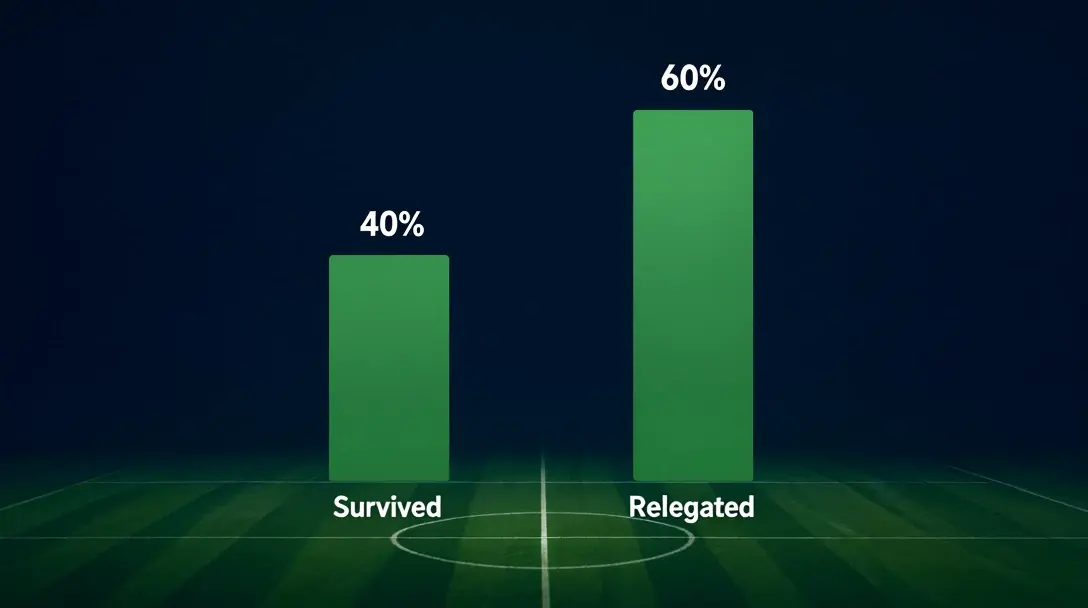
Fast forward to 2020-2025, and those figures look completely different. Average points dropped to 30.5. Survival rates crashed to 33.3%. Goals against soared to 73.8 per season.

The 2024-25 season was particularly brutal. Leicester City, Ipswich Town, and Southampton managed just 59 points between them - somehow worse than the previous season's record-low 66 points from Burnley, Luton Town, and Sheffield United.

The Promoted Teams Relegation "Yo-Yo" Phenomenon

Since the Premier League expanded to 20 teams, 42 of 89 promoted clubs (47.2%) have suffered immediate relegation. That sounds like a coin flip, but the promoted teams relegation trend has accelerated dramatically. In the past five seasons, only one in three promoted teams has survived.

Football Finance Expert

The financial rules now favor existing Premier League clubs. You have a 'new middle class' of established teams who are incredibly unlikely to be dragged into a relegation battle. The 44 million pound gap in permitted losses between established and newly promoted clubs has created a structural advantage that shows on the pitch.

Kieran Maguire

European Context: Is Premier League Relegation Unique?

Here's where it gets interesting. This promoted teams relegation phenomenon isn't happening across Europe's other major leagues. Serie A has seen all three promoted teams relegated only once in 39 years. La Liga has recorded this once in 58 years. The Bundesliga once in 32 years. Ligue 1 has never experienced it.

The Premier League's financial disparity, combined with Profitability and Sustainability Rules (PSR) limiting promoted clubs to 61 million pounds in losses over three years (compared to 105 million for established clubs), creates an environment where survival is genuinely harder than anywhere else.

Editorial illustration showing statistical analysis and data comparison for betting on promoted teams
Statistical analysis reveals the patterns behind promoted team performance

Why Newly Promoted Teams Are Struggling: Key Factors

A few interconnected factors explain why promoted team performance has nosedived and relegation risk has spiked.

Financial Constraints and PSR Rules Impact

The mathematics here are brutal. Established Premier League clubs can absorb losses of roughly 35 million pounds per season under PSR regulations. Newly promoted clubs, having spent recent years in the Championship with lower permitted losses of 13 million pounds per season, arrive with their financial flexibility already squeezed.

This has created what football finance experts call a "new middle class" of established Premier League clubs. Mid-table teams are structurally protected from relegation battles because they can spend more while staying within the rules. The competitive gap has widened at both ends of the table.

The Defensive Crisis: Why Promoted Teams Concede More Goals

Here's a football betting insight that should change how you think about betting on newly promoted teams: their decline is driven almost entirely by defensive collapse, not attacking weakness.

Metric 1995-2020 Average 2020-2025 Average Change
Goals For 40.5 38.8 -4%
Goals Against 61.1 73.8 +21%
Promoted Teams Performance Comparison: Goals For vs Goals Against

Tactical Gap and Rigid Philosophy

Premier League promoted teams still score at similar rates. What they can't do is defend. That 21% increase in goals conceded represents the difference between survival and relegation. Teams conceding 74 goals per season will almost certainly go down.

This has direct implications for Championship betting strategy when applied to Premier League markets. When promoted teams face elite opposition with dangerous attacks, the OVER 2.5 goals market often offers value. Both Teams to Score (BTTS) can be profitable when backing promoted teams that can score but can't defend.

The Tactical Gap Between Championship and Premier League

Championship dominance simply doesn't translate to Premier League survival anymore. Championship form has become a surprisingly poor predictor of top-flight success.

Consider this promoted teams relegation indicator: of the five teams relegated after achieving 95+ Championship points, four occurred in the last four years. Both Burnley and Leeds United topped 100 points in the 2023-24 Championship season. Both found themselves in serious relegation battles the following year.

The speed, intensity, and tactical sophistication of the Premier League have accelerated beyond what Championship form prepares teams for. The gap has never been this wide.

Rigid Philosophy vs Tactical Adaptability

Southampton's 2024-25 campaign is a perfect cautionary tale for betting on newly promoted teams. Manager Russell Martin insisted on possession-based football despite his squad lacking the technical quality to execute it at Premier League level. The result? Record earliest relegation (confirmed with seven games still to play) and a miserable 12 points all season.

Compare that with successful promoted teams. Research shows teams making minimal tactical changes have better survival rates. Brighton made just a 0.03% change in passes per sequence when promoted. They survived comfortably and eventually qualified for Europe. Norwich City made a 0.90 change in the opposite direction and went straight back down.

The lesson for football betting tips followers is pretty clear: tactical inflexibility is a red flag. When a promoted team manager insists on an approach that clearly isn't working, back against them.

Football Betting Tips: The 10-Game Benchmark Rule

If there's one metric that separates surviving Premier League promoted teams from relegation candidates, it's the 10-game points benchmark.

The Magic Number: 11 Points After 10 Games

Historical data from the past decade shows an extraordinary correlation. Every promoted team reaching 11 points after 10 games has survived. Not most of them. All of them.

On the flip side, teams with fewer than 8 points after 10 games face almost certain relegation. Of the five teams in this position recently, only one survived - a 20% survival rate compared to near-100% for teams hitting the 11-point mark.

Teams with 8-10 points after 10 games are in uncertain territory. They're still in with a shout but face an uphill battle for Premier League survival.

Practical Application for Betting on Newly Promoted Teams

This creates a clear football betting framework:

  • 11+ points after 10 games: The team will likely survive. Consider backing them for top-half finishes or opposing them in relegation markets.
  • 8-10 points after 10 games: Marginal survival candidates. Proceed with caution and look for additional indicators.
  • Under 8 points after 10 games: Strong relegation candidates. Back them for relegation or consistently oppose them in match markets.

This framework requires patience. The temptation to bet on newly promoted teams in weeks 1-5 can be strong, especially when initial results look promising. But the data strongly suggests waiting until the 10-game mark before making significant positions.

Home Form: The Secondary Survival Indicator

While the 10-game benchmark grabs the headlines, home form offers additional confirmation for Premier League promoted teams.

Promoted teams achieving 8 or more home wins have a 95.8% survival probability. Those averaging more than 1.53 points per home game survive at a 96.1% rate.

The practical application is pretty straightforward. When assessing Premier League promoted teams, calculate their home points per game. If they're tracking above 1.53 with potential to reach 8+ home wins, survival becomes highly probable. If home form is poor, relegation risk increases significantly regardless of overall points.

Case Studies: Promoted Teams Success and Failure Stories

Understanding why specific promoted teams succeeded or failed puts the statistics and football betting tips into context.

The 2022-23 Survivors: Fulham, Bournemouth, Nottingham Forest

This season represents the exception that proves the promoted teams relegation rule. All three newly promoted teams survived by hitting key benchmarks.

Fulham finished 10th with 53 points. Aleksandar Mitrovic chipped in 14 goals, providing the consistent goal threat that promoted teams desperately need. Marco Silva kept things tactically consistent and hit 10 points after 10 games, just shy of the magic 11.

Bournemouth secured 39 points and 15th place. After sacking Scott Parker following his public criticism of transfer policy, Gary O'Neil implemented a more pragmatic approach. They ground out results rather than chasing style.

Nottingham Forest survived with 38 points despite a chaotic transfer splurge. They signed 29 players across two windows, spending over 150 million pounds. While bonkers, this approach gave them options, rotation capability, and eventually survival.

All three now rank as established Premier League clubs. Nottingham Forest pushed for Champions League places in 2024-25. Bournemouth contend for European qualification. Fulham sit comfortably mid-table. Survival was just the beginning.

The 2024-25 Failures: Leicester, Ipswich, Southampton Relegation

The following season produced the opposite outcome with some instructive differences for betting on newly promoted teams.

Southampton epitomized tactical rigidity. Russell Martin's insistence on possession football despite a squad completely ill-equipped for it led to the earliest relegation in Premier League history. They managed just 12 points, narrowly avoiding the lowest-ever points total by a single point.

Leicester City showed that even recent Premier League experience offers no guarantees against relegation. Despite winning the FA Cup in 2021 and having players familiar with top-flight football, no Leicester player reached double figures. Jamie Vardy led with just 9 goals. The lack of a consistent goal threat proved fatal.

Ipswich Town showed that individual brilliance can't compensate for collective weakness. Liam Delap scored 12 goals but received almost no support. Their combined 59 points represented the worst total for Premier League promoted teams in history.

The common thread? None adapted effectively to Premier League demands. All showed tactical inflexibility. None reached the 11-point benchmark after 10 games.

Editorial illustration representing strategic betting analysis and decision making for promoted teams
Strategic thinking is essential when betting on newly promoted Premier League teams

Championship Betting Strategy: 5 Actionable Betting Strategies

Understanding the promoted teams relegation problem is one thing. Exploiting it profitably is another. Here are specific strategies with clear rules for betting on newly promoted teams.

Strategy 1: The 10-Game Wait

Concept: Wait 10 games before making significant bets on newly promoted teams. Let the data reveal their true quality.

Rules:

  • Track all Premier League promoted teams' points after 10 games
  • Back teams with 11+ points for survival-related markets
  • Back teams with under 8 points for relegation
  • Ignore pre-season relegation markets unless exceptional value exists

Expected edge: Historical data suggests this approach captures roughly 80% of the value in promoted team markets while avoiding most variance.

Strategy 2: Home Fortress Betting

Concept: Target Premier League promoted teams at home against bottom-half opposition.

Rules:

  • Only bet on promoted teams in home matches
  • Only against teams in positions 10-17
  • Use Draw No Bet or Asian Handicap +0.5 for risk mitigation
  • Calculate home points per game before placing bets (1.53+ is positive)

Rationale: Promoted teams get the majority of their points from home matches. Their away form is typically terrible, but home performances against fellow strugglers can be profitable.

Strategy 3: Goals Market Exploitation

Concept: Exploit promoted teams' defensive frailties in goals markets.

Rules:

  • Back OVER 2.5 goals when Premier League promoted teams face top-8 opposition
  • Consider BTTS Yes when promoted teams have decent attack but poor defense
  • Back opposition to score 2+ goals against promoted teams with defensive issues

Rationale: The 21% increase in goals conceded by promoted teams represents a systematic edge. Markets often underestimate this defensive deterioration.

Strategy 4: Relegation Ante-Post Timing

Concept: Back Premier League promoted teams for relegation at optimal moments.

Rules:

  • Pre-season: Only if promoted team has had chaotic summer (manager change, key player sales)
  • After 10 games: Back teams with under 8 points for relegation
  • January: Reassess after transfer window. Teams spending heavily may improve

Expected edge: Waiting until the 10-game mark captures significantly better odds than pre-season while maintaining high predictive accuracy.

Strategy 5: Manager Sack Race

Concept: Target promoted team managers in first manager sacked markets.

Indicators:

  • Public criticism of board or transfer policy
  • Heavy defeats of 4+ goals
  • Tactical inflexibility despite poor results
  • Under 8 points after 10 games

Historical backing: Scott Parker (Bournemouth 2022) was sacked after four games. Russell Martin (Southampton 2024) was sacked in December. Both showed clear warning signs beforehand.

When to Back vs When to Oppose Newly Promoted Teams

The most profitable approach to betting on newly promoted teams is selective opposition. Rather than trying to identify which promoted teams will succeed, focus on opposing those that will fail.

Best Times to BACK Premier League Promoted Teams

First 2-3 home games of the season: Peak motivation, unknown quantity, opponents may underestimate them.

After confirming survival: "Freedom football" often produces overperformance when pressure lifts.

Against fellow strugglers at home: Six-pointer mentality raises performance levels.

Post-manager sacking bounce: The new manager effect typically lasts 3-5 games.

Best Times to OPPOSE Newly Promoted Teams

Away matches at top-8 clubs: Historically extremely poor returns. Avoid backing promoted teams entirely in these fixtures.

After 10 games with under 8 points: Strong relegation indicators make opposition consistently profitable.

December-January period: Reality check phase combined with fixture congestion often produces poor results.

Final 5 games if already relegated: "On the beach" mentality leads to heavy defeats and minimal effort.

Against in-form teams with strong attacks: Defensive frailties become exposed when facing quality opposition.

Live Betting Opportunities

Live betting lets you assess things before committing to betting on newly promoted teams:

  • Watch the first 15-20 minutes before entering markets
  • Look for early signs of rust: misplaced passes, defensive gaps, lack of intensity
  • Promoted teams often start cautiously before settling into matches
  • Consider opposing promoted teams if they concede early, as collapse can follow

Bankroll Management for Betting on Promoted Teams

Betting on newly promoted teams involves higher variance than established club betting. Adjust your Championship betting strategy accordingly.

Reduce Stake Sizes

The unpredictability of promoted team performance means smaller positions:

Bet Type Recommended Units Reason
Single match - promoted team 0.5-0.75 units Higher variance
Relegation outright 1 unit Season-long position with edge
Points total Over/Under 0.5 units Difficult to predict accurately
Manager sacking 0.25-0.5 units Speculative market
Recommended Stake Sizes for Promoted Team Betting Markets

Bankroll Management Strategies

Dedicated Allocation

Consider allocating 5-10% of your season bankroll specifically to promoted team markets. This ring-fences the higher variance and prevents poor promoted team results from affecting your overall football betting strategy.

Diversification

Avoid large outright positions on single promoted teams. If taking relegation positions, consider backing multiple Premier League promoted teams rather than concentrating on one. This spreads risk while maintaining exposure to the overall promoted team underperformance trend.

Hedging Strategies

For pre-season relegation bets, consider hedging if the team reaches 35+ points by March. At this stage, survival becomes probable enough that locking in profits makes sense.

For match bets, live hedging provides an exit route if positions go against you. Promoted teams conceding early often leads to further goals, so early exits can prevent larger losses.

Record Keeping

Track performance by specific metrics when betting on newly promoted teams:

  • Win rate on promoted team bets (target 55%+)
  • ROI by market type (relegation, match result, goals)
  • Performance by timing (early season vs late season)
  • Performance by venue (home vs away)

This data reveals which approaches work best for your betting style and highlights areas for improvement.

Editorial illustration representing betting opportunities and market insights for promoted teams
Recognizing opportunities in promoted team betting markets requires patience and insight

The Recruitment Factor: What Successful Promoted Teams Do Differently

Understanding how Premier League promoted teams approach recruitment tells you a lot about their likely performance. The transfer market often reveals which teams are best prepared for the step up.

The Brentford Model: Analytics-Driven

Brentford's "Moneyball" approach involves data on over 85,500 players, focusing on undervalued talent and incremental squad building. They specialize in set-pieces and avoid high-profile signings. The result? Established mid-table presence with minimal relegation risk.

The Brighton Model: Stability

Brighton made minimal tactical changes when promoted, maintaining their consistent playing philosophy. Their recruitment focuses on specific player profiles that fit their system. The result? European qualification and development into a top-half club.

The Nottingham Forest Model: Quantity

Forest's 29 signings in two windows was an extreme approach, but it provided options and rotation capability. While high-risk, it ultimately succeeded in achieving survival.

The Failed Approach: No Clear Strategy

Southampton 2024-25 had no coherent recruitment strategy matching their tactical approach. The squad lacked technical quality for possession football, yet the system remained unchanged. This mismatch between recruitment and tactics proved fatal.

For bettors following football betting tips, examining summer recruitment provides clues about likely performance. Teams with clear strategies and signings addressing specific weaknesses tend to outperform those with chaotic or unfocused approaches.

Frequently Asked Questions

What percentage of newly promoted Premier League teams get relegated?

Historically, 47.2% of newly promoted teams face immediate relegation. However, in the past five seasons, this has increased to approximately 67%, with only one in three promoted teams surviving.

How many points do promoted teams need to survive?

Promoted teams with 11+ points after 10 games survive at near-100% rates. Historically, 35-40 total points usually guarantees Premier League survival, though promoted teams now average only 30.5 points per season.

When is the best time to bet on promoted team relegation?

The optimal timing is after 10 games. Teams with under 8 points after 10 games face almost certain relegation, and odds remain favorable compared to pre-season markets.

Which betting markets offer the best value for promoted teams?

Goals markets (OVER 2.5, BTTS) offer consistent value due to promoted teams' defensive frailties. Relegation outright markets also provide edge when timed correctly after the 10-game benchmark.

Why are promoted teams struggling more in recent seasons?

Financial rules (PSR) favor established clubs with higher permitted losses. The tactical gap between Championship and Premier League has widened significantly, and promoted teams are conceding 21% more goals than historically.

Conclusion: Premier League Betting Tips for Promoted Teams

Betting on newly promoted teams means accepting an uncomfortable reality: these teams are failing at historic rates, and the trend shows no sign of reversing.

The data points to a structural shift in Premier League dynamics. Financial rules favor established clubs, the tactical gap has widened, and defensive quality has deteriorated significantly. Premier League promoted teams now average just 30.5 points per season compared to 39 points historically.

But this creates defined opportunities for bettors who approach these markets systematically:

1. Wait for the 10-game benchmark. Promoted teams with 11+ points after 10 games survive at near-100% rates. Teams with under 8 points face almost certain relegation. This simple framework captures most of the edge in betting on newly promoted teams.

2. Focus on home form. Promoted teams achieving 8+ home wins survive 95.8% of the time. Home points per game above 1.53 signals likely survival.

3. Exploit defensive frailties. The 21% increase in goals conceded represents a systematic edge. Goals markets, particularly OVER 2.5 when promoted teams face elite opposition, offer consistent value.

4. Oppose struggling promoted teams. The most profitable approach is selective opposition rather than backing successful teams. Teams showing tactical inflexibility, poor early form, or internal conflict should be opposed consistently.

5. Apply disciplined bankroll management. Higher variance requires smaller stakes and dedicated allocation. Reduce position sizes to 50-75% of normal for promoted team bets.

The gap between Championship and Premier League has likely never been wider. For bettors willing to embrace data over narrative, this gap represents opportunity. The key is patience, discipline, and recognition that betting on newly promoted teams is a specialized niche requiring specific expertise.

As the 2025-26 season approaches, track the 10-game benchmark religiously. Monitor home form and defensive records. Watch for tactical inflexibility and managerial pressure. The teams that survive will show their quality early. The teams that fail will reveal their weaknesses just as quickly.

Your job as a bettor following these football betting tips is to see what the markets miss.

Professional headshot of Marcus Worthington, Senior Football Editor & Analyst

Marcus Worthington

Senior Football Editor & Analyst

Marcus Worthington is an experienced sports analyst and editor with over 12 years in sports journalism. Specializing in football tactics, league analysis, and long-form feature writing, Marcus provides in-depth coverage of Premier League, La Liga, and European competitions. His expertise extends to live score commentary and match result analysis, where his detailed understanding of game dynamics helps readers understand the story behind the scores. Marcus is known for his tactical breakdowns and ability to identify emerging trends in team performances.