What is Hedging in Lay Betting?
Hedging involves placing bets on different outcomes to either guarantee a profit or limit a potential loss. It's the professional trader's tool for managing risk and securing gains.
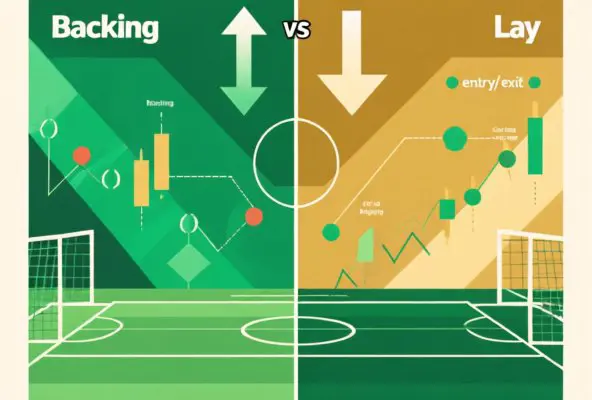
Most hedging involves back-lay arbitrage: you back a selection at one price, then lay it at another, creating a guaranteed profit regardless of outcome.
How to Hedge Lay Bets: A Real Example
Here's how professional hedging works in practice:
Step 1: Pre-match Back Bet
You back Liverpool at 2.50 with a £10 stake:
Potential profit = £10 × (2.50 - 1) = £15
Maximum loss = £10
Step 2: In-play Odds Movement
Liverpool scores early, odds drop to 1.60
Step 3: Hedge with Lay Bet
You lay Liverpool at 1.60 with a £15.63 stake:
Liability if Liverpool wins = (1.60 - 1) × £15.63 = £9.38
Profit if Liverpool doesn't win = £15.63
Step 4: Guaranteed Profit Result
If Liverpool wins: £15 (back profit) - £9.38 (lay loss) = £5.62
If Liverpool doesn't win: -£10 (back loss) + £15.63 (lay profit) = £5.63
You've turned an uncertain position into a guaranteed £5.62-£5.63 profit. Professional traders use automated hedging calculators to account for commission and ensure precise profit distribution.
Three Hedging Modes for Lay Betting
1. Cashout Mode:
Distributes profit evenly across ALL possible outcomes. Whether your selection wins or loses, you profit the same amount. Use this when you want to eliminate variance and secure a guaranteed return.
2. Freebet Mode:
Focuses profit on ONE selection while zeroing out the others. For example, if you've backed Benfica at 2.00 with £10 and their odds drop to 1.80, you might hedge so that:
- Benfica wins: £2 profit
- Benfica doesn't win: Break even
Use this when you remain confident but want insurance against a loss.
3. Trade Button:
A one-click feature that closes ALL positions at the best available price. This offers faster execution than Betfair's built-in cash-out and gives you more control over your exit price.
When to Hedge Your Lay Bets
Professional traders hedge in specific situations:
- Odds have moved significantly in your favor: The goal is to secure profit before the market can reverse
- Uncertainty increases: Injuries, red cards, or weather changes can rapidly shift probabilities
- Pre-event profit targets met: You've reached your desired return and want to eliminate risk
Common hedging mistakes include:
- Hedging too early and leaving profit on the table
- Over-hedging until profit margins become negligible
- Manual calculations leading to errors (always use a calculator)
Dutching: Multi-Selection Lay Betting Strategy
Dutching involves backing multiple selections in the same market to guarantee the same return regardless of which one wins.
Horse racing dutching example:
Back Horse A at 5.0 with £20
Back Horse B at 6.0 with £16.67
Back Horse C at 8.0 with £12.50

If any wins: Profit ≈ £80 - stakes
This approach works best when:
- You've identified a shortlist of strong contenders
- One outcome is clearly dominant (wastes stakes on unlikely winners)
- Trading correct score markets in football
Avoid dutching when one selection has a significantly higher probability—it drags down your overall return.