Lucky 15

Lucky 15, Yankee, Trixie and Patent: Full-Cover Bets Explained

Every system bet from the Trixie to the Goliath, what it costs, what it pays when one, two, three or four picks land, and when it beats a straight acca.

Lucky 15, Yankee, Trixie and Patent: Full-Cover Bets Explained
On this page

Four picks, one winner, still paid

You've spent Friday night on the form. Saturday comes, three of your four run like donkeys, and the 10/1 shot you nearly left out bolts up by five lengths. As a fourfold acca, that slip goes in the bin. As a Lucky 15, it's £11 back from a £15 stake. Had your 2/1 held on as well, you'd be £32 up.

That's why punters love full cover bets. You don't put everything on one all-or-nothing accumulator. You buy every combination of your picks instead: the doubles, the trebles, the big multiple and, in the "Lucky" versions, the singles too. More lines cost more money, but you no longer need the whole card to go your way.

Below is every common system bet with its line count and cost, worked returns for one to four winners, how the each-way versions settle, the bookmaker bonuses worth chasing, and our view on when a full cover is the smarter play.
How full cover bets work

A full-cover bet takes your selections and puts a separate bet on every possible combination of them. Pick three and you get three doubles plus one treble. That's a Trixie bet. Add the three singles and it becomes a Patent bet. The same logic runs all the way up to eight selections.

There are two families. The "doubles upwards" bets (Trixie, Yankee, Canadian, Heinz, Super Heinz, Goliath) leave out the singles. The "with singles" bets (Patent, Lucky 15, Lucky 31, Lucky 63) include them, so they pay out on a single winner. The "Lucky" name comes from the bonuses bookmakers attach to them, and the most common one is double the odds when only one selection wins.

The line count follows a tidy pattern. Learn it, because your unit stake gets multiplied by every single line:

Selections = n
With singles (Patent, Lucky 15, Lucky 31...):  bets = 2^n - 1
Doubles upwards (Trixie, Yankee, Heinz...):     bets = 2^n - 1 - n

Total stake = unit stake x number of bets
Each-way    = unit stake x number of bets x 2

Four selections give you 15 bets with singles and 11 without: a Lucky 15 and a Yankee. So a "£1 Yankee bet" costs £11, and a £1 each-way Lucky 15 costs £30. Check the stake box before you hit confirm.

Full covers back several horses to win. If you'd rather call the finishing order in a single race, that's a different job, covered in our forecast and tricast guide.

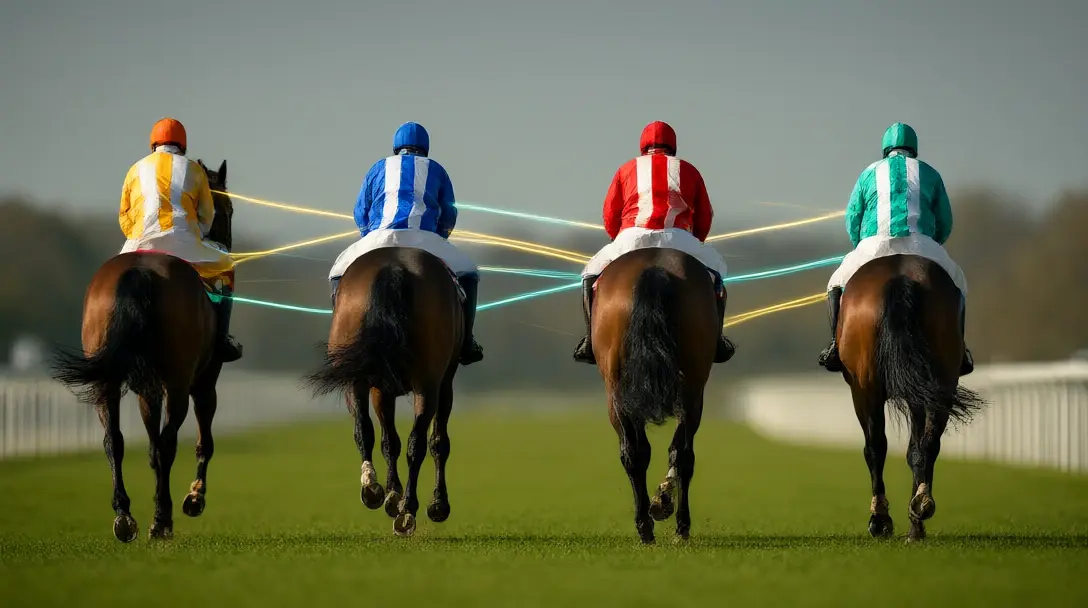
Four racehorses galloping away on a UK turf track linked by glowing lines showing bet combinations
Four picks, every combination covered.

Every system bet at a glance: Trixie to Goliath

Here's the whole family, from the three-pick Trixie to the eight-pick Goliath, priced at £1 a line.

The costs climb fast. A Lucky 15 is a sensible Saturday bet. A Goliath at £1 a line is £247, and at £5 a line it's £1,235. The big ones have their place, but most punters live in the Lucky 15 and Yankee, and we think they're right to. Four picks is enough to build a proper multiple without the line count getting away from you.

Bet Picks What's in it Bets Cost at £1
Trixie 3 3 doubles, 1 treble 4 £4
Patent 3 3 singles, 3 doubles, 1 treble 7 £7
Yankee 4 6 doubles, 4 trebles, 1 fourfold 11 £11
Lucky 15 4 4 singles + a Yankee 15 £15
Canadian (Super Yankee) 5 10 doubles, 10 trebles, 5 fourfolds, 1 fivefold 26 £26
Lucky 31 5 5 singles + a Canadian 31 £31
Heinz 6 15 doubles up to 1 sixfold 57 £57
Lucky 63 6 6 singles + a Heinz 63 £63
Super Heinz 7 21 doubles up to 1 sevenfold 120 £120
Goliath 8 28 doubles up to 1 eightfold 247 £247
Full-cover bets from Trixie to Goliath, cost at £1 a line.

Lucky 15 worked example: returns for one to four winners

Time for real numbers. Take four illustrative selections at 2/1, 6/4, 4/1 and 10/1 (decimal 3.0, 2.5, 5.0 and 11.0) and compare a £1 Lucky 15 (£15), a £1 Yankee (£11) and a £1 fourfold acca (£1).

Two winners can already put you in front if one of them is a decent price. The 2/1 and 4/1 together return £23 for your £15. Land the 4/1 and the 10/1 and you're £56 up, while the acca has long since been torn up.

Winners Lucky 15 return (£15) Yankee return (£11) Acca return (£1)
Only the 2/1 £3.00 £0 £0
Only the 10/1 £11.00 £0 £0
2/1 + 6/4 £13.00 £7.50 £0
2/1 + 4/1 £23.00 £15.00 £0
4/1 + 10/1 £71.00 £55.00 £0
2/1 + 6/4 + 4/1 £83.00 £72.50 £0
6/4 + 4/1 + 10/1 £251.00 £232.50 £0
All four £1,007.00 £985.50 £412.50
Returns include stakes; win-only, £1 a line, illustrative prices.

One winner is a cushion, not a profit

People get this bit wrong all the time. The singles in a Lucky 15 soften a bad day, but on their own they rarely cover the £15. Run the same bet with all four selections at evens and see what happens:

All four at evens (2.0), £1 Lucky 15 = £15 stake

1 winner:  £2  returned  (loss £13)
2 winners: £8  returned  (loss £7)
3 winners: £26 returned  (profit £11)
4 winners: £80 returned  (profit £65)

At short prices you need three from four just to make a profit. That's why we always build a Lucky 15 around prices of 2/1 and bigger, where one or two winners can actually do something for you.

Trixie and Patent: the three-pick full covers

Only got three you really like? Don't shoehorn in a fourth just to make a Lucky 15. The Trixie and the Patent do the same job on a smaller scale.

Using 2/1, 6/4 and 4/1, a £1 Trixie costs £4 and a £1 Patent costs £7. If all three win, the treble on its own returns £37.50. The Trixie returns £72.50 in total (£68.50 profit) and the Patent returns £83 (£76 profit). Two winners pay nicely as well: the 2/1 and 4/1 return £15 on the Trixie and £23 on the Patent, which is £11 and £16 profit.

The Trixie trap

A Trixie pays nothing at all on one winner. If only the 2/1 obliges, you've lost your £4. The Patent returns £3 from the single, so you're down £4 on a £7 stake. The Yankee and Lucky 15 work the same way. The bets without singles are cheaper, but you're backing at least two of your picks to come in.

Our rule of thumb is simple. If your selections are closely matched and fairly priced, a Trixie or Yankee keeps the cost down. If one of them is a bigger price and you fancy it, the singles in a Patent or Lucky 15 earn their keep.

Each-way Lucky 15: double the bets, double the chances

Go each-way on any of these and the line count doubles. An each-way Lucky 15 is 30 bets: one Lucky 15 on the win, plus a second, entirely separate Lucky 15 on the place part, settled at the place odds. If place terms are new to you, our each-way betting guide starts from scratch.

Here's a 50p each-way Lucky 15 (£15 total) on illustrative runners at 4/1, 5/1, 8/1 and 10/1, with 1/4 odds a place and three places paid:

Place prices at 1/4 odds:  4/1 -> 1/1   5/1 -> 5/4   8/1 -> 2/1   10/1 -> 5/2
Total stake: £0.50 x 15 bets x 2 (win + place) = £15
Result Return Profit / loss
4/1 wins, others unplaced £3.50 -£11.50
10/1 wins, others unplaced £7.25 -£7.75
4/1 wins, 5/1 and 8/1 place £21.50 +£6.50
No winners, all four place £87.25 +£72.25
All four win £2,606.75 +£2,591.75

Look at the fourth row. Not a single winner, and you still clear £72. The place half is its own full cover, so four placed horses build doubles, trebles and a fourfold at place odds. That's why the each-way Lucky 15 is such a favourite in big-field handicaps, where enhanced place terms from the bookmakers give you even more ways to get paid.

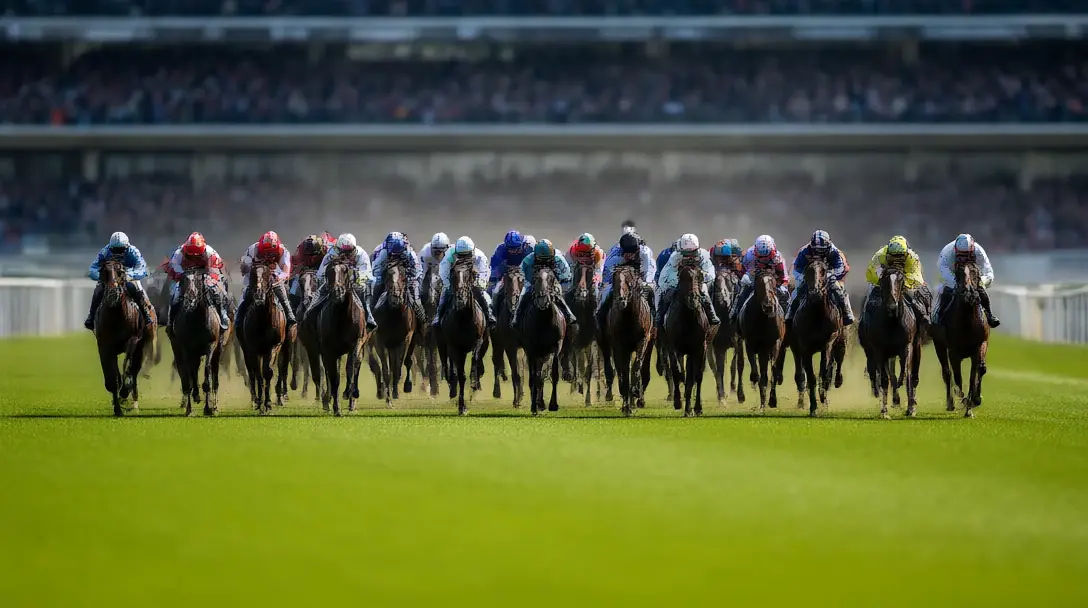
Large field of racehorses charging down the straight at Ascot in a handicap, grandstand behind
Big-field handicaps are where each-way Lucky 15s earn their keep.

Lucky 15 bonuses worth chasing

Bookmaker promotions are a big part of the case for the Lucky 15, 31 and 63. They come in two flavours: a one-winner concession that boosts the odds of a lone winner, and an all-correct bonus that adds a percentage when every selection lands. Before you commit, compare what each firm offers on multiples. Here's how three of the big names stood on 9 October 2026:

Bookmaker One winner All correct Extras
Betfred 3x odds (Lucky 15), 4x (Lucky 31), 5x (Lucky 63) 10% Lucky 15/Yankee, 20% Lucky 31/Canadian, 25% Lucky 63/Heinz Bonus paid on winnings, not stakes
bet365 Double the odds 15% boost on a Lucky 15 No bonus on the place part; BOG
Coral — 10% if all four win BOG on all multiples
Lucky bet promotions as of 9 October 2026. Offers change, so check the bookmaker's terms.

What a bonus is really worth

Betfred's offers cover horse racing and greyhounds (plus virtuals for the percentage bonus). Every selection has to run, and the one-winner multiplier only applies when exactly one wins. Free-bet stakes don't qualify, and Lucky 15s sit outside Betfred's Best Odds Guaranteed.

A concession softens the blow. It rarely turns a losing bet into a winning one. In a £1 Lucky 15, a lone 4/1 winner at double odds gets paid at 8/1 and returns £9. At Betfred's treble odds it goes to 12/1 for £13, still £2 short of your stake. The concession really bites when the lone winner is a bigger price: a 10/1 tripled to 30/1 returns £31.

The all-correct bonus is the cherry on top. In our 2/1, 6/4, 4/1, 10/1 example, four winners means £992 of winnings, and a 10% bonus on winnings adds £99.20. Not bad for picking the right four horses.

The small print that catches people out

Full covers are easy to place and a little fiddlier to settle. Know these rules before your bet goes on.

  • Non-runners don't kill the bet. A non-runner is made void and the bet stands on the rest. Every line that included the non-runner simply drops a level: the fourfold becomes a treble, the trebles it was in become doubles, and the doubles it was in become singles. What's left works like a Patent on your remaining three.
  • Ante-post is all in, run or not. Back a horse days or weeks out and if it doesn't run, that leg is a loser, not a void.
  • Each-way place terms follow the runners. In each-way racing multiples, place terms are set by the number of runners that come under starter's orders, so a shrinking field can change your terms.
  • Rule 4 and dead heats still apply. Late withdrawals and dead heats can trim an individual leg, and the cut carries through every double, treble and fourfold that leg sits in.
  • The returns box shows the maximum. The potential-returns figure on your slip assumes everything wins. That's the dream, not the forecast.
  • Maximum payouts exist. bet365, Betfair, Betfred, Coral, Ladbrokes and Paddy Power's top tier sit at £1,000,000, and Paddy Power drops to £100,000 on Class 5, 6 and 7 races.

Full cover vs acca: which should you play?

Neither one is "better". They're two shapes of the same risk. The acca is all-or-nothing and gives you the most per pound when everything lands. The full cover spreads your money across combinations so a partial hit still pays.

Put the same £15 behind each and the trade-off jumps out:

Four picks: 2/1, 6/4, 4/1, 10/1  (decimal 3.0, 2.5, 5.0, 11.0)

£15 fourfold acca, all four win:  15 x 3.0 x 2.5 x 5.0 x 11.0 = £6,187.50
£1 Lucky 15 (£15), all four win:                               £1,007.00

Lucky 15 with only 4/1 + 10/1 winning:  £71.00
Acca with only 4/1 + 10/1 winning:      £0

That gap is what the insurance costs you. You give up a big slice of the top-end payout, and in return you get paid on the days when two or three come in. With four selections at decent prices, those days come round far more often than the ones where all four win.

Mind the margin

Every leg carries the bookmaker's margin, and multiples compound it. With illustrative numbers:

5% margin per leg,  fourfold: 1.05^4 = 1.2155  (~21.6% combined)
10% margin per leg, fourfold: 1.10^4 = 1.4641  (~46.4% combined)

That compounding is exactly why most parlays lose over time. It's also why bonuses, Best Odds Guaranteed and enhanced place terms matter so much on full covers. If you'd rather stick with straight multiples, read our accumulator strategy guide next, along with the rundown on acca insurance.

Our betting angles for full-cover bets

  • Go bigger on price. Full covers shine with selections at 2/1 and up. Short-priced picks can't pay for the extra lines when only one or two land.
  • Pick the Lucky 15 over the Yankee when you've got a standout longshot. The singles cost £4 more, and they're what pays when your 10/1 is the only one to come in.
  • Save each-way Lucky 15s for big-field handicaps. Four placed horses and no winner can still return a healthy profit, and enhanced place terms only make it sweeter.
  • Chase the racing bonuses. One-winner concessions and all-correct boosts are usually racing and greyhound promotions, and that's where the Lucky bets earn their name.
  • Use three picks when you only like three. A Patent or Trixie beats padding out a Lucky 15 with a horse you don't believe in.
  • Count the lines before you count the winnings. A £5 Lucky 31 is £155 and a £1 Goliath is £247. Set your unit stake from the total you're happy to lose, never the other way round.

Choose a unit stake that fits your weekly budget, stick to it, and let the structure do the work.

18+. Please gamble responsibly. For free, confidential support visit BeGambleAware.org.

Topics