Transfer Flops vs Football Bargains: Worst & Best Signings
FEATURED

The £100 Million Mistakes: Inside Football's Most Spectacular Transfer Flops and Bargains

Jump to section

Transfer windows bring out the best and worst in football clubs. Every summer, executives spend billions chasing players they believe will transform their fortunes. Sometimes it works. Often, it doesn't.

The history of football transfers tells a strange story. Money doesn't guarantee success. Some of the greatest bargains cost absolutely nothing. Meanwhile, clubs have wasted hundreds of millions on players who never delivered.

Take Barcelona's €145 million signing of Philippe Coutinho in 2018. They thought they were getting a world-class playmaker to replace Neymar. Instead, they got a player who would later score twice against them while on loan at Bayern Munich—in an embarrassing 8-2 Champions League defeat.

Contrast that with Robert Lewandowski. Bayern Munich signed him on a free transfer in 2014. The Polish striker went on to score 191 goals in 242 games, winning multiple Bundesliga titles and the Champions League.

This is the reality of football's transfer market. Astronomical fees often lead to spectacular failure. Free bargains deliver extraordinary value.

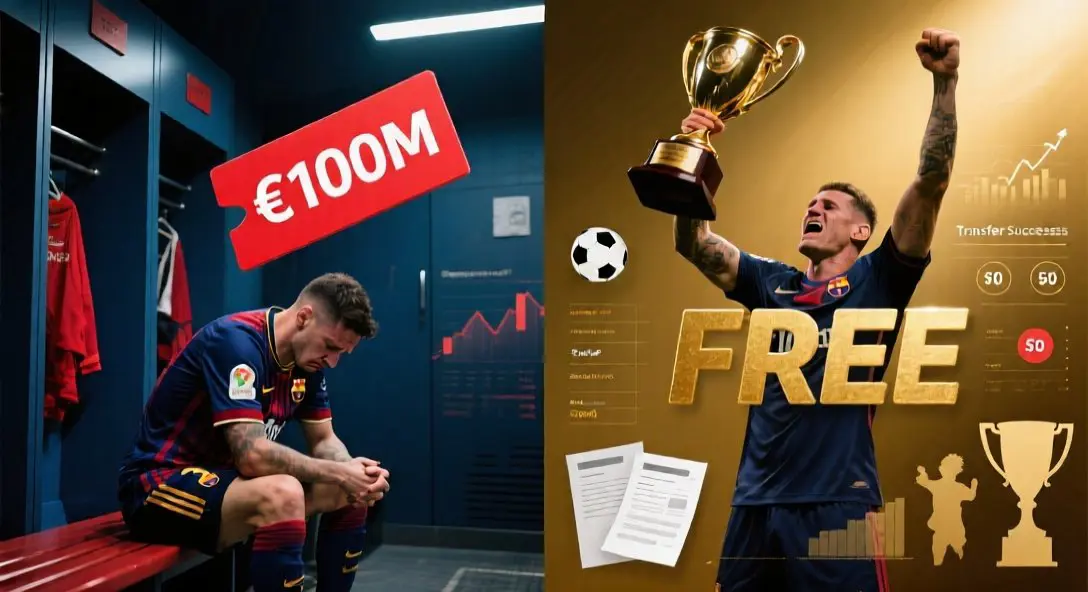
Editorial infographic comparing expensive transfer flops against successful bargain signings
The transfer market paradox: €160M disasters versus free transfer triumphs

The €100 Million Club: When Big Money Goes Wrong

Twelve players have commanded €100 million or more in transfer fees. Ten of them could be considered flops. The numbers are staggering.

Philippe Coutinho: The €160 Million Transfer Flop

Coutinho arrived at Barcelona as one of the Premier League's best players. Liverpool had developed him into a genuine world-class talent, and Barcelona were desperate to replace Neymar's creativity. The fee? €145-160 million.

What followed defied belief. Coutinho couldn't adapt to Barcelona's tactical system. He couldn't displace established stars. Barcelona eventually loaned him to Bayern Munich. The ultimate humiliation came in that 8-2 Champions League defeat—Coutinho scored twice against his parent club.

Barcelona sold him at a massive loss. This financial disaster contributed to a crisis that would eventually force them to let Lionel Messi leave.

Eden Hazard: 518 Days of Heartbreak

When Chelsea sold Eden Hazard to Real Madrid for €100-115 million in 2019, the Belgian playmaker was widely regarded as one of the Premier League's best ever talents. Real Madrid thought they were acquiring the heir to Cristiano Ronaldo.

Instead, they got a player who would miss 518 days through injury. In four years at the Bernabeu, Hazard scored just four league goals. He made fewer than 80 appearances. His story became a cautionary tale about how injuries can destroy even the most talented players.

Ousmane Dembele: The Injury-Prone €140 Million Enigma

Barcelona's troubles with expensive signings didn't start with Coutinho. Two years earlier, they had spent €140 million on Ousmane Dembele from Borussia Dortmund. The French winger was supposed to be Neymar's replacement.

Instead, Dembele spent more time injured than playing. Hamstring problems. Muscle tears. Fitness issues. When Barcelona eventually sold him to PSG, it represented another significant financial loss for a club already spiralling into crisis.

Antoine Griezmann: Tactical Misfit at €120 Million

Atletico Madrid fans watched in disbelief as their star striker Antoine Griezmann moved to Barcelona for €120 million in 2019. What followed was a masterclass in tactical incompatibility.

Griezmann thrived at Atletico as the main man. At Barcelona, he played second fiddle to Lionel Messi. The two occupied similar spaces. Griezmann never looked comfortable. After failing to justify his price tag, he returned to Atletico at a loss—another expensive mistake in Barcelona's chaotic post-Neymar spending spree.

The Premier League has seen its share of expensive disappointments too. British record transfers often become cautionary tales about worst football transfers.

Jack Grealish: The £100 Million Enigma

Manchester City made Jack Grealish the most expensive British player in history for £100 million in 2021. Expectations were enormous. Three Premier League titles followed—but Grealish's individual impact has been questioned.

With 157 appearances and limited goal contributions, Grealish has often found himself on the bench for big games. The cost per appearance? Approximately £636,942. He's won trophies, but many argue he hasn't justified his record-breaking fee.

Nicolas Pepe: The €1 Million Per Game Man

Arsenal's club-record €80 million signing of Nicolas Pepe from Lille in 2019 was supposed to transform their attack. Instead, it became a symbol of transfer market folly.

In 80 Premier League appearances, Pepe scored 16 goals and contributed 9 assists. That's roughly €1 million per league game. Arsenal eventually ripped up his contract one year early, letting him leave on a free transfer. The whole saga cost the club millions in fees and wages with little return.

Romelu Lukaku: The €113 Million Return That Failed

When Romelu Lukaku returned to Chelsea in 2021 for €113 million (£97 million), the club thought they were signing a proven goalscorer who would fire them to the Premier League title.

Instead, Lukaku scored just eight league goals and publicly criticized the club's tactics. After one disastrous season, he was loaned back to Inter Milan. The transfer highlighted the dangers of buying players who don't fit your tactical system—no matter how talented they are.

Kepa Arrizabalaga: The World's Most Expensive Goalkeeper Flop

Chelsea broke the world record for a goalkeeper in 2018, spending €80 million on Athletic Bilbao's Kepa Arrizabalaga. What followed was a nightmare.

Kepa lost his place in the team. He was dropped to the bench. He became an unused substitute in the 2021 Champions League final (which Chelsea won). His most notorious moment came in the 2019 League Cup final when he refused to be substituted—insubordination that summed up his troubled Chelsea career.

Paul Pogba: The £89 Million Mystery

When Manchester United re-signed Paul Pogba from Juventus for a then-world record £89 million in 2016, they expected him to become the team's leader. Instead, they got six seasons of inconsistency, injuries, and off-field controversies.

Pogba left for free again in 2022, having never justified his transfer fee. The saga cost United hundreds of millions in transfer fee and wages for a player who showed flashes of brilliance but never delivered consistently.

Football Analyst, theScore

For every brilliant deal and shrewd piece of business, there are dozens of signings that go bust for one reason or another—some in spectacular fashion.

Gordon Brunt
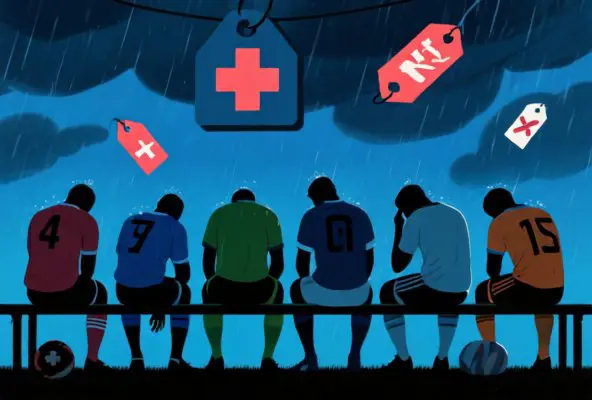
Editorial collage showing the weight of expensive transfer failures and disappointment
When big-money signings become heavy burdens: the human cost of transfer failures

Why Do Expensive Football Transfers Fail?

The stories of these transfer flops reveal patterns that clubs continue to ignore.

1. The Injury Curse

Eden Hazard missed 518 days at Real Madrid. Radamel Falcao never recovered from knee injuries at Manchester United. Kaka's injuries destroyed his pace and explosiveness at Real Madrid. Ousmane Dembele spent more time injured than playing.

Clubs often ignore injury history when chasing big names. The temptation to sign a world-class player outweighs concerns about their medical record—often at enormous cost.

2. Tactical Misfits

Antoine Griezmann couldn't play alongside Messi at Barcelona. Joao Felix struggled under Diego Simeone's rigid system at Atletico Madrid. Mesut Ozil found himself marginalized at Real Madrid when Benzema and Ronaldo took central roles.

Tactical fit matters more than reputation. Players who are stars in one system can become passengers in another.

3. Pressure and Mental Factors

Alexis Sanchez's form collapsed at Manchester United under the weight of expectations. Andy Carroll never looked like a £35 million player at Liverpool. Fernando Torres lost his confidence after moving to Chelsea and became a shadow of his former self.

Some players crumble under the pressure of big transfer fees. The psychological burden of justifying an astronomical price tag can destroy even the most talented players.

4. Adaptation Issues

Juan Sebastian Veron couldn't adapt to the pace of the Premier League at Manchester United. Andriy Shevchenko struggled with the physicality of English football. Kleberson was the wrong Brazilian signed by Manchester United after the 2002 World Cup.

Different leagues require different attributes. Players who dominate in one country can struggle badly in another.

5. Systemic Club Issues

Barcelona's post-Neymar panic buying (Coutinho, Dembele, Griezmann) happened in a club already in financial and tactical chaos. Manchester United's post-Ferguson struggles saw multiple expensive signings flop in an unstable environment.

When clubs are in crisis, expensive signings rarely fix the problems. They often make them worse.

The Free Transfer Revolution: When Zero Cost Means Maximum Value

While some clubs wasted hundreds of millions on transfer flops, others were building trophy-winning teams with football bargains.

Robert Lewandowski: The Greatest Free Transfer Ever?

When Robert Lewandowski left Borussia Dortmund for Bayern Munich in 2014, he cost nothing. His return? 191 goals in 242 games, multiple Bundesliga titles, and the Champions League.

The contrast between Barcelona's €145 million on Coutinho and Bayern's free signing of Lewandowski perfectly encapsulates the transfer market's paradox. Sometimes the best football bargains cost absolutely nothing.

Andrea Pirlo: "Signing of the Century"

AC Milan let Andrea Pirlo leave for free in 2011. Juventus snapped him up, and the regista midfielder proceeded to win four consecutive Serie A titles.

Gianluigi Buffon, Juventus's legendary goalkeeper, famously said: "When Andrea told me that he was joining us, the first thing I thought was: 'God exists'."

Pirlo's transformation from Milan discard to Juventus legend shows how undervalued older players can be in the football transfer market.

Paul Pogba: The Free Transfer Who Became the World's Most Expensive

The irony of Paul Pogba's career is extraordinary. When he left Manchester United for Juventus in 2012, he was a free transfer. Four years, four Serie A titles, and one £89 million return to United later, the Italian club had made one of the greatest profits in football history.

Pogba's first stint at Juventus cost nothing but delivered everything. His performances earned him the world-record move back to United—a deal that ultimately didn't work out, proving that the same player can be a bargain at one club and a flop at another.

Sol Campbell: The Free Transfer That Crossed North London

When Sol Campbell crossed the Tottenham-Arsenal divide for free in 2001, Spurs fans were furious. Arsenal fans were celebrating. Campbell went on to win two Premier League titles and three FA Cups, becoming one of Arsenal's greatest defenders.

The controversy of his move from Tottenham to Arsenal shows how free transfers can create seismic shifts in football's power structures—not just on the pitch, but in the psychology of rivalries.

Gary McAllister: The 35-Year-Old Who Won the Treble

Liverpool's decision to sign 35-year-old Gary McAllister on a free transfer in 2000 raised eyebrows. But the veteran midfielder became an integral part of their treble-winning season (FA Cup, League Cup, UEFA Cup).

McAllister made 49 appearances in his first season and scored crucial goals against Everton, Barcelona, and Alaves. His story proves that age is just a number when it comes to transfer value.

The Bargain Hunters: Finding Best Football Signings for Under £15 Million

While some clubs wasted hundreds of millions on worst football transfers, others were building title-winning teams with shrewd low-cost signings.

N'Golo Kante: The £5.6 Million Machine

When Leicester City signed N'Golo Kante from Caen for £5.6 million in 2015, nobody expected the French midfielder to become a World Cup winner and multiple Premier League champion.

Kante was instrumental in Leicester's miraculous title win, earning a place in the PFA Team of the Year. Chelsea then paid €32 million to take him to Stamford Bridge, where he won more trophies.

Riyad Mahrez: From £400,000 to £60 Million

Leicester City's scouting network found Riyad Mahrez at French club Le Havre for just £400,000 in 2014. Two years later, he was the PFA Player of the Year as Leicester won the Premier League.

When Manchester City bought him for £60 million in 2018, Leicester made a huge profit—but they'd already won the biggest prize in English football with their bargain discovery.

Jamie Vardy: The £1 Million Record-Breaker

Non-league footballer Jamie Vardy cost Leicester just £1 million when they signed him from Fleetwood Town in 2012. He went on to become a Premier League winner and England international, scoring in 11 consecutive Premier League games—a record that still stands.

Vardy's journey from factory worker to title winner encapsulates everything that's brilliant about football transfer bargains.

Vincent Kompany: The £6 Million Captain

Manchester City paid Hamburg just £6 million for Vincent Kompany in 2008. The Belgian defender went on to captain City to four Premier League titles and six domestic trophies, becoming one of the club's greatest ever players.

Kompany's leadership, defensive quality, and ability to score crucial goals made him the bargain that transformed Manchester City into a European superpower.

Eric Cantona: The £1.2 Million Who Changed Everything

When Leeds United sold Eric Cantona to Manchester United for £1.2 million in 1992, they had no idea they were giving away the player who would transform United into the dominant force in English football.

Cantona won four Premier League titles in five years at United, his charisma and talent inspiring the club's remarkable success under Sir Alex Ferguson. His relatively small transfer fee delivered returns beyond anyone's wildest dreams.

Cristiano Ronaldo: The £12.24 Million Steal

Before he became Cristiano Ronaldo, the Portuguese winger was a talented teenager Sporting Lisbon sold to Manchester United for £12.24 million in 2003.

As one analyst noted: "He was relatively cheap. He went on to become Cristiano Ronaldo. It's a bargain, alright?"

Ronaldo developed into one of the greatest players of all time at United, winning the Ballon d'Or and the Champions League before his world-record move to Real Madrid.

2025 Analysis

Value-for-money isn't guaranteed in football. Clubs and bettors alike get caught up in hype, but it's the fit, form, and discipline that define success.

Business A.M.
ℹ️

According to Sky Sports analysis, transfer fees have risen 7x faster than regular inflation since 1992. A loaf of bread would cost £24 if it rose at the same rate as Premier League transfer fees.

The Inflation Illusion: Why Today's £100 Million Isn't What It Was

Football transfer fees have exploded in recent decades, but inflation-adjusted analysis reveals some surprising truths about the real cost of transfers across different eras.

The Most Expensive Flop When Adjusted for Inflation

Andriy Shevchenko's £31 million move from AC Milan to Chelsea in 2006 doesn't sound like much by today's standards. But when adjusted for inflation to 2023 values, that fee becomes a staggering £215 million.

Shevchenko scored just four league goals in his first season at Chelsea and his career went into rapid decline. When viewed through the lens of inflation, he becomes arguably the most expensive Premier League transfer flop ever.

The Champions of the Inflation-Adjusted Era

  • Andriy Shevchenko (2006): £31 million → £215 million today
  • Rio Ferdinand (2002): £29 million → £199 million today (most expensive defender when adjusted)
  • Zinedine Zidane (2001): €75 million → €92.1 million today

These figures demonstrate how dramatically the football transfer market has escalated in recent decades—and why judging transfers purely by fee size can be misleading.

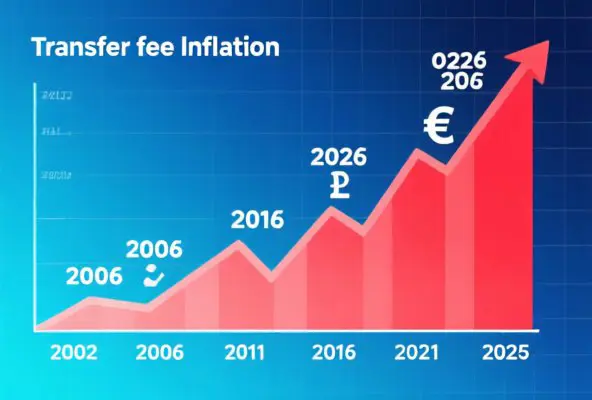
Editorial infographic showing the dramatic inflation of football transfer fees over decades
The inflation illusion: how £31M in 2006 equals £215M today

Barcelona's Financial Crisis: How Bad Transfers Broke a Superclub

No club illustrates the dangers of bad transfer business better than Barcelona. The Catalan giants went from European dominance to financial ruin largely through a series of catastrophic transfer decisions.

The Neymar Domino Effect

When Neymar left Barcelona for PSG in 2017 for €222 million, the club suddenly had enormous resources but panicked badly in how they spent them:

  • Philippe Coutinho: €145 million → massive loss when sold
  • Ousmane Dembele: €140 million → sold at a loss to PSG
  • Antoine Griezmann: €120 million → financial burden contributed to Messi's departure

These three signings alone cost Barcelona over €400 million in transfer fees—and the return on investment was disastrous.

The Messi Tragedy

The most painful consequence of Barcelona's transfer failings was the 2021 departure of Lionel Messi. The club couldn't afford to keep their greatest ever player because of the financial mess created partly by the Coutinho, Dembele, and Griezmann signings.

The irony is painful. Barcelona spent hundreds of millions on players who flopped, while Messi—a player who delivered unprecedented success for two decades—was allowed to leave for free.

Football History

It was Jean-Marc Bosman in 1995 that changed the way that transfers would be conducted forever. Thanks to an uncapped Belgian midfielder, players would be able to move anywhere without a transfer fee.

FourFourTwo

Recent transfer windows have continued the pattern of big money and mixed results in football transfer fees.

Recent Flops: The 2024-25 Season

Goal.com's analysis of the 2024-25 season identified several high-profile disappointments:

  • Endrick (Real Madrid): Struggled to make impact
  • Joao Palhinha (Bayern Munich): Failed to adapt to Bundesliga
  • Douglas Luiz (Aston Villa to Juventus): €51.5 million disappointment
  • Joao Felix (Chelsea loan): Continued struggles at new clubs

The Saudi Pro League Disruption

Neymar's move to Al-Hilal for €90 million plus €101 million per year in wages highlighted a new trend. But after playing just 7 games in 1.5 seasons due to injury, the Brazilian has earned approximately €472,000 for every minute played.

The Saudi Pro League's disruption of the transfer market creates new risks for players—and extraordinary value calculations that make even European flops look reasonable.

Free Transfer Boom

The modern era has seen top stars increasingly use the Bosman rule:

  • Lionel Messi (Barcelona to PSG)
  • David Alaba (Bayern to Real Madrid)
  • Sergio Ramos (PSG to various clubs)

These free transfers prove that even the biggest players can be acquired for nothing—if clubs are patient and strategic.

Editorial illustration depicting Barcelona's financial crisis from failed transfer dealings
When bad transfers break a superclub: the cascading consequences of financial mismanagement

The Psychology of Transfer Failures: What Really Goes Wrong

Behind every failed transfer lies a complex web of psychological factors that clubs often ignore.

The Burden of the Price Tag

When a club spends £100 million on a player, expectations become unrealistic. Every mistake is scrutinized more heavily. Every missed opportunity becomes a "waste of money."

Andy Carroll never looked comfortable at Liverpool with the weight of a £35 million price tag on his shoulders. Fernando Torres lost his confidence at Chelsea because he couldn't replicate his Liverpool form quickly enough.

The mental pressure of justifying a big fee can destroy players who were stars at their previous clubs.

The Homegrown Premium

British players often carry inflated price tags:

  • Jack Grealish: £100 million (British record)
  • Harry Maguire: £80 million (world record for defender)
  • Jadon Sancho: £73 million
  • Bukayo Saka: Arsenal rejected £100+ million offers

Meanwhile, foreign bargains like Kante, Mahrez, and Cantona delivered extraordinary value for minimal fees.

Is there a systematic overvaluation of domestic talent? The evidence suggests yes.

Agent and Third-Party Influence

Modern transfers often involve complex third-party arrangements:

  • Neymar to PSG: Uncertainty over actual fee due to complex deal structure
  • Tevez to Manchester City: Third-party ownership created complications
  • Agent fees: Often represent millions in additional costs beyond transfer fees

The lack of transparency in transfer deals makes true cost analysis difficult—and allows bad decisions to be hidden behind convoluted financial structures.

Hidden Gems and Forgotten Failures: The Transfer Market's Curiosities

Beyond the big-money flops and famous bargains lie some extraordinary stories that deserve to be remembered.

The Ultimate Flop: Ali Dia

Southampton manager Graeme Souness received a phone call from "George Weah" recommending a brilliant young striker. The player was Ali Dia, a 31-year-old university student posing as a professional footballer.

Southampton signed him on a free transfer. He lasted 53 minutes in his only professional appearance before being substituted. The Ali Dia story remains the most bizarre transfer flop in football history.

The Pensioner Who Won the Treble

Gary McAllister was 35 years old and effectively retired when Liverpool signed him for free in 2000. He proceeded to score crucial goals against Everton, Barcelona, and Alaves, playing 49 times in a treble-winning season.

Age is just a number when experience and quality meet the right opportunity.

The Free Transfer Who Vacuumed for a Living

Swedish striker Tomas Brolin cost Leeds United a club-record £4.5 million in 1995. Unhappy at being played out of position, he deliberately played poorly before retiring at 28 to become a vacuum cleaner salesman.

Sometimes, expensive signings just don't work out—and players find happiness in unexpected places.

Lessons for the Future: What Clubs Must Learn

The history of transfer flops and bargains offers clear lessons for clubs looking to avoid expensive mistakes.

1. Tactical Fit Over Reputation

Antoine Griezmann at Barcelona and Mesut Ozil at Real Madrid prove that world-class players can become expensive passengers in the wrong system. Clubs must prioritize how a player fits their tactical approach over their reputation.

2. Injury History Matters

Eden Hazard, Radamel Falcao, Kaka, and Ousmane Dembele all had concerning injury records before their big moves. Clubs that ignore medical warnings do so at their peril.

3. Psychological Assessment is Crucial

Fernando Torres, Andy Carroll, and Alexis Sanchez all crumbled under pressure. Clubs must assess mental resilience as rigorously as physical ability.

4. Free Transfers Offer Exceptional Value

Robert Lewandowski, Andrea Pirlo, Paul Pogba (first time), and Sol Campbell delivered trophy-laden success for nothing. The Bosman rule remains the most underutilized source of value in football.

5. Age and Contract Timing

Gary McAllister (35), Andrea Pirlo (32), and Zlatan Ibrahimovic (various ages) have proved that older players can deliver extraordinary value. Clubs should not dismiss players based on age alone.

6. Inflation-Adjusted Reality

Understanding that Shevchenko's £31 million in 2006 equals £215 million today puts modern transfer fees in perspective. Context matters when judging transfer value across eras.

The Beautiful Game's Beautiful Paradox

Football's transfer market remains one of the most fascinating paradoxes in sport. Clubs continue to spend record sums on players who often fail to deliver, while bargains and free transfers regularly produce trophy-winning success.

As Business A.M. noted in 2025: "Value-for-money isn't guaranteed in football. Clubs and bettors alike get caught up in hype, but it's the fit, form, and discipline that define success."

The €100 million flops and free transfer success stories teach us the same lesson: football is not a financial transaction, it's a human endeavor. Tactics, psychology, timing, and luck matter more than transfer fees.

As long as clubs ignore these truths, the transfer window will continue to deliver its annual mix of heartbreak for some and joy for others. And that's what makes it so compelling.

If every expensive signing succeeded and every bargain flopped, football would lose the drama that makes the transfer market the theater of dreams and nightmares that captivates fans around the world.

Editorial illustration summarizing key lessons for successful football transfers
Six lessons for transfer success: tactical fit, injury history, psychology, free transfers, age and timing
Professional headshot of Marcus Worthington, Senior Football Editor & Analyst

Marcus Worthington

Senior Football Editor & Analyst

Marcus Worthington is an experienced sports analyst and editor with over 12 years in sports journalism. Specializing in football tactics, league analysis, and long-form feature writing, Marcus provides in-depth coverage of Premier League, La Liga, and European competitions. His expertise extends to live score commentary and match result analysis, where his detailed understanding of game dynamics helps readers understand the story behind the scores. Marcus is known for his tactical breakdowns and ability to identify emerging trends in team performances.