
World Cup

World Cup 2026 Review: What the 48-Team Tournament Taught Bettors

A Spain defence that conceded once, England's best finish since 1966 and a final Argentina never got a shot away in. Here's what the biggest World Cup ever taught us about betting on the next one.

World Cup 2026 Review: What the 48-Team Tournament Taught Bettors
On this page

The summer football got bigger

Ferran Torres had barely stopped celebrating when the pushing and shoving started. Spain had just beaten Argentina 1-0 after extra time at MetLife Stadium, and a brawl at the final whistle on 19 July was a fitting full stop to a World Cup that never did anything quietly.

It was the biggest tournament the game has ever staged: 48 teams, 104 matches and 39 days of football across Canada, Mexico and the United States. For punters it was a feast. More games, more goals, more unfamiliar match-ups, and a group stage where almost nothing was a dead rubber.

And yet, for all the talk of an expanded format creating chaos, the cream rose to the top. The world's four highest-ranked sides, Argentina, Spain, France and England, made up the semi-final line-up, the first time that has ever happened at a World Cup. England went on to finish third, their best World Cup since 1966, and Spain were simply the best team in it.

Below we look back at how it unfolded, what the new rules did to match markets, how the betting looked going into the final week, and the lessons we think are worth carrying into the next major tournament.

World Cup 2026 by the numbers

Measure World Cup 2026
Dates 11 June to 19 July 2026
Hosts Canada, Mexico, United States (16 cities)
Teams and matches 48 teams, 104 matches
Goals 308, or 2.96 per game, the highest average since 1970
Attendance 6,810,966, a World Cup record
Champions Spain (second title, first since 2010)
Golden Boot Kylian Mbappé (France), 10 goals

Nearly three goals a game. That's the number that should jump out at anyone who bets on totals: this was the highest-scoring World Cup, on average, for more than half a century.

There are good reasons for it. Forty-eight teams meant more mismatches in the group stage, and the new clampdown on time-wasting squeezed more actual football out of every 90 minutes. The third-place lifeline helped too. With eight of the 12 third-placed sides going through, teams sitting on three points still had every reason to chase a goal in their final group game rather than sit on what they had.

The crowds were huge as well, averaging more than 65,000 a match. Whatever you think of the expanded format, people turned up for it.

Quick verdict

Spain were the best team in it, the 48-team format delivered nearly three goals a game and the lower-ranked nations bit harder than anyone expected. Our three takeaways for the next big tournament: trust elite defences in the knockouts, lean towards goals in the group stage, and know whether you're backing a team over 90 minutes or to qualify.

New format, new rules, new angles

The 48-team format split the field into 12 groups of four. The top two in each group went through, joined by the eight best third-placed teams, to make a round of 32. That extra knockout round meant the finalists played eight matches, one more than in the old 32-team World Cup.

Alongside the format came a raft of rule changes, and several of them land squarely on the markets punters use every week.

Change What it does Markets it touches
Head-to-head first Teams level on points are split by head-to-head before overall goal difference To qualify, group winner, finishing position
Ten-second subs Substitutions must be made in 10 seconds, or the player waits a minute Time played, late goals
Restart countdowns Five-second countdowns on throw-ins and goal kicks Time played, late goals
Hydration breaks A three-minute break in each half, with the clock stopped In-play pricing
Expanded VAR Can overturn wrongly awarded corners, certain attacking fouls and clear second-yellow mistakes Cards, corners, red card markets
Conduct Covering your mouth in a confrontation, or walking off in protest, is a red card Cards, red card markets

Why head-to-head matters

This is the one that catches people out. Under the old rules, a team that thrashed the group minnow could leapfrog a rival on goal difference. Now, if two sides finish level on points, the result between them comes first. A scrappy 1-0 in the opening game can be worth more than a five-goal romp later on, and that should shape how you price group-winner and to-qualify bets after matchday one.

Less time-wasting, more football

The shot-clock style restarts and ten-second substitutions took a lot of the dark arts out of the closing stages. For in-play punters that's a genuine shift: a side protecting a lead has fewer ways to run down the clock, and the window for a late equaliser stays open longer.

Stadium tunnel with a stopwatch in the foreground and a glowing replay monitor in the background
Ten-second subs and restart countdowns: fewer ways to kill a game, more football in every 90 minutes.

The final: Spain 1-0 Argentina (after extra time)

It was billed as the perfect final. The European champions against the Copa América holders, the world's top two ranked sides, and the first World Cup final ever to pit two reigning continental champions against each other. In front of 80,663 at MetLife Stadium, with Slovenia's Slavko Vinčić in charge, it turned into a siege.

Spain had the ball and the chances. Argentina had Emiliano Martínez, who made 11 saves, the most by a goalkeeper in a World Cup final. They also had very little else. Lionel Scaloni's side went the whole of normal time without a single shot, the first time that has happened in a World Cup final, and Enzo Fernández's second-half red card left them hanging on with ten men.

They made it to extra time, but not much further. Nico Williams nodded the ball into Ferran Torres's path and Torres finished it, earning man of the match and handing Spain their second World Cup and their first since 2010. It also made Spain the first country to hold the men's and women's World Cups at the same time.

The night had its oddities too. The first ever World Cup final half-time show stretched the interval past 27 minutes, and the brawl at the end left a sour taste. But nobody could argue with the winners.

The betting lesson

The final was goalless after 90 minutes. Anyone who backed Spain in the standard match odds lost, while anyone who backed them to lift the trophy got paid. It sounds obvious, but in knockout football the difference between the 90-minute market and the to-qualify or outright market is everything. Make sure you know which one you're on before you hit the button.

After the final

“This isn't just my goal. It's for 47 million people. I want to grab the cup and squeeze it.”

— Ferran Torres, Spain forward

How Spain won it: one goal conceded all summer

Spain conceded once in the entire tournament. One goal in eight matches, the fewest ever by a World Cup winner. Everything else about their summer flows from that.

They arrived on a 37-match unbeaten run, level with Italy's record for men's international football, and played like a side that had forgotten how to lose. They topped Group H with two wins and a draw, then worked their way through Austria, Portugal and Belgium before the semi-final that told us they were the team to beat.

France had the most frightening attack left in the tournament, built around Kylian Mbappé, Ousmane Dembélé, Bradley Barcola and Michael Olise. In Dallas on 14 July, Spain shut them out. Mikel Oyarzabal scored a first-half penalty, Pedro Porro added a second just before the hour, and France didn't manage a shot on target until the 81st minute. It finished 2-0 and it never felt closer.

The individual awards told the same story. Rodri took the Golden Ball, Unai Simón the Golden Glove and Pau Cubarsí the best young player award. That's a holding midfielder, a goalkeeper and a centre-back: the spine of the best defence in the tournament.

Argentina's road was far bumpier. They swept Group J with three wins and saw off Cape Verde, but they were 2-0 down to Egypt in the round of 16 with 11 minutes left before three late goals turned the tie on its head. Switzerland were beaten in the quarter-finals, and then they needed another late show to get past England. That's thrilling to watch, but living on the edge caught up with them in the final.

England's best World Cup since 1966

Thomas Tuchel's side won Group L, beat DR Congo in the round of 32 and then produced the result of their summer: Mexico 2-3 England at the Azteca on 6 July. Jude Bellingham scored twice in 98 seconds, Harry Kane converted a penalty, and England held on with ten men for the last 36 minutes plus stoppage time. It was Mexico's first ever World Cup defeat at the Azteca.

Norway were seen off in the quarter-finals, and by the semis Bellingham and Kane had scored 12 of England's 13 goals between them. That dependence on two players was both the case for England and the worry about them.

The semi-final against Argentina in Atlanta on 15 July was cruel. Anthony Gordon put England 1-0 up in the second half and they led going into the final five minutes, and then Enzo Fernández scored in the 85th minute and Lautaro Martínez won it in stoppage time. Argentina 2-1, and another near miss.

To their credit, England signed off in style. They beat France 6-4 in the third-place match on 18 July, a game that will go straight onto the over 2.5 goals highlight reel. Third place is England's best World Cup finish since they won it.

France and Mbappé

France finished fourth, but Kylian Mbappé had a summer to remember. His 10 goals won the Golden Boot, made him the first player to win it at two World Cups, and took him past everyone to become the tournament's all-time leading scorer.

Scotland

Scotland's summer ended in the group stage, but not without a win. They beat Haiti 1-0, then lost 1-0 to Morocco and 3-0 to Brazil to finish third in Group C on three points. A goal difference of minus three left them short in the race for the best third-placed spots, which is a reminder that in this format, every goal counts right up to the final whistle of the group.

After the semi-final

“We were so close but we got too passive after we scored.”

— Thomas Tuchel, England head coach

Where the underdogs bit

The top four in the world reached the last four, so the tournament's big picture went to script. Lower down, it was a different story, and that's where the expanded format earned its keep for punters.

Cape Verde, ranked 67th, and Ghana, ranked 73rd, both went into the tournament well below their group opponents and both made the round of 32 by taking points off higher-ranked sides. Ghana finished third in England's group and earned a knockout tie with Colombia. Cape Verde's reward was Argentina, which is where their adventure ended, but getting there at all was a story in itself.

That's the hidden upside of a 48-team World Cup. With eight third-placed teams going through, the smaller nations had a realistic route out of the group, and they played like it. Final-round group games that would once have been dead rubbers were live, and sides you might have expected to fold kept turning up with something to play for.

Our take on group-stage underdogs

We don't think the answer is to back every outsider blind. The angle is more specific than that: in the second and third group games, look hard at teams who are still alive for a third-placed spot. Motivation is easier to price than you'd think, and the handicap and double-chance markets are where an organised underdog with something on the line is often undervalued.

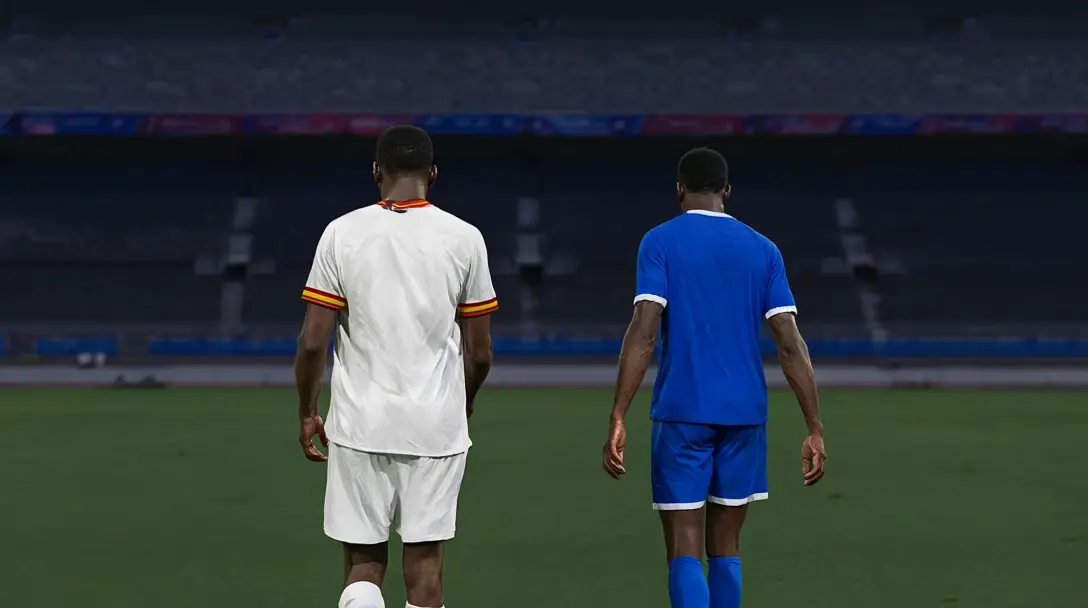
Two footballers seen from behind walking across a pitch, one in white with red and yellow collar, one in blue, empty stand
Ghana and Cape Verde both reached the round of 32 by taking points off higher-ranked sides: the 48-team format rewards that.

How the market called it

On 15 July, with Spain already through and England still to play Argentina, the outright market looked like this:

Team Best price Decimal Implied chance
Spain 8/11 1.73 58%
England 16/5 4.20 24%
Argentina 17/4 5.25 19%

The money was moving the same way. Of the outright bets placed after Spain beat France, 42% were on Spain, 34% on England and 24% on Argentina. Punters fancied England to be the ones to give Spain a game.

The bookmakers got the big call right: Spain were the best side in the tournament and priced like it. Where the market wobbled was the other semi. Argentina were the outsiders of the three, largely because of how they'd been winning, not whether they could. They went on to beat England and push Spain all the way to extra time.

Short prices on outstanding favourites

At 8/11 you're staking £11 to win £8, and you need the favourite to win nearly six times in ten just to break even. Spain did it, but only after 120 minutes and with Emiliano Martínez making 11 saves at the other end. Short prices on great teams can still be fair prices. They're rarely generous ones, and the outright market late in a tournament rewards being right more than it rewards finding value.

The Golden Boot in a bigger tournament

Mbappé's 10 goals came for a France side that didn't reach the final, but the third-place match meant they still played eight games. That's the key change for top-scorer betting: an extra knockout round adds a match to every deep run, so winning totals are likely to sit higher than in the 32-team era. Strikers on teams with a soft group and penalty duties are the profile to follow.

Cards and red cards

The new conduct rules and expanded VAR gave officials more ways to send a player off, and the final itself turned on a red card. When rules tighten, card lines can lag behind. It's worth reading the latest guidance before every tournament, not after the first round of bookings.

Overhead view of a blank notebook, calculator and tablet showing an unlabelled glowing bar chart on a desk
8/11 looked short in mid-July. Spain made it look about right, eventually.

Our betting angles for the next big tournament

  • Trust elite defences once the knockouts start. Spain conceded one goal in eight games and lifted the trophy. In single-match football, the side that doesn't concede is the side that keeps coming back for more. Unders and clean-sheet markets on the best defensive teams deserve a long look from the round of 16 onwards.
  • Know your 90-minute market from your to-qualify market. The final was 0-0 after 90 minutes. Spain backers in the match odds lost; Spain backers to lift the trophy won. If you fancy a team to get through rather than to win in normal time, back them to qualify.
  • Lean towards goals in an expanded group stage. Nearly three a game across the tournament, more mismatches than ever and fewer ways to waste time. Overs and both-teams-to-score in the group stage are where we'd start next time, especially when a big side meets a debutant.
  • Back motivated underdogs in the final group round. With eight third-placed teams going through, very few games are dead. Sides still chasing a spot are worth considering on the handicap, and Scotland's minus-three goal difference shows how fine those margins are.
  • Don't overpay for a team that keeps winning late. Argentina's comebacks against Egypt and England were brilliant, and they got to the final. But a side that keeps needing a rescue is a risky bet at a short price, and in the final they ran into a defence that kept them without a shot for 90 minutes.
  • Follow the striker, not just the team, in the Golden Boot. Eight games for every semi-finalist means bigger totals. Mbappé won it with 10 goals for a side that never reached the final.
  • Read the rulebook before the card markets. New conduct rules and wider VAR powers change how often players see red. Pricing doesn't always keep up in the opening round.

Whatever you back next time, set your stake before a ball is kicked and stick to it. Tournament football is a five-week rollercoaster, and the best punters are the ones still thinking clearly in the final week.

Topics

Professional headshot of Caleb Harrington, Senior Football & Betting Analyst

About the author

Caleb Harrington

Senior Football & Betting Analyst

Caleb Harrington is an experienced sports analyst and writer with over 8 years of expertise in football betting markets and tennis predictions. A graduate of Sports Journalism, Caleb combines deep statistical knowledge with an engaging writing style to make complex betting concepts accessible to all readers. He's particularly known for his data-driven approach to Premier League analysis and his insightful coverage of major tennis tournaments. When he's not analyzing odds or writing match previews, Caleb enjoys exploring emerging trends in sports betting technology and strategy.