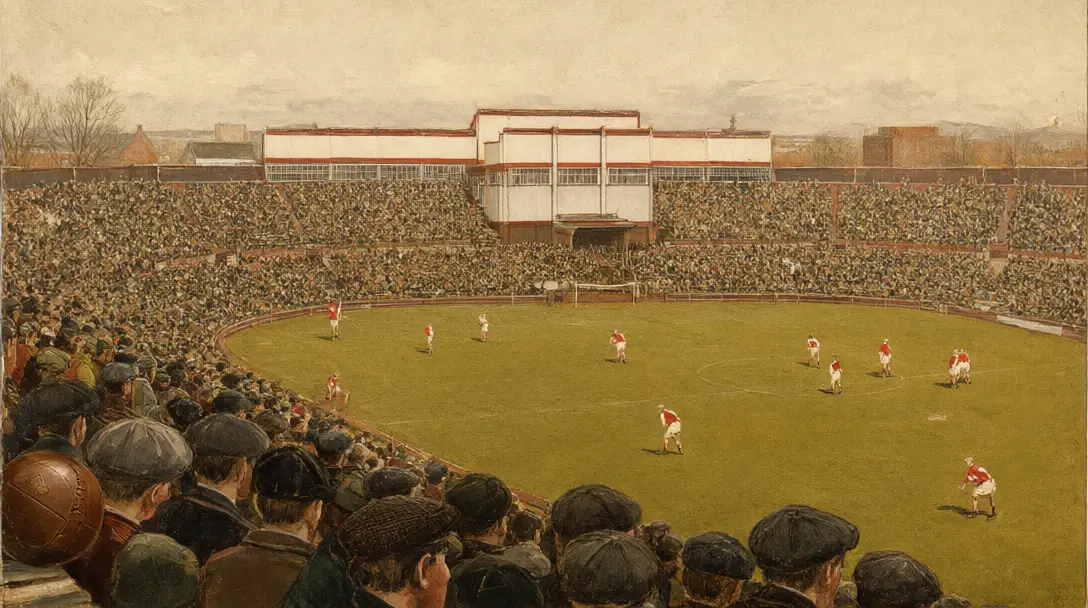
Emirates Stadium on matchday with Arsenal fans in red and white
Club Guide

Arsenal FC: Complete Guide to the Gunners (2026)

Jump to section

Introduction

Few clubs in English football have a story quite like Arsenal FC. Nearly 140 years of history, starting in a South London munitions factory and ending up - well, not ended yet - at the top of the Premier League table in March 2026. That is five points clear, if you are counting. And Arsenal fans definitely are.

What sets Arsenal apart? They are still the only team to go an entire 38-game Premier League season unbeaten. Nobody else has managed it before or since. They hold the record for FA Cup wins with 14. But there is something else too - a commitment to playing football a certain way that has survived through different eras, different managers, different owners. Herbert Chapman started it in the 1920s. Arsene Wenger perfected it. Now Mikel Arteta is chasing a title with that same philosophy.

This is the story of Arsenal Football Club. From Dial Square to the Emirates. From Woolwich to Islington. From relegation battles to Invincibles.

Arsenal FC Origins: From Dial Square to the Gunners

October 1886. A group of workers at the Royal Arsenal munitions factory in Woolwich decided to start a football club. David Danskin, a Scot, led the way. They called it Dial Square after one of the workshop buildings. That first match happened in December - details lost to time - but the Gunners were born.

The name changed quickly. Dial Square became Royal Arsenal, then Woolwich Arsenal by 1891 when they turned professional. In 1893, they made history as the first southern club to join the Football League. Big stuff for a team of factory workers.

Money was always tight. Woolwich was geographically isolated from the football heartlands up north. By 1910, bankruptcy loomed. Henry Norris, a businessman, stepped in and made a call that would define Arsenal forever. In 1913, he moved the club four miles north to Highbury.

Four miles from Tottenham's White Hart Lane. You can probably see where this is going. The North London Derby had its spark. In 1914, "Woolwich" dropped from the name. Just Arsenal now. North London's newest team - whether Tottenham liked it or not.

Historical Perspective

The move from Woolwich to Highbury was the most significant decision in Arsenal's history. It transformed the club from a struggling provincial team into a club with access to London's growing population and transport network. But it also planted the seeds of one of English football's fiercest rivalries.

Football Historian

The Herbert Chapman Revolution

Herbert Chapman did not just manage Arsenal. He reinvented them. Arriving in 1925 from Huddersfield Town, where he had won two league titles, Chapman brought ideas that made other managers look like amateurs.

His big tactical innovation was the WM formation - a 3-2-2-3 system created to counter a change in the offside law. The rule now required only two defenders between attacker and goal instead of three. Goals went up everywhere. Chapman's solution? Pull the center-half back as a third defender. W shape in attack, M shape in defense. Simple but devastating.

The results came fast. Arsenal won their first FA Cup in 1930. First league title in 1931. Five league titles and two FA Cups followed throughout the 1930s. Chapman died of pneumonia in 1934, aged 55, but his team kept winning.

Chapman was more than a tactician. He brought in numbered shirts, floodlights, proper training methods. He understood branding before anyone used that word. Got the local tube station renamed from Gillespie Road to Arsenal. The first modern football manager, decades ahead of his time.


Arsene Wenger and the Invincibles

If Chapman built the foundation, Arsene Wenger built something nobody had seen before. He arrived in September 1996 - a Frenchman from Japanese football who cared about nutrition and training methods. First manager from outside Britain to take charge of a major English club. Plenty of people thought he would fail.

They were wrong. Wenger's early teams played fast, attacking football that left defenders spinning. Marc Overmars, Dennis Bergkamp, Thierry Henry - they tore teams apart with pace and technique that looked almost unfair. Premier League and FA Cup doubles arrived in 1998 and 2002.

Then came 2003/04. The Arsenal Invincibles. Twenty-six wins, twelve draws, zero losses. No Premier League team had done it. None have done it since. Thierry Henry scored 30 goals. Patrick Vieira ran midfield. Dennis Bergkamp created chances from nothing. Sol Campbell and Kolo Toure defended like their lives depended on it.

The unbeaten run stretched to 49 games - an English top-flight record that still stands. For Arsenal supporters, the Invincibles season is everything. Style and substance perfectly balanced.

Wenger stayed 22 years. Three Premier League titles, seven FA Cups. He managed the move from Highbury to Emirates Stadium in 2006, a financial gamble that shaped the club's future. When he left in 2018, he had taken charge of 1,235 games. Nobody has managed Arsenal more.

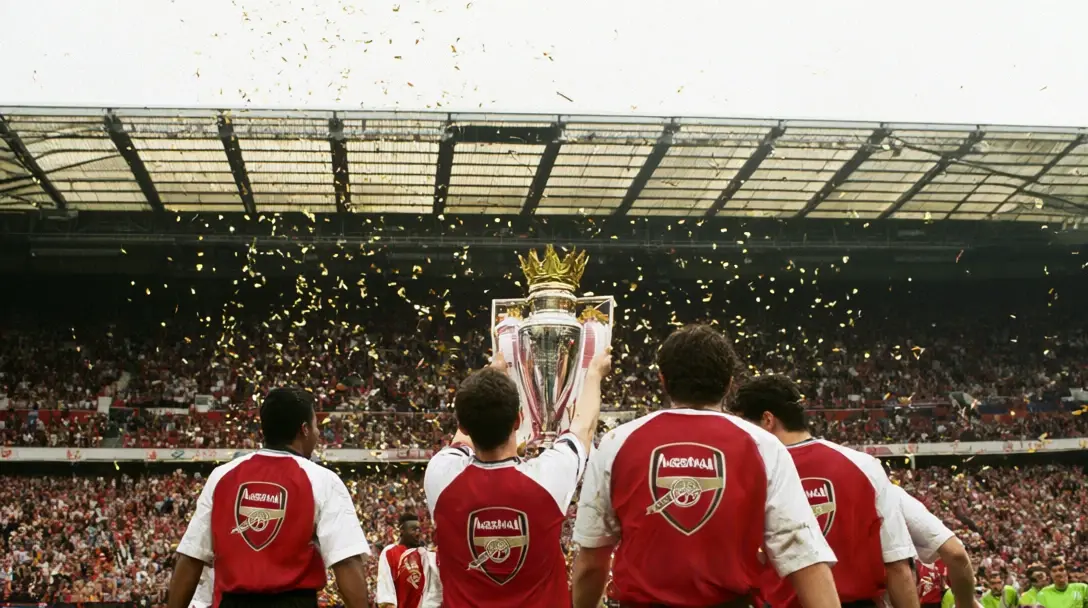
Arsenal Invincibles 2003-04 golden trophy celebration
The 2003/04 Invincibles - the only team to complete a 38-game Premier League season unbeaten

Invincibles Stats

The Invincibles Record

2003/04 Premier League Season: 38 games, 26 wins, 12 draws, 0 losses. The only team to complete a 38-game Premier League season unbeaten. A record that still stands.

Arsenal Legend

Arsene changed everything. The diet, the training, the way we thought about football. He made us believe we could achieve things that seemed impossible. Going a whole season unbeaten? Before Arsene, we never would have dreamed of it.

Thierry Henry

North London Derby: Arsenal vs Tottenham

You cannot talk about Arsenal FC without talking about Tottenham. The North London Derby is not just a football match. It is identity. History. A century of resentment that makes local rivalries worth caring about.

Arsenal's move to Highbury in 1913 started it. Tottenham had been in North London since 1882. Now here came this South London outfit, moving in next door. But the real damage came in 1919. The Football League expanded the First Division from 20 to 22 teams. Arsenal finished fifth in the Second Division but somehow got elected to the top flight. Tottenham, who had finished bottom of the First Division, went down. The suspicion of backroom deals has never gone away.

The numbers tell the story. In 212 competitive meetings, Arsenal have won 90, Tottenham 67, with 55 draws. The 4-5 Arsenal win at White Hart Lane in November 2004? One of the wildest Premier League games ever played.

Iconic moments pile up. 1971: Arsenal won the league title at White Hart Lane, Ray Kennedy's header sealing the first part of a double. 2004: Arsenal sealed their Invincibles season with a 2-2 draw at Tottenham, celebrating on their neighbors' pitch. 2017: Tottenham finally finished above Arsenal for the first time in 22 years. Their fans went slightly mad with relief.

The recent 4-1 Arsenal win in November 2025 - Eberechi Eze with a hat-trick - showed Arsenal's current dominance as they chase the Premier League title. But in this fixture, form means nothing. Pride means everything.

Club Legend

Playing in a North London Derby is like nothing else. The atmosphere, the intensity, the knowledge that this match matters more than any other to the fans. You grow up understanding what this game means. Losing is simply not an option.

Tony Adams
Arsenal FC legendary players Thierry Henry, Dennis Bergkamp, Tony Adams, Patrick Vieira tribute
Arsenal legends: Henry, Bergkamp, Adams, and Vieira - the players who defined eras

Arsenal FC Legends

Some players become bigger than the club. Arsenal have had a few.

Thierry Henry

Arrived from Juventus in 1999 as a winger who could not quite work out his best position. Arsene Wenger made him a striker. The rest is history. Henry scored 226 goals for Arsenal - still the club record, and not likely to be beaten soon.

He had everything. Pace that terrified defenders. Technique that made difficult things look easy. A finishing ability from any distance. Four Premier League Golden Boots. That signature move - cutting in from the left, bending it right-footed into the far corner - became the most feared sight in English football. For many, Henry is the greatest Premier League player ever.

Dennis Bergkamp

If Henry scored the goals, Bergkamp created the magic. The Dutchman arrived in 1995, before Wenger, and stayed 11 years. His 120 goals were impressive. His 166 assists (unofficial - assists were not tracked for much of his career) tell the real story.

That touch. That vision. His goal against Newcastle in 2002 - one touch to spin Nikos Dabizas around, another to finish - gets voted among the best Premier League goals ever scored. He refused to fly, missing European away games, which somehow made him more mythical.

Tony Adams

Nineteen years at Arsenal. 669 appearances. Captain for 14 of them. Adams came through the youth system and became the embodiment of Arsenal defending. He led the famous "back four" with Lee Dixon, Steve Bould, and Nigel Winterburn.

Four league titles across three different decades. That takes some doing - adapting to different managers, different styles, different eras. His statue outside the Emirates says everything about what he means to Arsenal FC.

Patrick Vieira

Tall, powerful, technical. Vieira could dominate a midfield like few others. His battles with Roy Keane became Premier League folklore - two warriors going to war for the title.

As captain of the Invincibles, Vieira set the standard. His final act as an Arsenal player? Scoring the winning penalty in the 2005 FA Cup shootout. Perfect exit. Arsenal have spent years trying to replace him.

Ian Wright

Before Henry, there was Wrighty. Signed from Crystal Palace in 1991, he scored 185 goals - a club record until Henry came along. Explosive pace, natural finishing, and a personality that made him a fan favorite.

His hat-trick against Southampton in his final Arsenal appearance? The perfect goodbye. Not as many trophies as some, but ask any Arsenal fan about Ian Wright and watch them smile.


Emirates Stadium: Arsenal's Modern Home

Highbury was home for 93 years. Art deco East Stand, tight atmosphere, history everywhere you looked. But 38,419 capacity was not enough. Manchester United had more seats. Chelsea under Abramovich had more money. Arsenal needed to grow.

The Emirates Stadium opened in July 2006. Cost around 390 million pounds. Biggest gamble in the club's history. Bonds and naming rights spread the cost over decades, but the financial squeeze affected Wenger's transfer budget for years.

Capacity: 60,704. Third-largest club stadium in England. Matchday revenue jumped from around 37 million pounds at Highbury to over 100 million now. But early days were tough. Fans called it "The Library" - all that corporate seating, none of that Highbury atmosphere.

Things changed. Fan initiatives, organized singing sections, better acoustics. The "Arsenalisation" project in 2009 added murals and historical references throughout the ground. Now the Emirates feels like Arsenal's home.

Arsenal Women play here too. Regular crowds over 50,000. The WSL record of 60,160, set in 2024/25, shows how far women's football has come - and how well this stadium hosts it.


Arsenal Women FC

While the men's team grabbed headlines, Arsenal Women built their own legacy. Founded in 1987 as Arsenal Ladies, they have become the most successful women's team in English football. Fifteen league titles. Fourteen Women's FA Cups.

The biggest achievement came in 2007. Arsenal Women won the UEFA Women's Cup - the precursor to the Women's Champions League. Still the only English club to do it. Nobody has matched them since.

The 2024/25 season was a breakthrough. Top of the Deloitte Women's Money League with 21.5 million pounds revenue - highest in the world. Average attendances over 34,000 at the Emirates. The club even made a modest profit of 22,000 pounds. Small money in Premier League terms, but huge for women's football.

Arsenal Women led the way on integration. First women's team to play regularly at their club's main stadium. Others followed. The commitment shows in marketing, facilities, support. Arsenal FC gets women's football right.


Mikel Arteta's Arsenal Revolution

December 2019. Arsenal were lost. Unai Emery had tried to follow Wenger and failed. The club was drifting. Enter Mikel Arteta - former Arsenal player, Pep Guardiola's assistant at Manchester City. His job: restore identity, challenge for trophies.

First season delivered the FA Cup. Beat Chelsea in the final. Good start. Then came back-to-back second-place Premier League finishes in 2023 and 2024. Close to Manchester City, but not quite there.

Now? March 2026. Arsenal sit five points clear at the top with 13 games left. Arteta has built something formidable. Declan Rice transformed the midfield - defensive steel that lets Martin Odegaard and Bukayo Saka create. William Saliba and Gabriel Magalhaes are among the best defensive partnerships in world football. David Raya brought reliability in goal.

Set pieces have become an Arteta specialty. Sixteen goals from corners this season - matching the Premier League record with nine games still to play.

Young players keep coming through. Ethan Nwaneri, 18 years old, is the latest from Hale End. Bukayo Saka represents everything Arsenal fans love about their academy - local boy, world-class talent, one of their own.

Can Arteta end the 21-year wait for a Premier League title? The last one came in 2004. For a club this size, that drought feels wrong. The 2025/26 season is the best chance since the Invincibles.

Arsenal fans Gooners celebrating at Emirates Stadium with red and white scarves
The Gooners - Arsenal's passionate supporters who fill the Emirates every matchday

Arsenal Manager

We are building something special here. You can feel it in the stadium, in the training ground, in the city. The players believe, the fans believe, and we are going to fight for every point until the end.

Mikel Arteta

Arsenal Fans: The Gooners

Arsenal supporters call themselves Gooners. Play on Gunners, obviously. But the name means something - pride in supporting a club that does things the right way.

Matchday traditions have evolved. Tollington Road fan zone, pubs around Holloway Road - the usual pre-match rituals. North Bank lower tier is the designated singing section at the Emirates. Away tickets sell out in minutes.

New traditions have emerged. "North London Forever" - written by fan Louis Dunford - became the club anthem in 2022. Sung before every home game now. "St. Totteringham's Day" is the celebration when Tottenham can no longer finish above Arsenal in the league. Less frequent recently, but still cherished.

AFTV (Arsenal Fan TV) changed things. Post-match interviews, fan reactions, millions of views. Love it or hate it, AFTV gave Gooners a global voice. Passionate, frustrated, hopeful - all the emotions of supporting Arsenal, broadcast to the world.


Arsenal FC: The Road Ahead

March 2026. Arsenal top the Premier League. Thirteen games left. The title drought could end.

Mikel Arteta has built a team that can compete with anyone. Young, talented, hungry. The financial base is solid - Emirates Stadium generates serious revenue. Hale End keeps producing players. Arsenal Women lead their sport.

Problems exist. That elusive Champions League trophy - Arsenal have never won it. Stadium expansion is tricky with surrounding infrastructure. Manchester City remain powerful. Traditional rivals like Liverpool are resurgent. Nothing comes easy.

But right now? The present feels bright. Highbury memories, Invincibles glory, legends in the cannon shirt - all feeding into a sense that Arsenal Football Club is heading somewhere good. From Dial Square to the top of the Premier League. Long journey. Sometimes hard. Never boring.

This is Arsenal FC. This is what it means to be a Gooner. And right now, the future looks better than it has in years.

Professional headshot of Marcus Worthington, Senior Football Editor & Analyst

Marcus Worthington

Senior Football Editor & Analyst

Marcus Worthington is an experienced sports analyst and editor with over 12 years in sports journalism. Specializing in football tactics, league analysis, and long-form feature writing, Marcus provides in-depth coverage of Premier League, La Liga, and European competitions. His expertise extends to live score commentary and match result analysis, where his detailed understanding of game dynamics helps readers understand the story behind the scores. Marcus is known for his tactical breakdowns and ability to identify emerging trends in team performances.