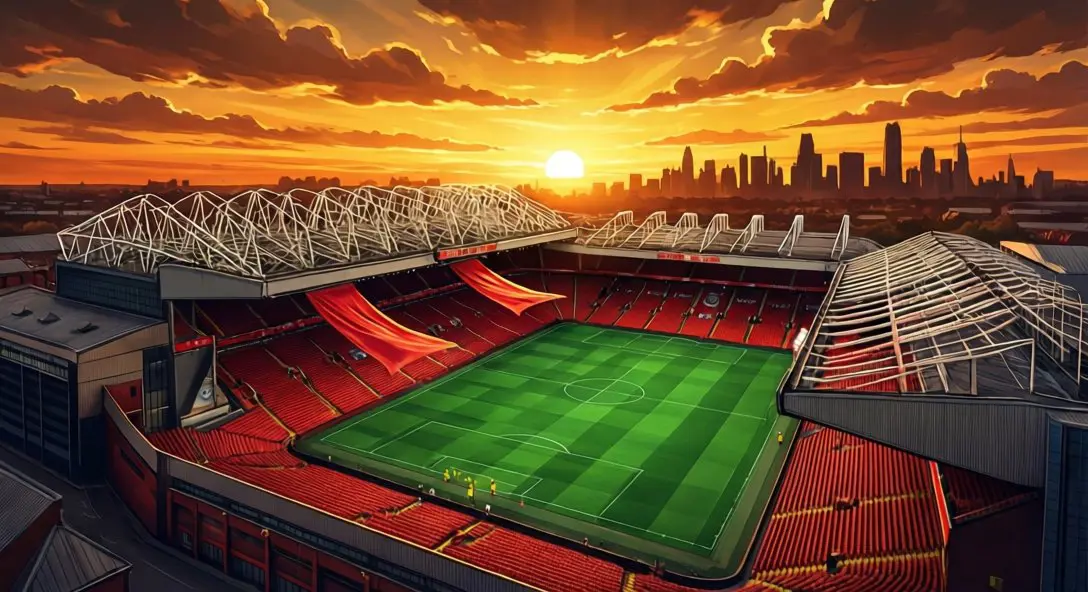
Aerial view of Old Trafford stadium at sunset with dramatic lighting
Club History

Manchester United History: The Theatre of Dreams and English Football's Most Iconic Club

Jump to section

Introduction

Manchester United isn't just a football club. It's a global phenomenon, a commercial powerhouse, and for millions of fans, something closer to a religion. The numbers speak for themselves: 20 English league titles, 12 FA Cups, 3 European Cups. But strip away the silverware and you'll find something more compelling - a story of survival, reinvention, and an almost stubborn refusal to accept defeat.

Old Trafford has seen it all. The "Theatre of Dreams" - a name Bobby Charlton gave it that stuck - has witnessed tragedy and triumph in equal measure. The Munich Air Disaster of 1958 could have killed the club. Instead, it forged United's identity. Sir Alex Ferguson's 26-year reign didn't just bring trophies; it changed how people think about football management. And through it all, one thread connects every era: the academy. United give young players a chance. They always have.

This is how it happened.
Manchester United Origins: From Railway Tracks to the Theatre of Dreams

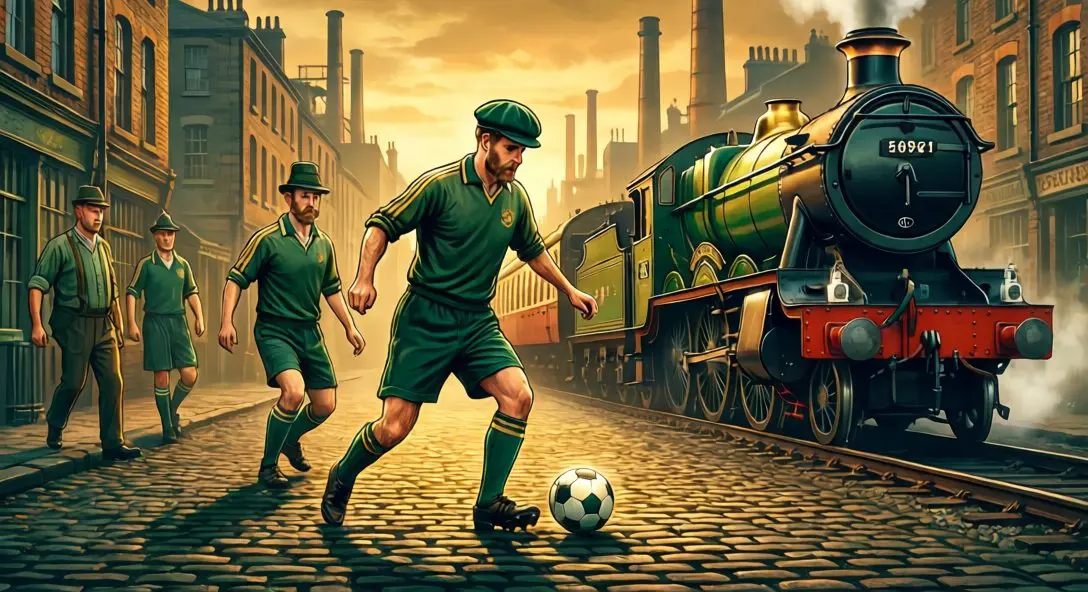
Back in 1878, nobody could have predicted what Newton Heath LYR Football Club would become. The team was formed by workers from the Carriage and Wagon department of the Lancashire and Yorkshire Railway - just local lads kicking a ball around after shifts. They wore green and gold. They played on a rough pitch in Newton Heath. People called them "The Heathens" because of where they played, not how they behaved.

For more than 20 years, Newton Heath scraped by in the lower divisions. By 1902, the debts had piled up to the point where bankruptcy looked certain. Then John Henry Davies, a local brewery owner, stepped in with the money needed to save the club. On April 26, 1902, Manchester United was born.

Things moved quickly after that. United won their first league title in 1907-08. Two years later, they moved into Old Trafford. Architect Archibald Leitch designed a stadium that could hold 80,000 people, complete with the largest cantilever roof in Europe. Manchester United finally had a home that matched their ambitions.

Victorian railway workers playing early football in industrial Manchester
Newton Heath LYR Football Club, founded in 1878 by railway workers

The Busby Babes and the Munich Air Disaster

You can't talk about Manchester United without talking about February 6, 1958. But first, you need to know what the world lost that day.

Matt Busby took over as manager in 1945 with an idea that seems obvious now but was revolutionary then: build through youth. Don't just buy players. Develop them. The "Busby Babes," as journalist Tom Jackson called them in 1951, played with a freedom and flair that captured the imagination. They won two league titles in the 1950s. Europe looked like the next frontier.

Then came Munich.

The team was flying home from a European Cup tie in Belgrade. The plane stopped to refuel at Munich-Riem Airport. During takeoff, it crashed. Twenty-three people died. Eight Manchester United players: Roger Byrne, Eddie Colman, Mark Jones, Duncan Edwards, Liam Whelan, Tommy Taylor, David Pegg, and Geoff Bent. Jackie Blanchflower and Johnny Berry survived but never played again. Busby himself was given last rites twice. He survived.

Duncan Edwards was 21 when he died, 15 days after the crash. People who saw him play still argue he was the best English player ever. That's the measure of what Munich took from the game.

Busby could have walked away. Instead, he rebuilt. From the wreckage emerged a new team built around Bobby Charlton, George Best, and Denis Law - the "Holy Trinity." Ten years after Munich, in 1968, United became the first English club to win the European Cup, beating Benfica 4-1 at Wembley. The victory meant more than football. It was proof that the club had survived.

On the Munich Air Disaster

The tragedy is so much part of the club's history that it's impossible to ignore. The thing that comes out of it all is the courage the club showed in recovering from it.

Sir Alex Ferguson
ℹ️

Sir Bobby Charlton on Duncan Edwards

He was the only player that made me feel inferior.

Manchester United Legends: The Holy Trinity

Walk outside Old Trafford and you'll see a statue of three men. Bobby Charlton, George Best, and Denis Law. The Holy Trinity. They defined United's recovery from Munich and set the standard for everything that came after.

Sir Bobby Charlton survived Munich and went on to score 249 goals for the club - a record that stood until Wayne Rooney broke it in 2017. He named Old Trafford the "Theatre of Dreams." He became what United represented: class, dignity, and an unwavering commitment to attacking football. Knighted in 1994, he remained a presence at Old Trafford until his death in 2023.

George Best was something different entirely. Before Beckham, before Ronaldo, there was Best. His dribbling could make defenders look like they were standing in mud. His looks made him a tabloid obsession. They called him "El Beatle" because his popularity rivaled the band. He won the Ballon d'Or in 1968. His 179 goals in 470 appearances came with a style that nobody has quite replicated since. Many consider him among the greatest footballers of all time.

Denis Law, known to supporters as "The King," scored 237 goals in 404 appearances. He remains the only Scottish player to win the Ballon d'Or, picking up the award in 1964. Together, these three didn't just win trophies. They turned a club haunted by tragedy into champions of Europe.

Sir Alex Ferguson Era: 26 Years of Unprecedented Success

When Alex Ferguson arrived from Aberdeen on November 6, 1986, Manchester United hadn't won the league in 19 years. The club was going nowhere. The early results weren't great either. By 1990, there were rumors he was one bad result away from getting sacked. Then Mark Robins scored in an FA Cup third-round replay against Nottingham Forest. Ferguson won his first trophy that season. The rest is history.

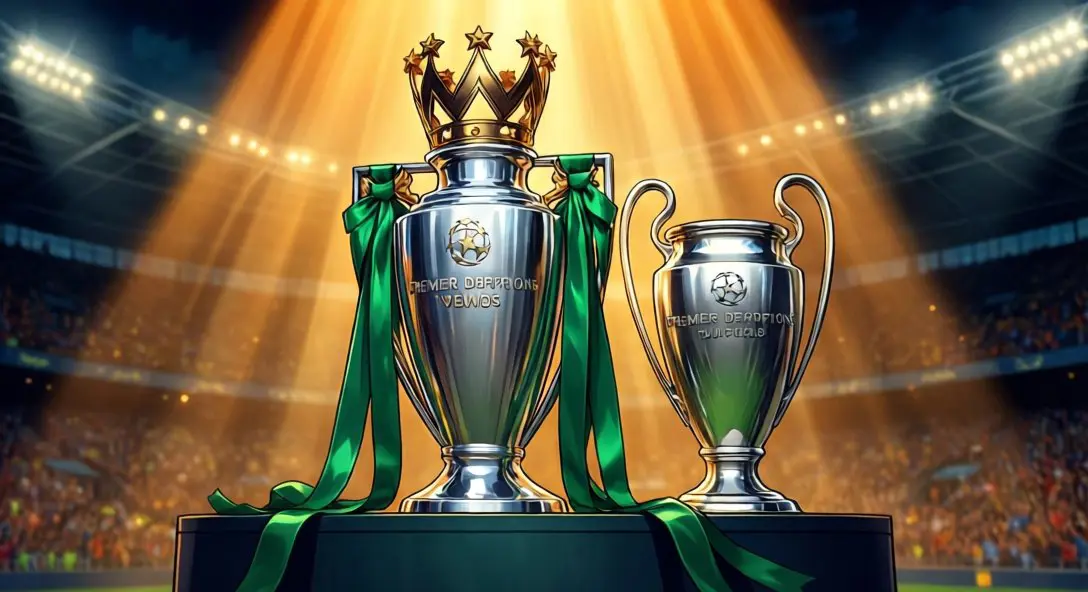
Over the next 26 years, Ferguson won 38 major trophies at United. Thirteen Premier League titles. Five FA Cups. Four League Cups. Two Champions Leagues. The numbers are staggering, but they don't tell the whole story.

The peak came in 1998-99. United did what no English club had done before: they won the treble - Premier League, FA Cup, and Champions League in the same season. The Champions League final against Bayern Munich at Camp Nou on May 26, 1999, remains one of the most absurd sporting moments ever. United were 1-0 down going into stoppage time. Three minutes later, they'd scored twice - through Teddy Sheringham and Ole Gunnar Solskjaer - and won the whole thing. Ferguson was knighted shortly after. He retired in 2013, leaving behind a record that may never be matched.

Premier League and Champions League trophies in dramatic spotlight
38 major trophies under Sir Alex Ferguson, including 13 Premier League titles and 2 Champions Leagues

The Class of '92: Homegrown Greatness and Youth Development

Ferguson's commitment to young players might be his greatest legacy. The "Class of '92" proves it.

David Beckham, Nicky Butt, Ryan Giggs, Gary Neville, Phil Neville, and Paul Scholes all came through United's academy. They won the FA Youth Cup together in 1992. Then they won multiple Premier League titles and the 1999 Champions League as first-team players. Giggs made 963 appearances for the club - a record. Scholes became one of the finest midfielders of his generation. Neville captained the side. Beckham became a global icon.

This wasn't a one-off. United have had a homegrown player in every matchday squad since October 1937 - over 88 years. Marcus Rashford is just the latest academy graduate to establish himself in the first team.

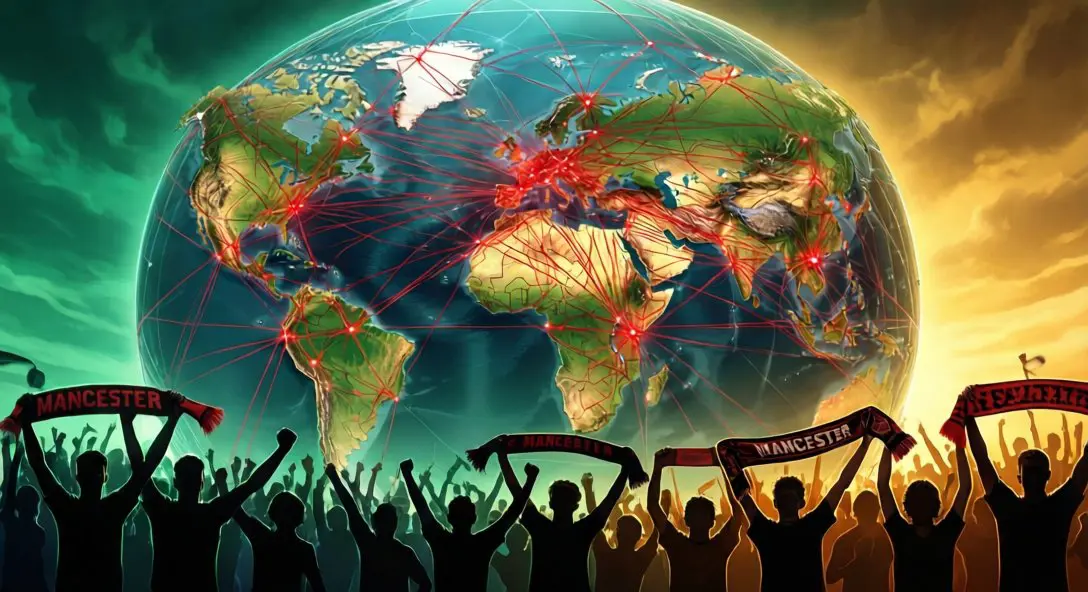
Global Manchester United supporters connected across the world map
1.1 billion fans worldwide - from Manchester to Melbourne, the Red Devils are everywhere

Old Trafford Stadium: The Theatre of Dreams

Bobby Charlton named it, and nobody has come up with a better description since. Old Trafford opened on February 19, 1910. It's still the largest club football stadium in the United Kingdom, holding 74,244 people. The record attendance - 76,962 - was set in 1939 for an FA Cup semi-final.

Each stand has its own story. The Sir Alex Ferguson Stand (North) is the biggest. The Sir Bobby Charlton Stand (South) can't be expanded because of a railway line behind it - a limitation that's existed since 1974. The East Stand houses the Munich Memorial. The West Stand, known as "The Stretford End," is where the noise comes from. That's where the hardcore fans stand.

Old Trafford has survived plenty. German bombing during World War II forced United to share Manchester City's Maine Road from 1941 to 1949. The stadium has been renovated multiple times since. Now there's talk about whether to renovate again or build something new. Either way, the Theatre of Dreams keeps hosting the games people remember.

The Red Devils: A Nickname Born from Resilience

The "Red Devils" nickname has an unusual origin story. After Munich, Busby wanted something tougher than "Busby Babes." He found it in an unlikely place: Salford rugby club. During a 1934 tour of France, French journalists had called the Salford team "Les Diables Rouges" - The Red Devils.

Busby liked it. He adopted the nickname in the early 1960s. It worked on two levels: it projected strength, and it nodded to the club's original "Heathens" moniker. The Red Devil holding a trident became part of the club crest in 1973. "Fred the Red" has been the mascot since 1994.

Manchester United Rivalries That Define the Club

Liverpool: The Ultimate Derby

United against Liverpool isn't just a football rivalry. It's two industrial cities that have been competing for centuries - for shipping routes, for commercial dominance, for bragging rights. The trophy count tells the story: 20 league titles each (as of 2025), though Liverpool leads 6-3 in European Cups. When these two meet, the world watches.

Manchester City: The Noisy Neighbors Get Loud

For most of history, City existed in United's shadow. Then 2008 happened. The Abu Dhabi United Group bought City, and everything changed. Since then, City have won 17 domestic trophies. The Manchester Derby has become one of the biggest games in world football. When Carlos Tevez swapped United for City in 2009, the rivalry got personal.

Leeds United: Bad Blood from the War of the Roses

The historic tension between Lancashire and Yorkshire provides the backdrop here. The 1965 FA Cup semi-final between United and Leeds ended with a pitch invasion after Leeds scored a late winner. It's been spicy ever since. Transfers like Eric Cantona, Rio Ferdinand, and Alan Smith moving from Leeds to United added fuel to the fire. Leeds spent 16 years outside the Premier League (2004-2020), which cooled things down temporarily. But the animosity hasn't gone anywhere.

Arsenal: The Title Rivals

Late 1990s, early 2000s - this was when United and Arsenal fought for Premier League supremacy. Ferguson versus Wenger produced some classic encounters. Multiple "Battle of Old Trafford" fixtures earned that name for a reason. The football was good. The tempers were better.

Modern Manchester United: Searching for Identity

Since Ferguson retired in 2013, United have been searching for what they used to be. Managers have come and gone. The 2025-26 season saw Ruben Amorim sacked after just 14 months - the payout cost around 15.9 million GBP.

The ownership situation complicates things. The Glazer family has controlled the club since their leveraged takeover in 2005, which plenty of fans have never accepted. Sir Jim Ratcliffe, the British billionaire and United supporter, bought about 28% of the club in 2023 and now runs football operations. Fans still protest against the Glazers. Talk of a full sale never quite goes away.

Despite the chaos, the club posted an operating profit of almost 33 million GBP for the first half of 2025-26. Commercially, United remains a machine - the first football club valued at over $3 billion, consistently ranking among the world's most valuable sports teams.

Global Fanbase: A Billion Manchester United Fans Worldwide

United's support stretches far beyond Manchester. An estimated 1.1 billion people worldwide follow the club. Asia Pacific accounts for 325 million of those. The Middle East and Africa add another 173 million. On Instagram, United have over 29.5 million followers - more than any other Premier League club.

This global appeal didn't happen by accident. United have always produced players people want to watch. George Best became football's first celebrity superstar. David Beckham turned himself into a global brand. Cristiano Ronaldo developed from a tricky winger into the world's best player during his time at Old Trafford.

The number 7 shirt carries its own mythology. Best wore it. So did Bryan Robson, Eric Cantona, Beckham, and Ronaldo. When a player pulls on that shirt, they're following a tradition of flair and excellence. Alongside rivals like Chelsea FC, United remains one of the most globally recognized brands in football.

Manchester United Legacy: A Club Written in Courage

Resilience. That's the thread running through everything United. Financial collapse in 1902. Munich in 1958. The post-Ferguson years. Each time, the club found a way to rebuild.

Every February 6, a memorial service at Old Trafford ensures the Munich victims are remembered. The Munich Tunnel and the memorial plaque keep their names visible. "The Flowers of Manchester," the folk song about the crash, still gets sung.

The academy keeps producing players. Over 900 graduates since 1931. That commitment to youth - started by Busby, continued by Ferguson - remains a point of pride.

Old Trafford still fills up every fortnight. Seventy-four thousand people singing "Glory Glory Man United," just as they have since the 1980s. The Theatre of Dreams keeps hosting the drama.

On United's Legacy

Manchester United's history is incredible. What Sir Alex Ferguson did for 26 years is something that will never be repeated.

Pep Guardiola

The Road Ahead for Manchester United

What happens next? Should Old Trafford be renovated or replaced? Will the Glazers ever sell? Can United find the managerial stability they need to compete consistently at the highest level again?

Nobody knows for certain. What's clear is that United will remain one of football's most compelling stories. The history, the global support, the financial muscle, the academy - few clubs have that combination.

From Newton Heath to the Theatre of Dreams. From the Busby Babes to the Class of '92. From Munich's devastation to Barcelona's celebration in 1999. Manchester United have written their own legends.

The next chapter is waiting to be written.

Professional headshot of Marcus Worthington, Senior Football Editor & Analyst

Marcus Worthington

Senior Football Editor & Analyst

Marcus Worthington is an experienced sports analyst and editor with over 12 years in sports journalism. Specializing in football tactics, league analysis, and long-form feature writing, Marcus provides in-depth coverage of Premier League, La Liga, and European competitions. His expertise extends to live score commentary and match result analysis, where his detailed understanding of game dynamics helps readers understand the story behind the scores. Marcus is known for his tactical breakdowns and ability to identify emerging trends in team performances.