Betting Coups

The Greatest Betting Coups in History

A ring-in at Cartmel, a hijacked phone box at Bellewstown, Frankie's seven at Ascot and Leicester at 5000/1: the stories behind betting's most famous days, and what each one teaches you today.

The Greatest Betting Coups in History
On this page

When the punters won big

Every bookmaker has a day they'd rather forget, and the greatest betting coups in history are made of exactly those days. Some were plotted for months by men with sealed envelopes and a phone box to guard. One was cooked up by a crooked syndicate and finished at Preston Crown Court. Another wasn't anyone's plan at all: just an Italian jockey on a September afternoon and a country full of punters who'd backed him blind.

The winners did more than pick the right horse or team. They found a crack in the way prices were made. Sometimes it was a slow phone line, sometimes a starting price set by a ring that never saw the money, and once it was a market that simply refused to believe a mid-table club could keep on winning.

Here are six of the best: Gay Future, Vincent O'Brien's 1944 double, Yellow Sam, Barney Curley's 2010 four-timer, Dettori's Magnificent Seven and Leicester City. Each one comes with a lesson that still holds the next time you open a betting app.

Gay Future: the coup that ended in court

Bank holiday Monday, 26 August 1974, at Cartmel, a small and remote racecourse. The plot belonged to Tony Murphy, a millionaire Cork builder with a gold Rolls-Royce, and trainer Tony Collins, a Troon-based permit-holder and stockbroker. The papers called the gang the "Cork Mafia", and its members even included a Garda superintendent (he was later cleared).

The ring-in

This was a substitution, pure and simple. A much poorer horse sat in Collins's yard pretending to be Gay Future, so anyone who came to check on him saw nothing worth a bet. The real Gay Future was being readied in Edward O'Grady's yard in County Tipperary, and the two were swapped at the roadside before the race. The rules said a horse had to be with a trainer for 28 days before running for him. On paper, that box was ticked.

The bets

On race morning the money went down in betting shops across London: singles, plus £10 and £15 doubles and trebles tying Gay Future to two other Collins entries at Southwell and Plumpton. Those two were never meant to run. Once they were declared non-runners, every multiple collapsed into a single on Gay Future at starting price. The bookmakers saw a heap of harmless-looking multiples. They didn't see a gamble on one horse.

Cartmel did the rest. It had one public phone line and no Extel "blower" link to the off-course firms, and that phone was kept busy. Ladbrokes sent a motorbike rider from Manchester with cash to hammer the price on course. He turned up after the race. A late jockey change put top Irish amateur Tim Jones in the saddle instead of 7lb claimer Jimmy McNeill, and Gay Future won by 15 lengths at 10/1.

The unravelling

The bookmakers refused to pay until there'd been an inquiry. That evening a Sporting Life reporter rang Collins's yard, and a stable worker told him the two "non-runners" had never left the place. In February 1976 Murphy and Collins were convicted of conspiracy to defraud at Preston Crown Court, fined, and warned off by the Jockey Club for ten years. The singles alone had stood to land more than £500,000 in today's money. The whole saga became the 1980 film Murphy's Stroke, with Pierce Brosnan as O'Grady.

The lesson: Gay Future marks the line in the sand. Clever staking and taking a price is fair game. Swapping horses is fraud, and it costs you everything.

Vintage-style scene of tiny Cartmel racecourse with a late motorbike courier and a horsebox at the roadside
Cartmel, 1974: a small course with one phone line and a big secret.

Vincent O'Brien's 400/1 double

"I learned the lesson, luckily for me pretty early in life, that betting on other people's horses wasn't exactly a paying game." — Vincent O'Brien

Ballydoyle was a long way off when a 27-year-old Vincent O'Brien was in his first year as a public trainer. In autumn 1944 he landed an ante-post double at 400/1: Drybob in the Irish Cambridgeshire and Good Days in the Irish Cesarewitch. Drybob dead-heated. Good Days won by a neck.

Both horses started at 20/1 on the day, so all the value came from getting on early, well before the market caught up. O'Brien cleared about £1,000, serious money in 1944. Owner Frank Vickerman won a good deal more and went on to buy Cottage Rake, who completed a Gold Cup hat-trick from 1948 to 1950. The two races were worth £584 in prize money between them. The bet was worth far more than the races.

The lesson: ante-post prices lock in value before the market corrects, and the people closest to a horse (its trainer above all) know things the market doesn't. That's why trainer and jockey statistics remain one of the sharpest tools in racing betting.

Barney Curley was born in Irvinestown, County Fermanagh, in 1939. Before he became racing's most famous gambler he'd been a Jesuit seminarian, owned a bookmaker's shop and a pub, and managed a pop group. In late June 1975 he pulled off the coup that made his name, at the little Irish track of Bellewstown.

The horse and the plan

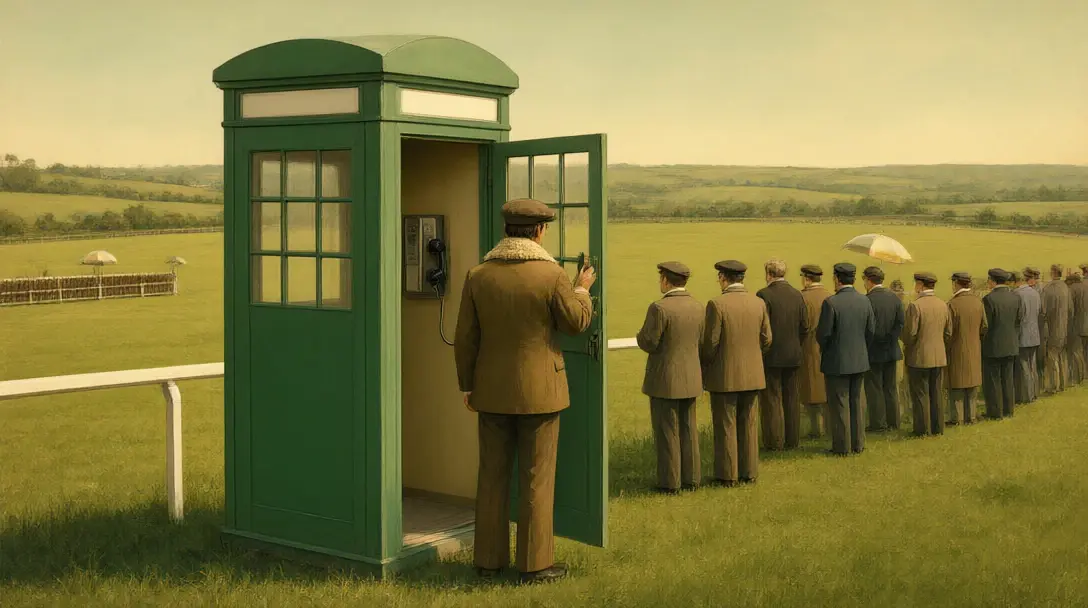
Yellow Sam, trained by Liam Brennan and named after Curley's father's racecourse nickname, had shown nothing in eight runs over hurdles. Curley entered him in a low-grade handicap hurdle full of mostly amateur riders, with Michael Furlong on board. The whole plan hung on one weakness: Bellewstown had almost no way of getting information out. Curley's friend Benny O'Hanlon took over the course's public phone box for around 25 to 30 minutes, supposedly calling a dying aunt in a hospital that didn't exist.

Meanwhile, dozens of helpers waited in betting shops across Ireland with sealed instructions. In the final minutes before the off they put on bets of £50 to £300 apiece. With no way for that money to reach the course, the on-course bookmakers never saw the gamble coming, and Yellow Sam went off at 20/1.

The payout

Curley's stake was just over £15,000, every penny of his savings. Yellow Sam won by two and a half lengths and Curley collected about £300,000, a fortune in 1975. He reckoned the horse would have been nearer 2/1 if the money had reached the ring. None of it broke any rules, so the bookmakers had to pay in full. They did it in single notes that filled 108 bags, then tightened their rules on big late bets.

The lesson: off-course bets were settled at starting price, and the starting price was set by the ring on course. Cut the link between the two and you got a price the market never really agreed to. Exchanges and instant price feeds have shut that door for good, but the principle lives on: the price you take matters as much as the result.

A man seen from behind using a green public phone box at a rural Irish racecourse while racegoers queue behind him
Bellewstown, 1975: one phone box, and the price nobody could move.

Curley's 2010 four-horse plot

"You get what is, in theory, a 10-1 shot of losing millions and millions of pounds. ... The prices are locked in and all you can do is sit and hope they get beaten." — James Knight, Coral odds compiler

Thirty-five years after Bellewstown, the old master proved he still had it, updated for the account era. On Monday 10 May 2010 four horses ran at three different tracks, tied together in trebles and accumulators. The bets went through "slow-burning" accounts that had spent months placing routine, recreational-looking bets, so no alarm bells rang when the real money went down.

Horse Track Morning price Result
Agapanthus Brighton 25/1 Won at 2/1
Savaronola Wolverhampton 8/1 Won at 11/10
Sommersturm Wolverhampton - Beaten at 1/3
Jeu De Roseau Towcester - Won at 6/4

Curley trained three of the four. And the one that got beaten? Sommersturm, the 1/3 banker. The treble still landed, with profit estimates running into several million pounds, and had Sommersturm obliged the takeout was put at around £20m. Curley said "May 10 was bigger" than Yellow Sam, adding: "No-one will win as much on horseracing for another 100 years."

He still wasn't finished. On 22 January 2014 four more Curley-linked horses won. Coral admitted a six-figure payout and put the industry hit at around £2 million, while Paddy Power reported losses of more than €1 million. Curley died on 23 May 2021, aged 81.

The lesson: modern coups are about locking in prices across lots of accounts before the market reacts. Bookmakers know this, which is why winning or unusual accounts get restricted quickly. If you take your betting seriously, it's worth reading up on how and why bookmakers limit winning players.

Dettori's Magnificent Seven

"Frankie is Mr Racing to some people and they'll back him blind whether he's on Pegasus or the pack horse." — Mike Dillon, Ladbrokes

Saturday 28 September 1996, the Festival of British Racing at Ascot. Seven races, the Queen Elizabeth II Stakes among them, and Frankie Dettori won the lot. Only two jockeys had swept a British card before, Gordon Richards and Alec Russell, and both did it on six-race programmes.

Race Winner SP
Cumberland Lodge Wall Street 2/1 fav
Diadem Diffident 12/1
Queen Elizabeth II Mark Of Esteem 100/30
Festival Handicap (26 ran) Decorated Hero 7/1
Rosemary Fatefully 7/4
Blue Seal Lochangel 5/4
Gordon Carter Handicap Fujiyama Crest 2/1

Nobody planned this one. It was a coup by the public, and quite possibly the most expensive of them all. Multiply the seven SPs together and you can see why:

Decimal SPs: 3.00 x 13.00 x 4.333 x 8.00 x 2.75 x 2.25 x 3.00
           ≈ 25,096 returned per £1 staked

Accumulator odds ≈ 25,095/1

How the price moved on the last

By the final race, punters up and down Britain had Dettori multiples still running. Bookmakers cover themselves by sending money to the course to shorten the SP, and Fujiyama Crest went from 12/1 in the morning to a 2/1 favourite. That was liability management, not form. Ring bookmaker Barry Dennis laid the horse to lose £23,000, when his previous worst day in 30 years had been £5,000. Fujiyama Crest held on by a neck.

Who got paid

Darren Yates, a joiner, had a 50p Super Heinz and a £1 each-way accumulator. He'd laid out £67.58 and won £550,823.54. Mary Bolton from Somerset had a £5 each-way accumulator at Ladbrokes in Dover Street, Mayfair, and was due £900,000, against a Ladbrokes maximum payout of £500,000. A cleaner with 50p singles on all seven collected less than £20, when a 50p accumulator on top would have paid her over £12,000. Fred Done flashed a message across his betting-shop screens: "Reward, dead or alive: good-looking Italian kid, last seen in Ascot area." The total cost to the industry was put at as much as £40 million.

The lesson: accumulators compound, both ways. Bookmakers love them because seven out of seven almost never happens, and our accumulator strategy guide explains why that maths usually suits the layer. Ascot also shows the gap between early prices and SP: the cleaner's acca would have been worth roughly ten times more at morning odds.

Leicester City at 5000/1

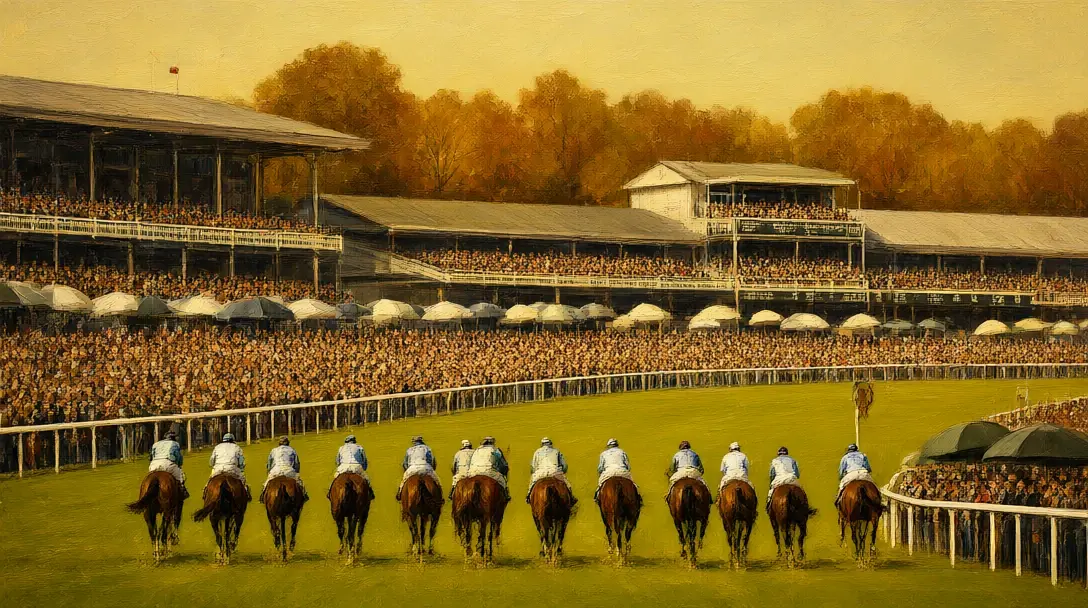
Leicester City finished 14th in 2014/15. Twelve months later, on 2 May 2016, they were confirmed Premier League champions when Tottenham drew at Stamford Bridge. Claudio Ranieri's side, driven by Jamie Vardy's 24 league goals, won the first top-flight title in the club's history from a pre-season price of 5000/1.

The 5000/1 grabbed the headlines, but the money tells a different story. Only a handful of super-fans took the full price. Carpenter Leigh Herbert was one of them, and he netted £20,000. The real damage came at 100/1 to 500/1, as punters piled in while Leicester kept winning and the market kept waiting for them to fade. For context, Tottenham were 150/1 and West Ham 3,000/1 before a ball was kicked.

Coral's Simon Clare put his firm's payout at about £2m: "we've done £2m, so across the industry, it's possibly £20m." Ladbrokes' Alex Donohue said "£3m is a record net payout for a title winner, but we did well out of Leicester upsetting the odds." That second half matters. Week after week the big clubs dropped points, the accumulators loaded on them went down, and the bookmakers clawed plenty back on the weekend coupons.

Clare's verdict on where it went wrong is the best line of the lot: "They were like the bookies, thinking 'it won't last' in mid-September, but that is where the damage was done."

The lesson: 5000/1 was never the right price, but nobody could know by how much in August. The smart money wasn't the lottery ticket. It was backing Leicester at 100/1 and bigger once the form was real and the market still didn't believe it. That's the favourite-longshot bias turned on its head: most longshots are too short, but a genuinely live outsider can be miles too big.

Famous betting coups at a glance

Date Coup Price How it was won
Autumn 1944 O'Brien's Drybob / Good Days double 400/1 ante-post Trainer knowledge, early price
26 Aug 1974 Gay Future, Cartmel 10/1 Ring-in and fraud (convicted Feb 1976)
Late Jun 1975 Yellow Sam, Bellewstown 20/1 Late off-course money, phone blocked
28 Sep 1996 Dettori's Magnificent Seven, Ascot 25,095/1 Public money on one jockey
10 May 2010 Curley's four-horse plot 3 of 4 won Prices locked via quiet accounts
22 Jan 2014 Four more Curley-linked winners - Same method, industry hit ~£2m
2 May 2016 Leicester City champions 5000/1 A market that wouldn't believe

What the greatest betting coups teach modern bettors

Take away the phone boxes and motorbike couriers and the same few ideas run through every one of these stories.

Information beats everything

Gay Future, Yellow Sam and the 2010 plot all got their money down before the market could react. In 1975 that meant a blocked phone line. Exchanges, live price feeds and in-play suspensions make that sort of blackout impossible now, but the edge works the same way: you profit when you know or judge something before the price reflects it.

Price is the bet

O'Brien's 400/1 double came in on horses that started at 20/1. Fujiyama Crest was 12/1 in the morning and 2/1 at the off. Leicester's 100/1-plus backers did the real damage to the bookmakers, while anyone who waited until spring got a fraction of that price. The result is only half of a winning bet. The price you secure is the other half.

Stay on the right side of the line

Yellow Sam and the 2010 four-timer were legal: clever staking and smart price-taking, nothing more. Gay Future was fraud, and it ended in convictions and ten-year bans. Every legitimate edge in betting comes from judgement and timing. None of it comes from bending the rules.

Winning gets noticed

Curley's 2010 team spent months making their accounts look ordinary because they knew what happens to accounts that win. Nothing has changed there, so spreading your betting across bookmakers and keeping records is just good housekeeping.

Our betting angles from betting's greatest days

  • Take early prices when you have a real opinion. O'Brien and Leicester's 100/1 backers both show that the value sits before the market wakes up, not on the day.
  • Know when SP works against you. On big public days, with a famous jockey riding or a popular favourite running, the money floods in and shortens the SP. Taking a price early keeps you out of that squeeze.
  • Treat accumulators as entertainment, not a plan. Dettori's seven was 25,095/1 for a reason. Have a small-stakes punt by all means, but the maths sides with the bookmaker almost every time.
  • Full-cover bets soften the blow. Darren Yates's Super Heinz is the famous example: cover the combinations and a partial hit still pays. Our guide to Lucky 15, Yankee and Trixie full-cover bets shows what each one costs and returns.
  • Hunt for outsiders the market refuses to rate. Most longshots are poor value, but when the form is genuinely there and the price hasn't budged, that's where upsets pay best.
  • Never confuse a coup with a fix. The legal coups were won with patience and nerve. The illegal one got its plotters convicted and warned off for ten years.

Curley put his entire savings on Yellow Sam. You are not Barney Curley, so set your stakes before you start and stick to them.

18+. Please gamble responsibly. For free, confidential support visit BeGambleAware.org.

Topics