Half Time Full Time

Half-Time/Full-Time Betting Explained: Odds, Maths and When the Market Is Worth It

Nine outcomes, two halves and one ticket that has to be right twice. Here's how HT/FT is priced, what the goal-timing data says and where the draw/win angle earns its place.

Half-Time/Full-Time Betting Explained: Odds, Maths and When the Market Is Worth It
On this page

Two halves, one ticket

You know the feeling. Your side trudges in at the break all square, the favourites have looked flat for 45 minutes, and then three minutes after the restart the whole thing cracks open. Half-time/full-time betting (HT/FT for short) is built around exactly that story: what the score looks like at the interval, and how the match finishes.

It's a fixture on almost every football coupon, and one of the most misunderstood markets on it. The prices look generous next to a plain match result, which is what draws people in. The catch is that you have to be right twice, and the bookmaker charges you for the privilege of cutting one result into two pieces.

So it's worth knowing how the odds are built, where the margin sits and what the goal-timing numbers say before you put a penny on it. Get those right and HT/FT has one genuinely useful angle. Get them wrong and it's a tax on optimism. If specials are new to you, our football bet types guide is a good place to start.

The nine HT/FT outcomes at a glance

The market asks two questions. Who's ahead at half-time: the home side, the away side or nobody? And who's ahead at full-time, meaning 90 minutes plus stoppage time? Both legs have to land. Three half-time results times three full-time results gives you nine selections.

Bookmakers usually label them with team names, so a Liverpool v Everton market reads "Liverpool / Liverpool", "Draw / Everton" and so on. The shorthand uses 1 for home, X for the draw and 2 for away.

Selection Half-time Full-time What has to happen
1/1 Home leads Home wins Home side in front at the break and stays there
1/X Home leads Draw Home side pegged back to level
1/2 Home leads Away wins Away side turns it round
X/1 Level Home wins Home side breaks through after the interval
X/X Level Draw Level at both whistles
X/2 Level Away wins Away side wins it after the break
2/1 Away leads Home wins Home side turns it round
2/X Away leads Draw Away side pegged back to level
2/2 Away leads Away wins Away side in front at the break and stays there

Only the state of the game counts, not the scoreline. A 1-0 lead and a 3-0 lead at half-time are both "home leads", and 0-0 and 2-2 are both "level". That's the big difference between HT/FT and correct score, which we'll come back to later.

How bookmakers price half-time/full-time bets

Every HT/FT price is two probabilities multiplied together: the chance of the half-time result, and the chance of the full-time result given that half-time result. A home side leading at the break wins far more often than one trailing, so that second number swings wildly depending on the first.

Take a made-up but realistic fixture: a strong home favourite against a weak visiting side. Every number below is our own example, picked to show how the mechanics work.

Half-time result            Probability
Home leads                  0.40
Level                       0.45
Away leads                  0.15

Full-time, given half-time      Home win   Draw   Away win
Home leads at HT                0.85       0.10   0.05
Level at HT                     0.55       0.30   0.15
Away leads at HT                0.30       0.30   0.40

HT/FT probability = P(half-time result) x P(full-time result | half-time result)
Fair decimal odds = 1 / probability

1/1  0.40 x 0.85 = 0.340   -> 2.94
X/1  0.45 x 0.55 = 0.2475  -> 4.04
X/X  0.45 x 0.30 = 0.135   -> 7.41
X/2  0.45 x 0.15 = 0.0675  -> 14.8
2/2  0.15 x 0.40 = 0.060   -> 16.7
2/1  0.15 x 0.30 = 0.045   -> 22.2
2/X  0.15 x 0.30 = 0.045   -> 22.2
1/X  0.40 x 0.10 = 0.040   -> 25.0
1/2  0.40 x 0.05 = 0.020   -> 50.0

Two things leap out. 1/1 and X/1 between them carry almost the whole home-win chance: 0.34 plus 0.2475 makes 0.5875, out of a total home-win probability of 0.6325 (fair odds of about 1.58, roughly 4/7). And the turnarounds sit way out in double figures, which is exactly where you'll find them on a real coupon.

Look how close X/1 runs to 1/1, too. In a fixture like this, a favourite that's level at the break is still more likely than not to win. Hold that thought, because it's the seed of the draw/win angle.

Bookmaker wall board with a three by three grid of glowing blank panels, a pen and betting slip on the ledge
Nine outcomes, nine prices, and a margin baked into every one.

Where the margin hides

Fair odds are where the bookmaker starts, not the price you get. Every market carries a margin, also called the overround: add up the implied probabilities of every selection and the total comes out above 100%. Bookmakers build a fatter margin into nine-way markets like HT/FT than into the plain match result.

To see what that costs you, put a 15% margin on our nine-way book and a 5% margin on the match odds. The exact figures vary by bookmaker and fixture. The gap between them is what matters.

Implied probability = 1 / decimal odds
Offered price       = 1 / (fair probability x (1 + margin))

HT/FT book, 15% margin
1/1   1 / (0.340 x 1.15)  = 2.56
X/1   1 / (0.2475 x 1.15) = 3.51
2/1   1 / (0.045 x 1.15)  = 19.3

Match odds, 5% margin
Home  1 / (0.6325 x 1.05) = 1.51

Back 1/1 and X/1 together for the same return (dutching):
1/2.56 + 1/3.51 = 0.391 + 0.285 = 0.676  ->  combined price 1.48

Split the home win into 1/1 plus X/1 and you get 1.48, having thrown away the 2/1 slice along the way. The straight home win pays 1.51 and covers every route to victory. Same team, same result, worse price. That's the cost of chopping a bet into pieces, and it's why HT/FT only makes sense when you have a real view on how the match unfolds, not just who wins it. Our guide to bookmaker margin and fair odds shows you how to strip the overround out of any market.

First-half vs second-half goals: the second half is the bigger half

More goals come after the break than before it, in every English division and in all the big leagues in Europe.

That pattern has held for years. Daniel Finkelstein's Fink Tank analysis for The Times in 2009, covering four seasons from 2005/06, found 56% of goals arriving in the second half right across English football and Europe's major leagues. More recent counts land in the same spot: roughly 44% of goals in the first half, 56% in the second.

The English numbers barely move. Across the Premier League, Championship, League One and League Two from 2016/17 to 2020/21, there were 11,415 first-half goals and 14,354 second-half goals, a split of 44.3% to 55.7%.

Division (2016/17 to 2020/21) Second-half share of goals
Premier League 55.4%
Championship 56.6%
League One 55.4%
League Two 55.4%

The first-half share wobbles a little from season to season but stays well short of half. The Premier League had 476 first-half goals in 2018/19 (44.40% of the total) and 475 in 2019/20 (45.94%). Goals also bunch up just after the second-half kick-off and deep into second-half stoppage time, which our piece on why late goals are so common gets into.

For HT/FT, this is the single most important fact in the market. A cagey first half followed by a busier second is the normal shape of a football match, so a level score at the break is a waypoint, not a verdict. That's why X/1 and X/2 are serious selections rather than novelties. If you want to go deeper on timing, the minute betting markets guide breaks it down by goal window.

Tottenham v Man City: 2-0 down at half-time, 2-2 at full-time

“One minute at a time, one step at a time, one moment at a time, eat our way into the game. There is always an opportunity. That was the message.”

— Thomas Frank, Tottenham manager, on his half-time team talk
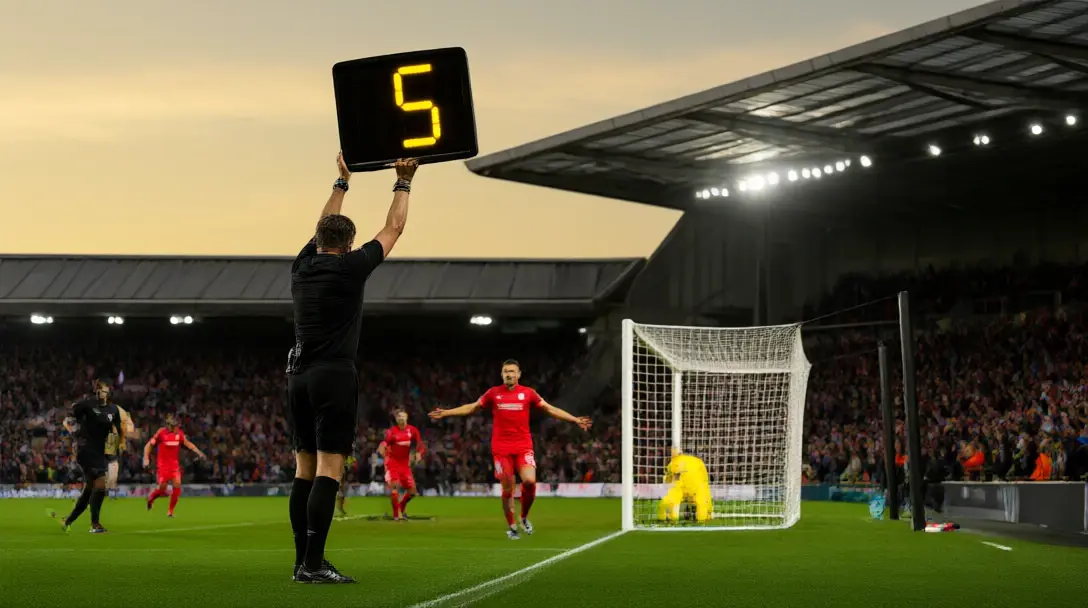
Stoppage-time board raised on the touchline as a striker celebrates a late goal under floodlights
The second half is where most goals arrive.

HT/FT turnarounds: rarer than they feel

Ask anyone for a memorable match and they'll describe a comeback. That's exactly the trap. Comebacks stick in the memory because they're unusual, and the 1/2 and 2/1 prices are long for good reason.

The best long-run measure is broader than half-time. In the 2015/16 Premier League season, teams fell behind at some point in a match 398 times and went on to win just 39 of those games, a rate of 9.79%. The following season it was 46 wins from 405, or 11.36%. So roughly one time in ten, a side that goes behind at any stage still wins. Trailing specifically at half-time, with only 45 minutes left to fix it, is a tougher spot again.

This season is bucking the trend

Early 2026/27 has been unusually kind to comebacks. After the first five Premier League matchweeks, home sides had won just 36% of matches, the lowest in Premier League history. There were 16 draws in the first 50 games, a 32% draw rate that's the highest of any Premier League season, and away teams won another 32%.

A team scored first in 45 of those 50 matches, yet only 29 of the first scorers went on to win. That 64.4% is the second-lowest in 14 years and the fourth-lowest in Premier League history. Bournemouth have been the poster club: they led in four of their first five matches, won none and dropped nine points from winning positions.

Fifty matches is a small sample and these numbers will drift back towards normal. Still, in a season where leads keep slipping, 1/X and 2/X (the "pegged back" selections) deserve more respect than usual.

1999 Champions League final: 1-0 down at half-time, 2-1 winners

“I can't believe it. I can't believe it. Football. Bloody hell.”

— Sir Alex Ferguson, Manchester United manager

The draw/win angle (X/1) for strong favourites

A heavy favourite that's level at the break is still more likely than not to win the match.

If one HT/FT selection has a proper case behind it, it's X/1 on a strong home favourite (or X/2 on a dominant away side). Everything above points this way. Plenty of matches are level at half-time, more goals come after the break, and good teams often wear opponents down rather than blowing them away early.

The classic mistake is the opposite: backing 1/1 on a big favourite because it "feels" like the natural result. In our worked example, 1/1 carries 34% and X/1 carries nearly 25%. That's a lot of probability parked in the draw/win slot, and it pays a much bigger price.

When X/1 makes sense

  • Patient, possession-heavy favourites. Sides that pin opponents back and grind them down tend to score later rather than earlier.
  • Underdogs who sit deep. A visiting side set up to defend can hold out for 45 minutes far more easily than for 90.
  • Second-half finishers. Some teams score a big share of their goals after the interval, so check their half-by-half record before you bet.
  • Strong benches. A favourite with match-changing substitutes has a second-half weapon the first half never sees.

When to leave it alone

Don't force it on favourites who start fast and score early, or in games where the underdog plays on the counter. Possession alone hasn't counted for much this season either: in the first five matchweeks, sides with at least 60% of the ball won only 8 of 22 matches. How a team plays matters more than how dominant it looks on paper.

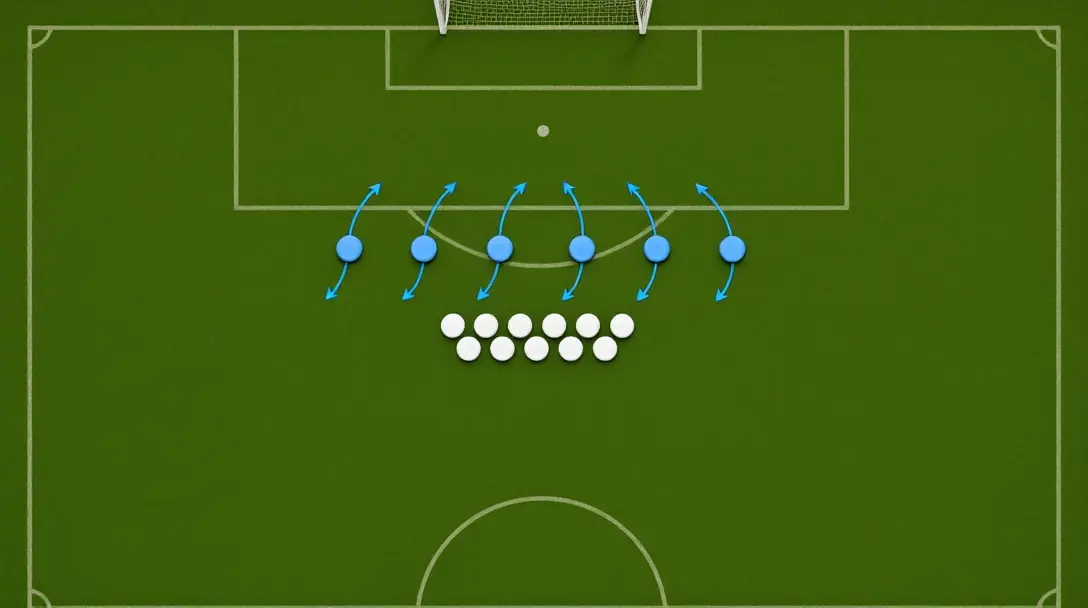
Top-down tactical view of sky blue attackers with arrows facing two tidy rows of white defenders in front of goal
A patient favourite against a deep block: the classic draw/win set-up.

HT/FT vs half-time result and correct score

HT/FT belongs to a family of related markets, and knowing the family helps you pick the right tool for the opinion you actually hold.

Half-time result

This is the first leg on its own: home, draw or away after 45 minutes. If your view is purely about the first half (a fast-starting favourite, say), the half-time result market gives you that without a second leg to worry about.

Correct score

Every HT/FT selection contains a bundle of correct scores. A 1/1 winner covers 1-0, 2-0, 2-1, 3-1 and plenty more. HT/FT is the coarser, shorter-priced cousin of correct score: you're calling the shape of the match, not the exact numbers. Our correct score betting guide covers the far end of that spectrum.

Bet builder variations

Several UK bookmakers offer HT/FT inside their bet builders, alongside specials such as HT/FT plus winning margin, HT/FT plus a player to score, and HT/FT correct score, where you name the exact half-time and full-time scores (1-0 at the break, 3-1 at the end, for example). That last one is the high-risk, high-reward extreme. Every extra leg adds margin, so treat these as fun stakes rather than the backbone of a betting plan.

How to place a sensible HT/FT bet

HT/FT rewards a specific opinion about how a match will play out. Without one, you're paying extra margin for what's really a match-result bet. Here's how we'd go about it.

  1. Start with the match odds. Decide whether you fancy the favourite at all. If you don't like the straight home win, there's no reason to like 1/1 or X/1.
  2. Form a view on the first half. Does the favourite start fast or slow? Does the underdog sit in? Half-time league tables, which several stats sites publish to show each team's record at the interval, are your friend here.
  3. Turn prices into probabilities. Divide 1 by the decimal odds. If X/1 were 3.50 (5/2), the bookmaker would be implying about 28.6%. Ask yourself whether your own estimate is higher.
  4. Compare the split with the whole. Add up the implied chances of 1/1 and X/1 and check them against the straight home-win price. If the split looks expensive, back the match result instead.
  5. Know the settlement rules. HT/FT settles on the result after 90 minutes plus stoppage time. Rules on abandoned or postponed matches vary by bookmaker, so read your operator's terms.

In-play at the break

Once the half-time whistle goes, the first leg is settled and a pre-match HT/FT ticket becomes a straight three-way bet on the second half. At 0-0, every live ticket in the market is X/1, X/X or X/2. Some bookmakers pull HT/FT once the first half is over, so if you want the draw/win angle, take it before kick-off.

Keep stakes smaller than you would for match-result bets. Nine-way markets are high-variance: even a good X/1 pick loses far more often than it wins, so size your bets so a run of losers doesn't dent your bankroll.

Best bet to consider

X/1 on a strong home favourite facing a side that sits deep. It's the one HT/FT selection with the goal-timing data on its side, and it pays a much bigger price than 1/1 for a result that lands surprisingly often. Take it before kick-off and keep the stake smaller than your usual match-result bet.

Our betting angles for HT/FT

  • X/1 is the selection we like best. A strong favourite against a deep-lying side is the textbook draw/win spot, and the price is usually well above 1/1.
  • Skip 1/1 on short favourites unless they start fast. If you just want the favourite to win, the match odds give you the same team at a better overall price.
  • Leave the turnarounds to the dreamers. 1/2 and 2/1 pay big because they rarely land; roughly one team in ten wins after falling behind at any stage, and trailing at half-time is harder still.
  • Give 1/X and 2/X more respect this season. Leaders have kept letting games slip in 2026/27, and Bournemouth's run shows how quickly an early lead turns into dropped points.
  • Back X/X sparingly and only in tight, low-scoring fixtures. It needs the game level at both whistles, and the second half is the bigger half for goals.
  • Use team half-time records, not instinct. Who scores early, who scores late and who folds after the break should drive every HT/FT pick.

Keep stakes modest and consistent: HT/FT is a market for sharpening an opinion, not for chasing a big price.

Topics