The going is the state of the turf, and it can turn a race upside down. The official British scale runs from hard through firm, good to firm, good, good to soft and soft to heavy. Hard exists on paper, but in practice racing is abandoned on welfare grounds before it gets that far. You'll also see mixed descriptions such as "soft, heavy in places", and in Ireland "yielding" stands in for what Britain calls good to soft.
All-weather tracks have their own scale: fast, standard to fast, standard, standard to slow and slow.
Courses aim for good ground over jumps and good to firm on the Flat, and they can water to soften it. Jumpers cope with far wetter conditions than Flat horses, which is why Flat meetings get called off sooner after heavy rain.
Who decides, and when it changes
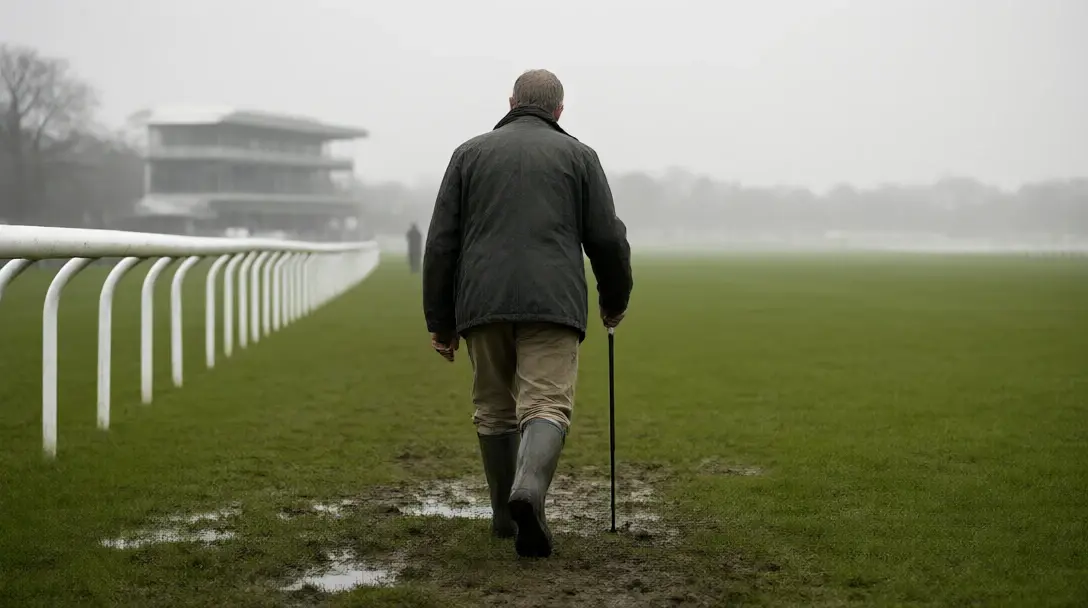
The going is first published with the entries five days before a race and updated again at declarations, 48 hours out. On raceday the clerk of the course walks the track early, from around 6am, and issues the official description, and it can still change race by race as riders report back.
Every British clerk is also required to take GoingStick readings. The stick reads on a scale of 0 (wettest) to 15 (firmest), averaging three readings at each of 30 spots around the track. Treat it as a companion to the clerk's description, not a replacement.
How going affects horses
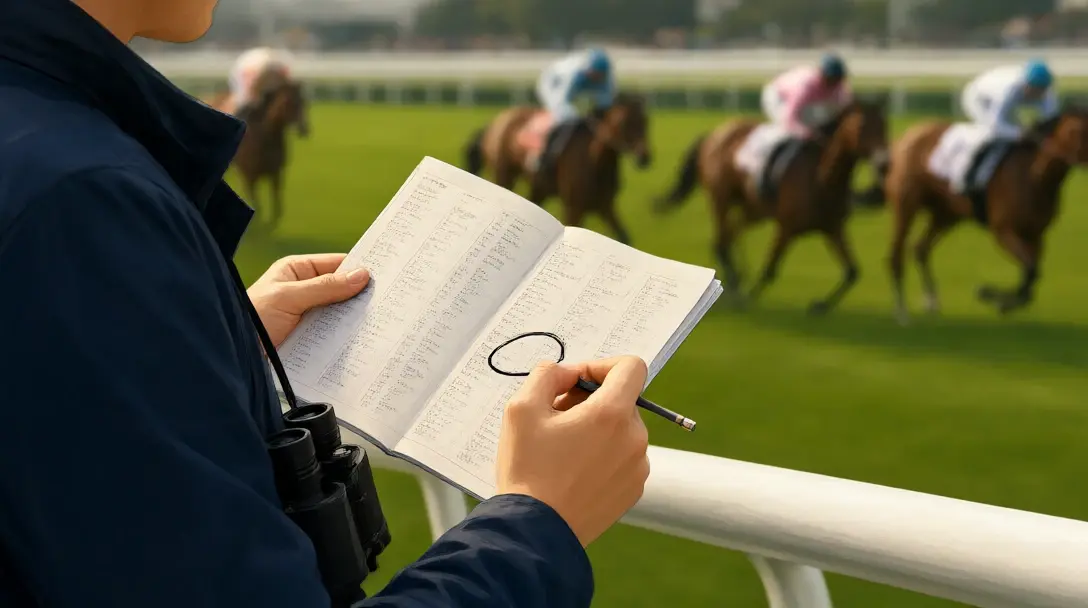
Horses have preferences, just like the rest of us. Some love it soft and testing; others need a quick surface to show their speed. Racing folk say a horse "acts on the going" when it handles the conditions. Check every runner's form on today's ground. On a wet day, a win on soft or heavy tells you far more than a win on good to firm. If a horse has never tried the conditions, its sire's record gives you a decent clue.