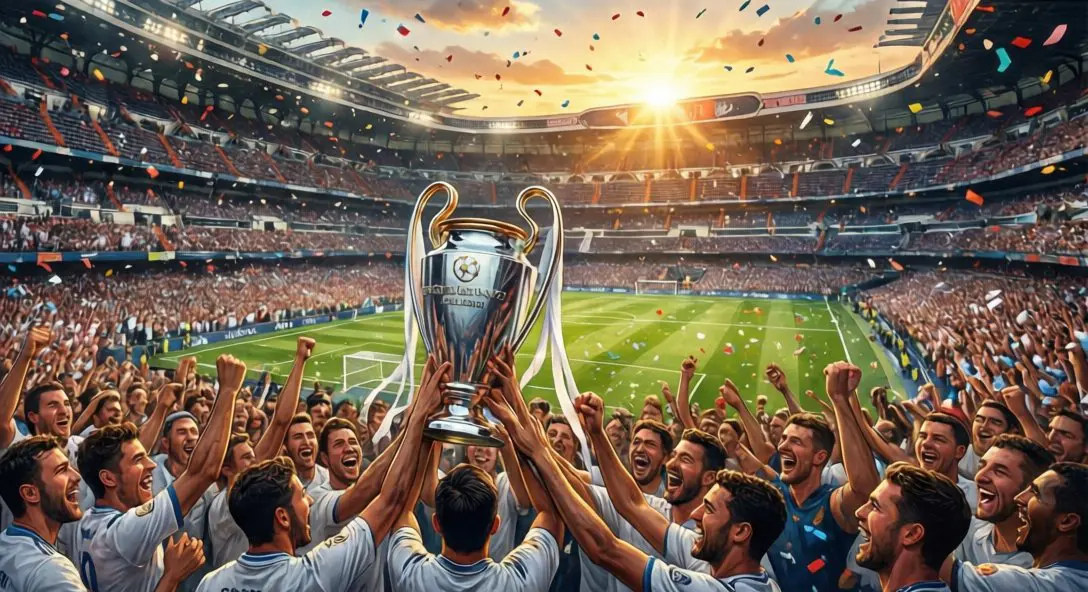
Santiago Bernabeu Stadium with Champions League trophy
Club History

Real Madrid: History, Champions League Titles & Legendary Players

Jump to section

Fifteen: A Number That Defines Greatness

Fifteen. That number hangs over world football like a royal decree, unmatched and seemingly untouchable. Real Madrid's fifteen Champions League titles represent not just dominance but a level of sustained excellence that defies logic in the modern era. While other clubs celebrate occasional European glory, Real Madrid treats the continent's most prestigious trophy as a family heirloom.

But Real Madrid is far more than silverware. This is a club that transformed from a local Madrid team into a global phenomenon, backed by 600 million social media followers and an estimated 450 to 600 million supporters worldwide. From the dusty pitches of early 20th century Spain to the state-of-the-art renovated Santiago Bernabeu, Real Madrid has written football's most compelling story of ambition.

Real Madrid History: From Humble Beginnings to Royal Status

The Real Madrid history story begins on March 6, 1902. A group of football enthusiasts led by Juan Padros and the Catalan brothers Juan and Carlos Padros founded Madrid Football Club. In those early days, football was still finding its footing in Spain. Nobody could have predicted this modest organization would become the most valuable sports club on the planet, worth an estimated $6.6 billion according to Forbes in 2024.

The club's first official match came just two months later, on May 13, 1902, against Barcelona. Even then, the rivalry that would captivate the world was taking shape. Real Madrid won their first Spanish Championship (now Copa del Rey) in 1905, establishing an early taste for success.

A pivotal moment came in 1920 when King Alfonso XIII granted the club the title "Real," meaning "Royal" in Spanish. The crown that still sits atop the club's crest today serves as a permanent reminder of this royal patronage. The white kit was chosen from the beginning, inspired by the English amateur team Corinthian FC, and has remained unchanged for over 120 years.

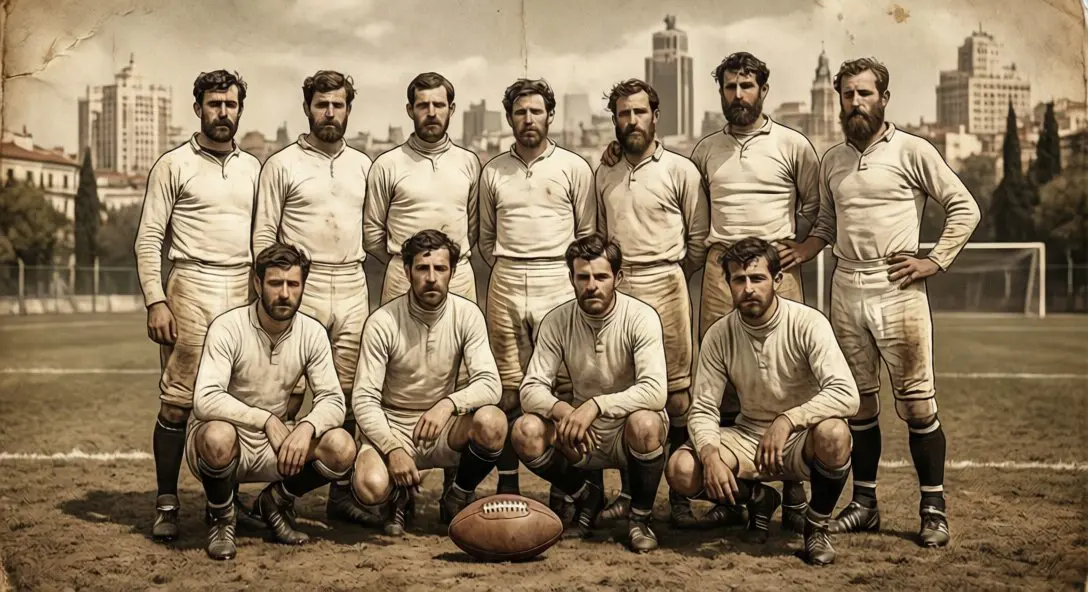
Early Real Madrid team from 1900s in vintage white kits
Real Madrid players from the early 1900s in their iconic white kits

Santiago Bernabeu and the Golden Age

The transformation from successful Spanish club to global powerhouse began with one man: Santiago Bernabeu. A former player who became club president in 1943, Bernabeu possessed a vision that extended far beyond Spanish football. He understood that for Real Madrid to become truly special, it needed to dominate Europe.

His first major project was building a new stadium. The Nuevo Estadio Chamartin opened on December 14, 1947, later renamed the Santiago Bernabeu in honor of the man whose ambition created it. But Bernabeu's most significant contribution came in 1953, when he signed Alfredo Di Stefano.

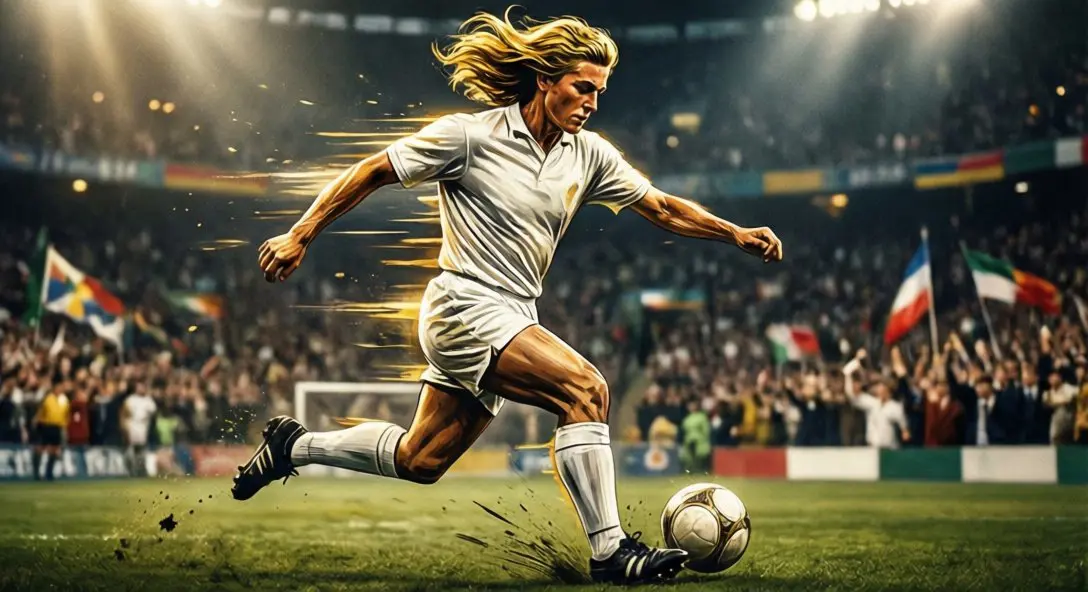
Alfredo Di Stefano the Blond Arrow in European Cup action
Alfredo Di Stefano, "The Blond Arrow," revolutionized Real Madrid with his all-action style

Real Madrid Players: The Blond Arrow Who Changed Everything

Alfredo Di Stefano didn't just join Real Madrid. He transformed it. Known as "La Saeta Rubia" (The Blond Arrow), the Argentine forward possessed an all-action style that revolutionized football. He wasn't simply a goalscorer. He was a complete footballer who defended, created, and finished with equal brilliance.

The statistics tell part of the story: 308 goals in 396 appearances, eight La Liga titles, and five consecutive European Cups. But Di Stefano's impact transcended numbers. He instilled a winning mentality that became encoded in Real Madrid's DNA. The club didn't just want to compete. It expected to win every single match.

Di Stefano remains the only player ever to receive the Super Ballon d'Or, awarded in 1989, recognizing him as the greatest player of the award's first three decades. His partnership with Ferenc Puskas, who scored 242 goals in 262 games, created one of the most devastating strike forces in football history. When Di Stefano finally departed in 1964, he left behind not just trophies but an identity.

Official Tribute

Di Stefano was the foundation on which Real Madrid's success was built. He transformed the club from a Spanish team to the greatest club in the world.

UEFA.com
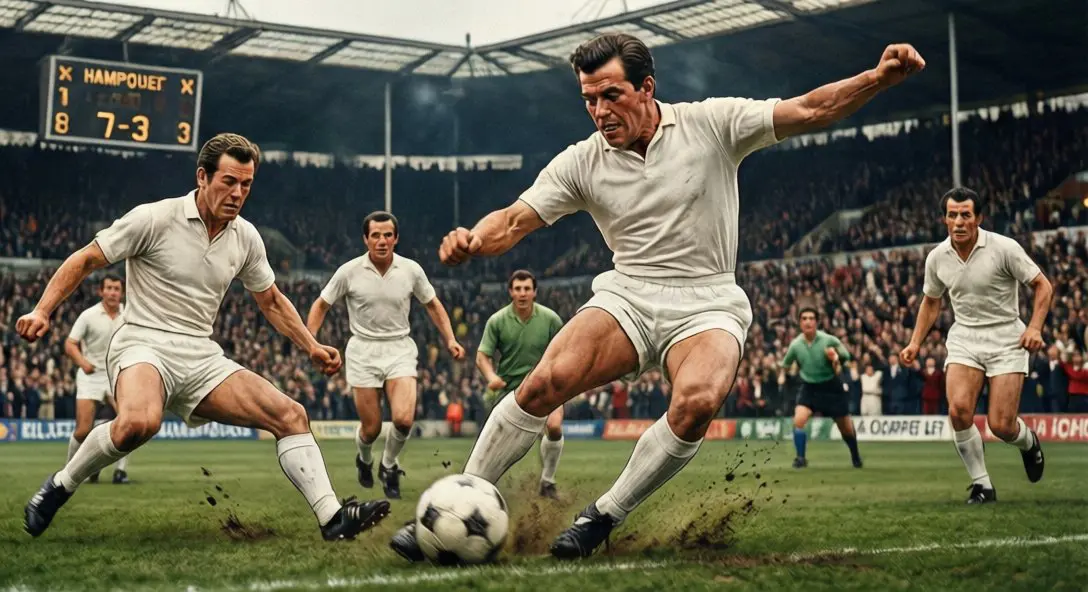
1960 European Cup final 7-3 victory over Eintracht Frankfurt
The 1960 European Cup final at Hampden Park - Real Madrid's legendary 7-3 victory

Champions League Titles: The Five That Started It All

Real Madrid's first five Champions League titles (then European Cups), won consecutively from 1956 to 1960, remain one of football's most remarkable achievements. The inaugural competition in 1955-56 saw Real Madrid defeat Reims 4-3 in a thrilling final, with Di Stefano scoring. The following year, they beat Fiorentina 2-0, then AC Milan 3-2 after extra time in 1958.

But it was the 1960 final that entered legend. Real Madrid faced Eintracht Frankfurt at Hampden Park in Glasgow. What unfolded has been called the greatest club match ever played. Di Stefano scored a hat-trick. Puskas netted four goals. Real Madrid won 7-3. The football was so breathtaking that even the defeated German supporters rose to applaud.

Francisco Gento, the lightning-fast winger who played from 1953 to 1971, remains the only player to win six European Cups. His longevity and the club's sustained excellence during this golden period speaks for itself.

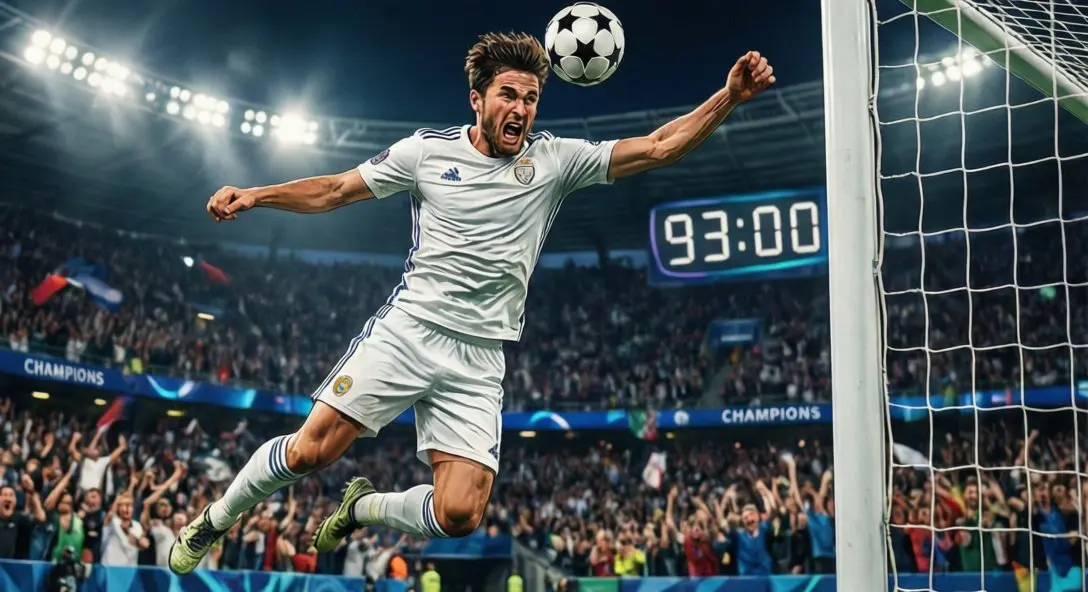
Sergio Ramos 93rd minute header in 2014 Champions League final
Sergio Ramos's famous 93rd minute equalizer against Atletico Madrid - "La Decima" moment

Champions League Titles: The Modern Dynasty - Six in Ten Years

While the Di Stefano era established Real Madrid's European credentials, the modern era has produced something perhaps even more remarkable: six Champions League titles in ten years between 2014 and 2024. This unprecedented run came despite the increased competitiveness of modern football, where financial fair play regulations and tactical sophistication were supposed to prevent any single club from dominating.

The journey began with "La Decima" - the obsession with winning a tenth European Cup that had consumed the club for 12 long years. When Sergio Ramos scored in the 93rd minute of the 2014 final against Atletico Madrid, heading home the equalizer that forced extra time, it wasn't just a goal. It was an exorcism. Real Madrid went on to win 4-1, and the floodgates opened.

What followed defied belief. Under Zinedine Zidane, Real Madrid won three consecutive Champions Leagues in 2016, 2017, and 2018. A feat that had never been accomplished and may never be repeated. Zidane, already a club legend for his playing career, cemented his status as one of football's greatest managers by achieving something even the great Di Stefano era couldn't match.

The 2022 triumph over Liverpool featured Vinicius Junior's winning goal, symbolizing the passing of the torch to a new generation. The 15th title came in 2024 against Borussia Dortmund, achieved during an unbeaten Champions League campaign that demonstrated Real Madrid's continued ability to reinvent itself.

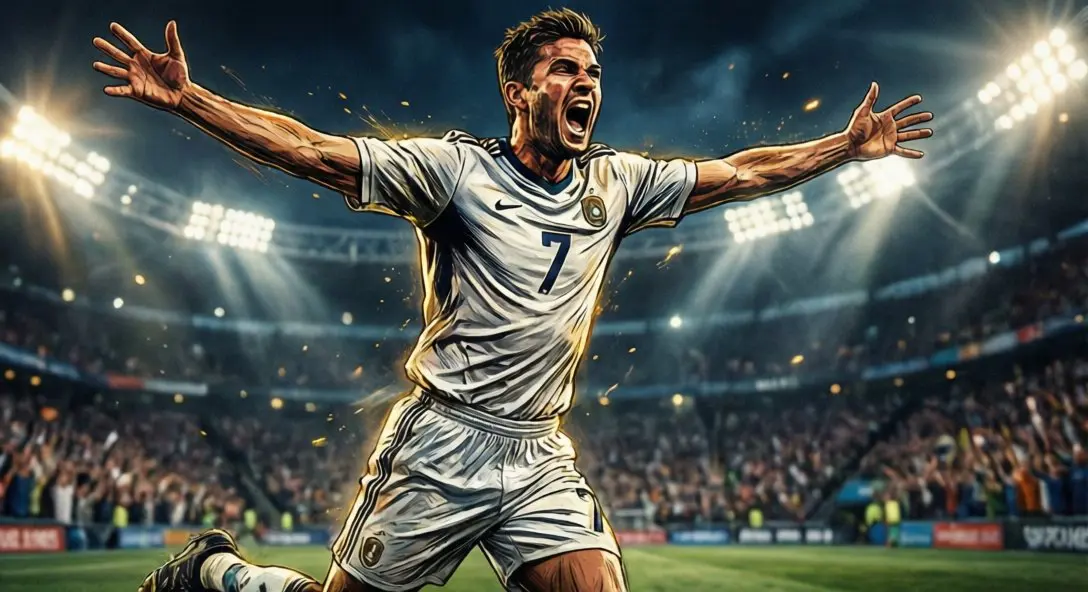
Cristiano Ronaldo celebrating one of his 450 goals for Real Madrid
Cristiano Ronaldo - Real Madrid's all-time top scorer with 450 goals in 438 games

Cristiano Ronaldo and the Galacticos Legacy

Florentino Perez's election as president in 2000 ushered in the Galacticos era. The policy of signing the world's most famous and talented Real Madrid players transformed the club into a global brand. Luis Figo arrived from Barcelona in a controversial transfer that enraged Catalan supporters. Zinedine Zidane followed. Then Ronaldo Nazario, David Beckham, and eventually the greatest Galactico of them all: Cristiano Ronaldo.

Ronaldo's arrival from Manchester United in 2009 for a then-world record fee represented Perez's vision in its purest form. The Portuguese forward didn't just score goals. He shattered records with methodical precision. His 450 goals in 438 games make him Real Madrid's all-time top scorer, a statistic that seems impossible given the club's illustrious history. He scored 50 or more goals in six consecutive seasons.

The BBC trio - Gareth Bale, Karim Benzema, and Cristiano Ronaldo - scored 442 goals together and won four Champions Leagues. Benzema himself would go on to score 354 goals in 648 appearances, winning the Ballon d'Or in 2022.

Luka Modric, who won the Ballon d'Or in 2018, ending the decade-long Ronaldo-Messi dominance of the award, exemplifies another aspect of Real Madrid's success: the ability to identify world-class talent that might not have the immediate marketing appeal of a Galactico but possesses the quality to sustain success. Modric's six Champions League titles place him among the club's most decorated players ever.

Real Madrid new generation - Vinicius, Bellingham, Mbappe
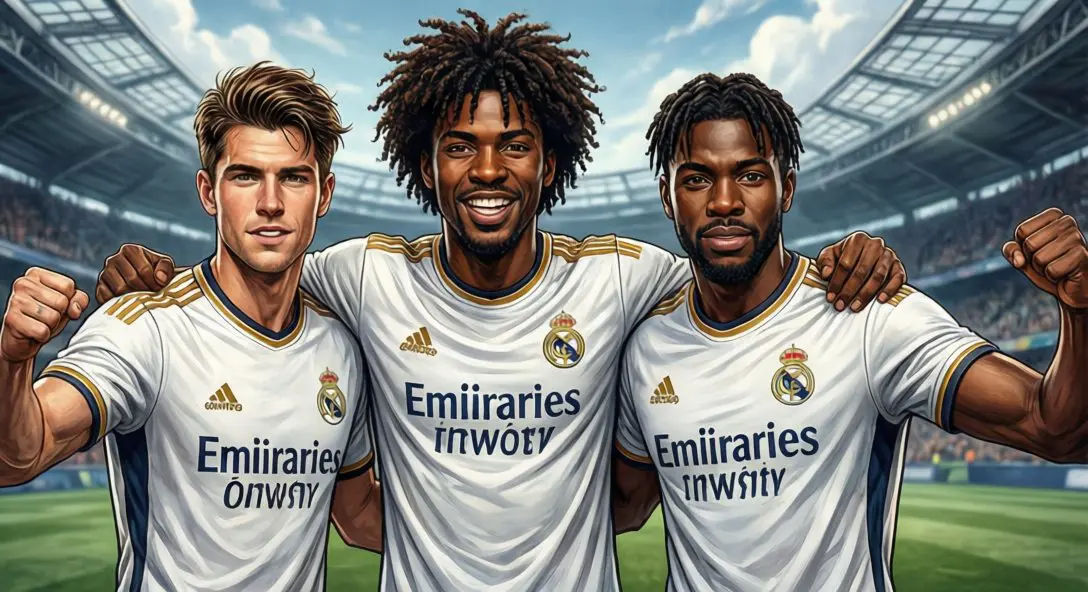
The new Galacticos: Vinicius Junior, Jude Bellingham, and Kylian Mbappe lead Real Madrid into the future

Real Madrid Players: The New Generation - Mbappe, Vinicius, and Bellingham

As the 2025-26 season unfolds, Real Madrid finds itself at the dawn of another potential dynasty. The arrival of Kylian Mbappe in 2024 on a free transfer from PSG brought the world's most sought-after player to the Spanish capital, adding another chapter to the Galacticos tradition.

Mbappe joins Vinicius Junior and Jude Bellingham in forming a new triumvirate of young superstars. Vinicius, who scored the winning goal in the 2022 Champions League final, has evolved from promising talent to genuine global superstar. His electrifying pace and creativity have made him one of the most feared forwards in world football.

Bellingham's immediate impact since arriving from Borussia Dortmund in 2023 demonstrated Real Madrid's continued ability to identify and secure the world's best young talent. The English midfielder's combination of technical excellence, physical presence, and tactical intelligence made him integral to the 15th Champions League triumph.

The challenge now facing Real Madrid is how to maximize the talents of three superstars who all expect to be the focal point of the attack. It's a luxurious problem that most clubs would envy, but one that requires careful management to ensure egos don't disrupt the collective success that defines Real Madrid's culture.

El Clasico rivalry - Real Madrid vs Barcelona match action
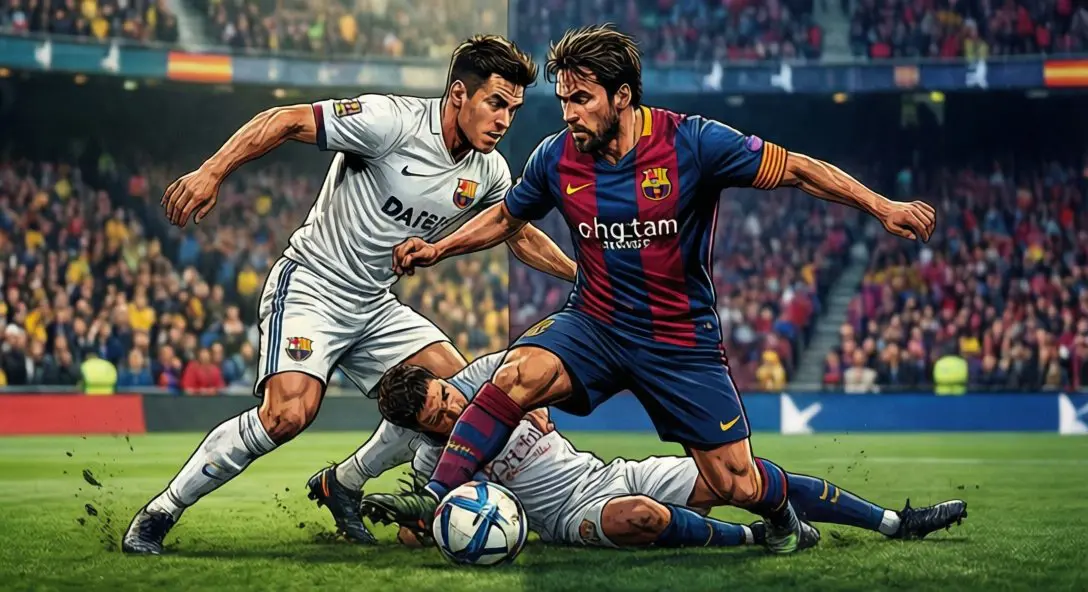
El Clasico - the world's greatest rivalry with 650 million viewers watching Real Madrid vs Barcelona

El Clasico: The World's Greatest Rivalry

When Real Madrid and Barcelona meet, the world stops to watch. El Clasico isn't just a football match. It's a global phenomenon that attracts 650 million viewers, representing political, cultural, and sporting dimensions that transcend sport.

The rivalry's roots extend deep into Spanish history. During the Franco era from 1939 to 1975, Real Madrid was often perceived as the establishment club, enjoying government support, while Barcelona became a symbol of Catalan identity and resistance. These political undertones have softened in modern times, but the intensity of the sporting rivalry remains unmatched.

The statistics are remarkably balanced across 262 competitive matches. Real Madrid leads with 106 victories to Barcelona's 104, with 52 draws. In La Liga specifically, Real Madrid holds a narrow 79-76 advantage across 190 matches. This parity speaks to how evenly matched the two giants have been throughout history.

Lionel Messi's 26 Clasico goals make him the all-time top scorer in the fixture. Real Madrid's response came through Cristiano Ronaldo's 18 goals and Alfredo Di Stefano's 18 before him. Raul Gonzalez added 15 more, demonstrating that Real Madrid has always produced players who relish the biggest occasions.

Memorable Clasicos litter football history. Real Madrid's 11-1 victory in 1943 remains the largest margin, though the circumstances of that match during the Franco era remain controversial. Barcelona's 5-0 victory in 1994, inspired by Romario, is still celebrated in Catalonia. The 2017 match at the Bernabeu, where Messi scored a last-minute winner and held his shirt aloft to the stunned Madrid crowd, produced one of football's most iconic images.

The rivalry has been fueled by controversial transfers between the clubs. Luis Figo's move from Barcelona to Real Madrid in 2000 sparked outrage so intense that Barcelona fans threw a pig's head at him during his return to Camp Nou. Luis Enrique made the opposite journey in 1996, becoming a Barcelona legend despite his Real Madrid origins. These transfers intensify the rivalry, transforming already tense matches into personal battles.
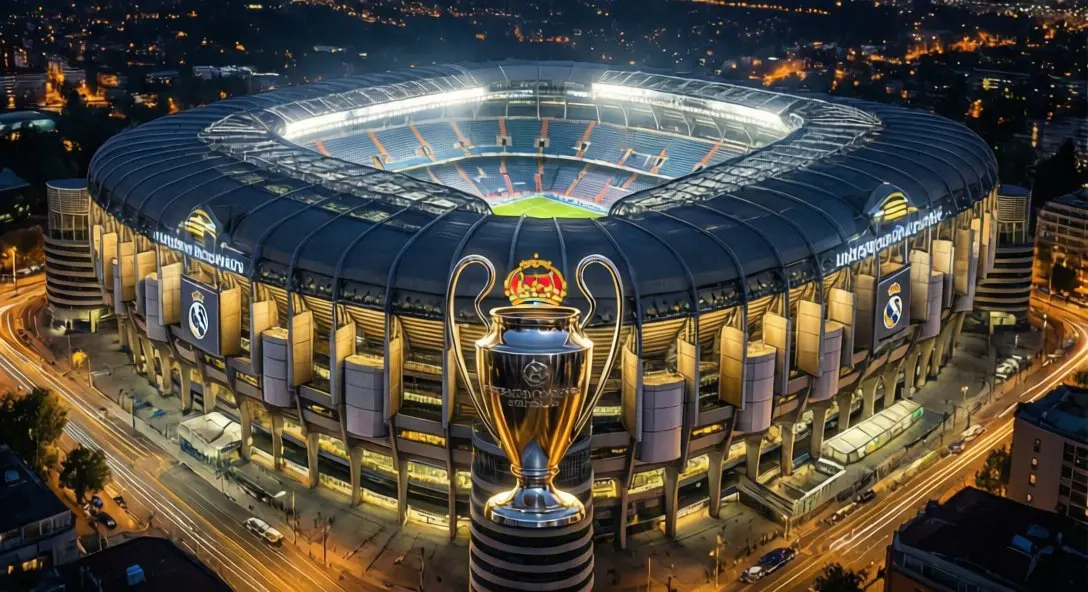
Newly renovated Santiago Bernabeu with retractable roof
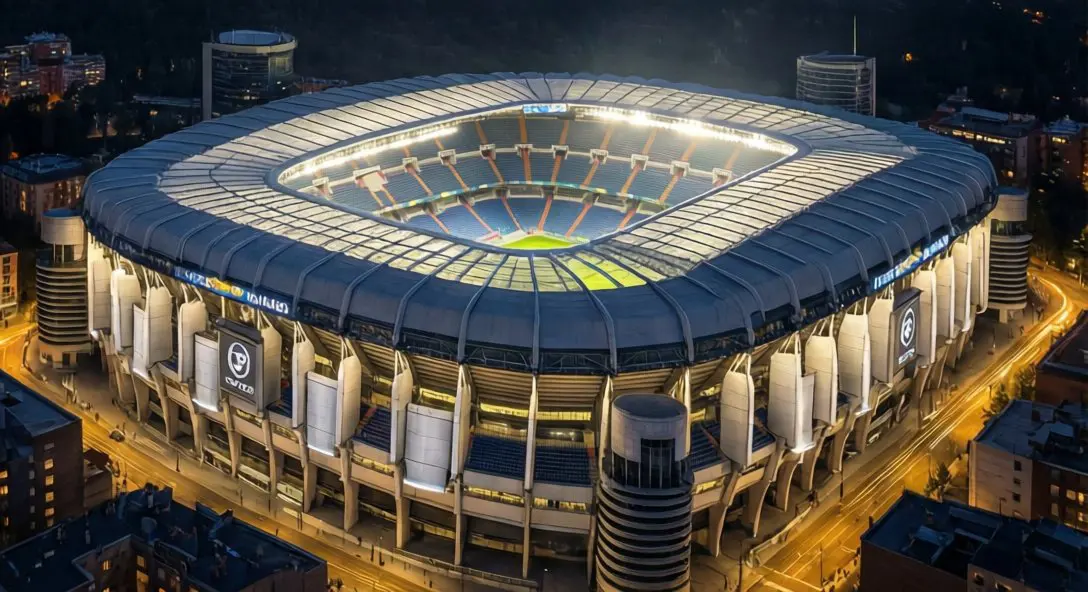
The $1.9 billion renovated Santiago Bernabeu - one of the world's most advanced stadiums

Santiago Bernabeu: Cathedral of Football

The Santiago Bernabeu isn't just a stadium. It's a cathedral where football is worshipped. Opened in 1947 and named after the visionary president who built it, the ground has witnessed every one of Real Madrid's European triumphs, countless El Clasico battles, and moments that have entered football folklore.

The recent renovation from 2019 to 2024, costing $1.9 billion, transformed the Santiago Bernabeu into perhaps the most advanced stadium in world football. A retractable roof now covers the entire stadium, protecting matches from Madrid's occasional rain and creating an intimidating atmosphere for visiting teams. A retractable pitch allows the venue to host concerts and non-sporting events, generating revenue year-round.

The capacity has increased to between 83,000 and 85,000, with premium hospitality areas that reflect Real Madrid's status as the world's richest football club. A 360-degree video screen surrounds the interior, while underground greenhouses ensure the pitch remains in perfect condition regardless of weather.

The "Bernabeu effect" has become part of football lexicon. It describes the phenomenon where Real Madrid, seemingly defeated, draws strength from the home crowd to produce impossible comebacks. The 2016 Champions League quarter-final against Wolfsburg, where Real Madrid overturned a 0-2 first-leg deficit with a Cristiano Ronaldo hat-trick, exemplifies this mystical quality.

The stadium will host matches during the 2030 FIFA World Cup and is a candidate to host the final. For Real Madrid supporters, the Santiago Bernabeu isn't just where they watch football. It's where they experience the full weight of the club's history and ambition.

La Fabrica - Real Madrid youth academy training
La Fabrica - Real Madrid's famous youth academy that produced Raul, Casillas, and Carvajal

The Madrid Way: Philosophy and Culture

Real Madrid's success isn't accidental. It's built on a philosophy that has remained remarkably consistent for over a century, even as tactics, players, and managers have changed.

The winning mentality sits at the core. "We don't play to compete, we play to win" isn't just a slogan. It's a non-negotiable expectation. This mentality explains Real Madrid's famous comebacks, like the 2022 Champions League semi-final against Manchester City. Down 5-6 on aggregate in the 90th minute, Real Madrid scored twice in stoppage time through Rodrygo before Karim Benzema's extra-time penalty completed an impossible turnaround.

The Galacticos policy represents another pillar of Real Madrid's identity. Florentino Perez's vision of signing the world's best players serves both sporting and commercial purposes. On the pitch, these players provide the quality needed to win trophies. Off it, they drive merchandise sales, attract global sponsors, and expand the club's worldwide following. When Kylian Mbappe arrived in 2024, he wasn't just joining a football club. He was becoming part of a lineage that includes Di Stefano, Zidane, Ronaldo, and Cristiano Ronaldo.

Yet Real Madrid also values youth development through La Fabrica (The Factory), the club's academy system. Raul Gonzalez, Iker Casillas, Guti, and Dani Carvajal all graduated from the academy to become first-team stars. The challenge has always been balancing the immediate impact of Galacticos with the long-term development of young players, but the academy remains an important part of the club's identity.

Attacking football is non-negotiable. Real Madrid has historically been one of the highest-scoring teams in Europe, prioritizing entertainment alongside results. Jose Mourinho's 2011-12 team scored 174 goals in all competitions, including 121 in La Liga alone, setting a record 100-point season. While defensive solidity matters, the expectation is that Real Madrid will outscore opponents rather than outlast them.

Hala Madrid

Real Madrid isn't just a club - it's a mentality. When pressure rises, Madrid rises higher. We don't play to compete, we play to win.

Club Philosophy
Real Madrid global fanbase from around the world
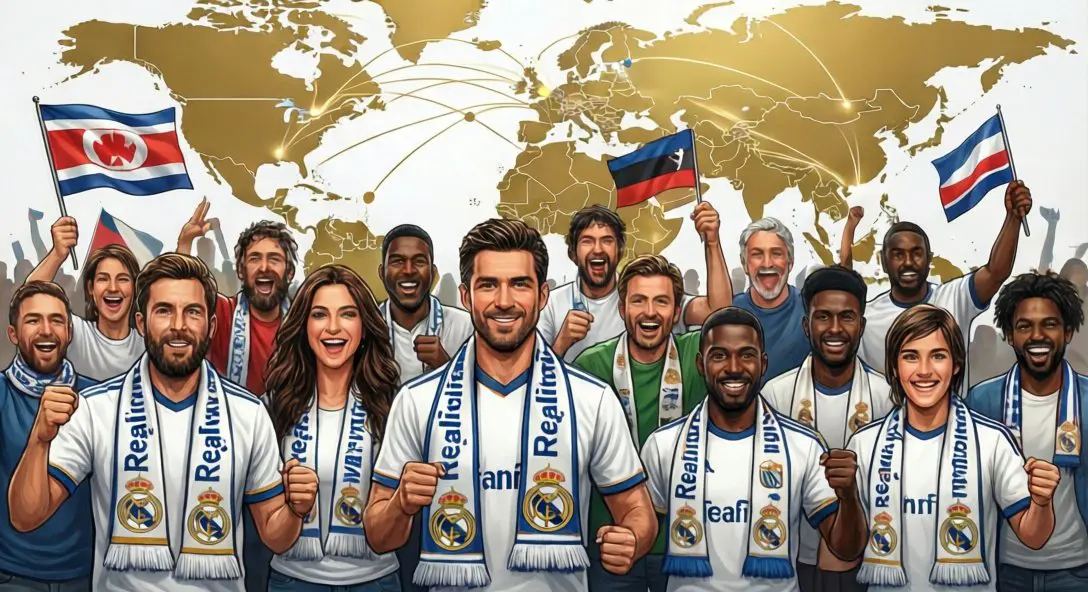
Real Madrid's 600 million social media followers span every continent - a truly global phenomenon

The Managers Who Made History

Real Madrid's success has been guided by some of football's greatest managers, each leaving their mark on the club's history.

Carlo Ancelotti stands as the most successful manager in Real Madrid history with 15 trophies across two spells. The Italian's calm, player-focused approach provided the stability needed to end the 12-year wait for La Decima in 2014, then returned to win two more Champions Leagues in 2022 and 2024. Ancelotti became the first manager to win the Champions League four times, three with Real Madrid.

Zinedine Zidane achieved something unprecedented by winning three consecutive Champions Leagues from 2016 to 2018. The Frenchman, already a club legend for his playing career including that famous volley in the 2002 Champions League final, translated his understanding of what makes Real Madrid special into managerial success. His tactical flexibility and calm demeanor under pressure personified the club's values.

Jose Mourinho's contribution was different but significant. His 2011-12 team's 100-point La Liga season with 121 goals represented the most dominant domestic campaign in Spanish history at that time. Mourinho's intensity ended Barcelona's period of supremacy under Pep Guardiola, restoring Real Madrid's competitive position even if Champions League success eluded him.

Vicente del Bosque provided steady leadership during the early Galacticos era, winning two Champions Leagues and two La Ligas between 1999 and 2003. His later success managing Spain to World Cup and European Championship victories demonstrated the quality he brought to Real Madrid.

Santiago Bernabeu celebrating Champions League victory
The Eternal Kings of Europe - Real Madrid's 15 Champions League titles and counting

2018 Ballon d'Or Winner

The Champions League belongs to Real Madrid. It's in our DNA.

Luka Modric

A Global Phenomenon

Real Madrid's reach extends far beyond the Santiago Bernabeu. With 600 million social media followers across platforms and an estimated 450 to 600 million global supporters, the club has transcended its Spanish roots to become a truly worldwide brand.

Instagram alone boasts over 150 million followers, while Facebook adds another 110 million. These aren't just passive followers. They're consumers of Real Madrid content, purchasers of merchandise, and participants in a global community united by the famous white shirt.

The club's marketing strategy leverages this reach through pre-season tours worldwide, international fan clubs known as penas in over 100 countries, and digital content in multiple languages. Strategic partnerships with brands like Emirates and Adidas provide hundreds of millions in revenue, while jersey sales run into millions annually.

Cultural impact extends into film, fashion, and lifestyle. "Real: The Movie" (2005) and multiple documentaries have chronicled the club's story. The Amazon Prime "El Clasico" series and Netflix "The Club" documentary brought behind-the-scenes access to global audiences. Celebrity supporters from entertainment, politics, and other sports publicly declare their allegiance, further expanding the club's cultural footprint.

The economic impact on Madrid itself is substantial. Tourism to the Santiago Bernabeu, merchandise sales in the city, and the general association of Madrid with football excellence all contribute to the local economy. Real Madrid isn't just a football club. It's an economic engine and cultural ambassador for Spain's capital city.

Former Captain

The comebacks we've achieved are not luck. They come from the mentality instilled by generations of Madridismo.

Sergio Ramos

The Future: Continuing the Legacy

As the 2025-26 season progresses, Real Madrid finds itself in a familiar position: competing on all fronts with expectations of winning everything. The 122nd season in the club's existence and 95th consecutive top-flight season represents not just longevity but sustained excellence across generations.

The integration of Kylian Mbappe with established stars Vinicius Junior and Jude Bellingham represents both the club's biggest challenge and greatest opportunity. If these three world-class talents can combine effectively, Real Madrid possesses an attacking force capable of dominating European football for years to come. The post-Ancelotti era, with the legendary manager having departed at the end of the 2024-25 season, brings uncertainty but also excitement about what comes next.

Questions remain about balancing Galacticos with youth development, managing Financial Fair Play regulations following the massive stadium renovation, and navigating the ongoing European Super League controversy that has divided football. Florentino Perez's vision continues to shape the club's direction, even as the landscape of European football evolves.

The Champions League remains the priority, as it has been since Santiago Bernabeu first envisioned European dominance in the 1940s. Real Madrid's relationship with this competition is unlike any other club's. It's not arrogance but a genuine belief that the Champions League and Real Madrid are intrinsically linked. Six Champions League titles in ten years suggests this belief isn't misplaced.

The Eternal Kings

Real Madrid's story isn't just about trophies, though the 15 Champions League titles, 36 La Ligas, and 106 total titles provide the foundation for any discussion of greatness. It's about an identity that has remained consistent for over 120 years: the expectation of excellence, the pursuit of the world's best players, the refusal to accept second best.

From Alfredo Di Stefano to Kylian Mbappe, from the primitive pitches of 1902 to the technological marvel of the renovated Santiago Bernabeu, from local Madrid club to global phenomenon with 600 million followers, Real Madrid has evolved while remaining recognizably itself. The white kit that has never changed symbolizes this continuity, connecting generations of players and supporters across more than a century.

FIFA named Real Madrid the Club of the 20th Century, the only club to receive this honor. The 21st century has only strengthened this case, with six Champions League titles in ten years demonstrating that Real Madrid's dominance transcends any single era or generation of players.

The club's motto, "Hala Madrid y nada mas" - Go Madrid and nothing more - encapsulates this mentality. It's not just encouragement. It's a statement of purpose. Real Madrid exists to win, to be the best, to represent the pinnacle of what football can achieve. For over 120 years, the club has fulfilled this purpose with remarkable consistency.

As the 2025-26 season unfolds, with new stars writing fresh chapters in this extraordinary story, one thing remains certain: Real Madrid will continue to be the standard against which all other clubs are measured. The 15 Champions League titles might become 16, 17, or more. The records might continue to fall. But the identity that Santiago Bernabeu established and Alfredo Di Stefano embodied will endure.

This is Real Madrid. This is what it means to be the Kings of Europe.

Professional headshot of Marcus Worthington, Senior Football Editor & Analyst

Marcus Worthington

Senior Football Editor & Analyst

Marcus Worthington is an experienced sports analyst and editor with over 12 years in sports journalism. Specializing in football tactics, league analysis, and long-form feature writing, Marcus provides in-depth coverage of Premier League, La Liga, and European competitions. His expertise extends to live score commentary and match result analysis, where his detailed understanding of game dynamics helps readers understand the story behind the scores. Marcus is known for his tactical breakdowns and ability to identify emerging trends in team performances.