Why Bookmakers Limit Winning Accounts: The Truth About Account Restrictions
Essential Guide

Why Bookmakers Limit Winning Accounts

Jump to section

Why Do Bookmakers Limit Winning Players?

You've had a decent run. A few smart bets, some well-timed wagers, and suddenly you're sitting on a nice profit. Feels good, right? Then you try to place a bet—something you've done a hundred times before—and instead of the usual limit, you're staring at a maximum stake that wouldn't cover a round of drinks. Or worse, you get that generic email about your account being closed "for commercial reasons."

Welcome to one of the most frustrating realities of sports betting: bookmakers limit winning players.

It feels unfair. Gambling's supposed to be about winning and losing, isn't it? But there's more to it than that. Understanding why do bookmakers limit winners, how they spot profitable players, and where you can actually bet without constantly looking over your shoulder will make you a smarter bettor.

This isn't about complaining—it's about knowing how the game actually works so you can make better decisions about where and how you place your bets.

The Business Reality: Why Account Restrictions Exist

The Vigorish Business Model

Sportsbooks aren't running a charity, and they're not really gambling themselves. They're market makers making money from vigorish (the "vig")—basically a commission built into every wager.

Take a standard point spread bet where both sides are offered at -110 odds. To win $100, you're risking $110. That extra $10? That's the bookmaker's margin. The implied probabilities add up to more than 100% (usually around 104-105%), and that overage is the house's guaranteed profit—assuming they get balanced action.

Here's the problem: winners mess up this model by consistently taking the favorable side of mispriced odds. Understanding why odds differ between bookmakers is key to spotting these value opportunities.

Risk Management vs. Casino Games

Unlike casino games where the odds never change (that roulette wheel always has the same 37 numbers), sports betting is unpredictable. Bookmakers have to:

  • Balance liability by attracting bets on both sides
  • Adjust odds on the fly to manage their exposure
  • Limit players who consistently find favorable odds
  • Protect themselves against sophisticated syndicates and algorithmic bettors

When you consistently beat the closing line or exploit market inefficiencies, you're not just "lucky"—you're systematically extracting value from their business model. Operators see this as a commercial relationship they'd rather not continue.

Industry Statement

It is customary for sports betting operators to manage customer betting limits at the individual level to manage enterprise risk levels. We believe this practice is beneficial overall, because if it were not possible, betting options would be restricted globally and limits available to customers would be much lower.

DraftKings Fiscal Year 2023 Report

By The Numbers: The Scale of Account Restrictions

This isn't some rare thing that only happens to professionals. Recent data from the UK Gambling Commission shows just how common account restrictions really are in one of the world's most established betting markets:

  • 4.31% of active accounts faced commercial restrictions (643,779 out of 14,923,840 accounts)
  • 2.68% of active accounts hit with stake factor restrictions (reduced maximum bets)
  • 2.23% of active accounts closed for commercial reasons

What's really telling: 46.78% of restricted accounts were in lifetime profit, compared to just 25.42% of all active accounts. Being a winning bettor nearly doubles your chances of getting restricted.

But here's what's crazy: 51.29% of restricted accounts were actually losing money when they got limited. This suggests bookmakers aren't just reacting to how you've done—they're using predictive modeling to identify potential winners before they even become profitable.

Understanding Stake Factoring

Bookmakers don't usually go with a straight "open or closed" approach. Instead, they use stake factoring—basically a multiplier that determines your maximum bet size:

  • Factor 1.0: Full limits for recreational customers
  • Factor 0.5: 50% of normal maximum stake
  • Factor 0.1: 10% of normal maximum stake
  • Factor 0.0: Effectively banned (betting facilities withdrawn)

Among UK accounts facing restrictions, most get hit hard:

  • 36.22% restricted to 1-9% of normal maximum stake
  • 29.43% restricted to 10-49% of normal maximum stake
  • 22.41% restricted to less than 1% of normal maximum stake

Only a small percentage (6.04%) keep 90-100% of normal limits, which means most restrictions are substantial, not just cosmetic.

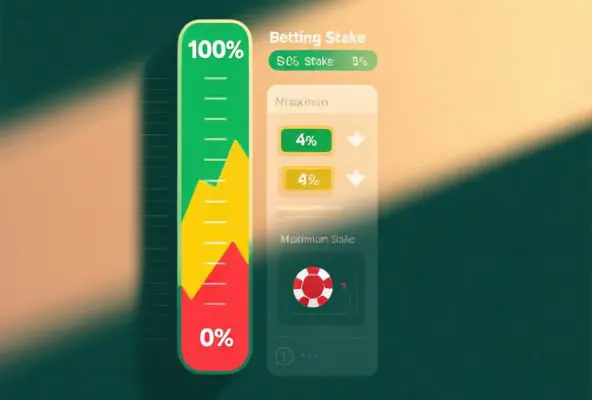
Editorial illustration showing betting stake restrictions with visual meter going from full limit to zero
Stake factoring reduces maximum bet sizes, often to unusable levels for serious bettors

How Bookmakers Detect Profitable Players

Closing Line Value: The Gold Standard

The single biggest metric bookmakers track is Closing Line Value (CLV)—the difference between the odds you bet and the closing odds before the event starts.

Consistently beating the closing line means you have market-beating insight or information. It's the strongest predictor of long-term profitability, and bookmakers track it relentlessly.

Why it matters: If you're consistently betting at +150 when the line closes at +130, you're extracting value they'd rather avoid. Automated systems track every bet against closing odds, and consistent CLV advantage triggers an account review.

Behavioral Pattern Analysis

Bookmakers use sophisticated AI and machine learning to analyze betting patterns beyond just profitability:

Bet Timing Patterns:

  • Early line betting (taking opening odds before the market adjusts)
  • Last-minute betting (after news breaks but before books adjust)
  • Consistent timing around line movements
  • Rapid betting when odds shift

Market Selection:

  • Frequent betting on obscure leagues or low-liquidity markets
  • Focus on niche props and player props
  • Avoiding mainstream markets with efficient pricing
  • Targeting markets where books have less information

Betting Patterns:

  • Always betting the maximum available stake
  • Consistently taking best available odds across all markets
  • Betting patterns that suggest automation (superhuman speed)
  • Precise timing around promotional offers

Advanced Detection Technology

Modern systems are getting scary sophisticated. The balance between human traders and algorithms in modern bookmaking continues to shift toward AI-driven detection:

  • Mouse movements and keystrokes: Detect automated betting bots
  • Navigation patterns: Identify rapid multi-bookmaker switching
  • Device fingerprinting: Track users across multiple accounts
  • IP analysis: Detect account sharing and "gnoming" (multiple accounts)
  • Time-based analysis: Flag bet speeds that are impossible for human users

Collaboration Between Operators

Bookmakers share intelligence through industry databases:

  • Industry-wide blacklists for fraud and arbitrage
  • Cross-platform identification of problematic customers
  • Shared intelligence about professional betting groups
  • IP and device flagging across operators

Get flagged at one major operator, and that information can spread quickly to others.

Industry Analysis

Contrary to popular belief, sportsbooks don't simply look at your overall win-loss record. Instead, they focus on metrics like closing line value (CLV). This is the difference between the odds you bet and the closing odds before the event starts. Beating the closing line is a strong indicator that you possess valuable information or insights.

Outlier Betting Strategy Guide (2025)

Types of Players Bookmakers Target

Arbitrage Bettors ("Arbers")

Arbitrage bettors exploit odds differences between bookmakers to guarantee profit regardless of outcome. They place simultaneous bets on all possible outcomes across different books.

Detection markers: Always betting best available odds, placing simultaneous opposing bets, betting patterns that prioritize price over opinion.

Learn more about how bookmakers detect arbitrage betting and the specific methods they use to identify these strategies.

Value Bettors

Value bettors consistently beat closing line odds by spotting mispriced odds before the market adjusts. Unlike arbers, they're not risk-free—variance can mean losses in the short term.

Detection markers: Strong CLV performance, early line betting, consistent profitability over large sample sizes.

Professional Syndicates

Sophisticated groups using algorithms, data analysis, and automated betting bots to identify and exploit market inefficiencies. They often move markets with large wagers and target obscure markets with low liquidity.

Detection markers: Large bet sizes, obscure market selection, automated betting patterns, coordinated activity across multiple accounts.

Matched Bettors

Matched bettors exploit free bet promotions and bonuses by placing opposing bets to guarantee profit from promotional offers rather than market inefficiencies.

Detection markers: Betting exact maximum required to claim bonus, betting at best current market odds during promotions, systematic exploitation of free bet offers, precise timing of promotional bet placement.

Industry Intelligence

Frankly excellent at benchmarking just how much value or not a customer will provide to them very early on in a new account's lifecycle. It's not rare to see new customers limited within a handful of bets placed if flagged as 'negative value'.

Smart Betting Club analysis of Flutter Group (Paddy Power, Sky Bet, Betfair)
Editorial illustration showing AI-powered behavioral analysis for detecting profitable bettors
Bookmakers use sophisticated AI and machine learning to analyze betting patterns and detect profitable players

Soft vs Sharp Bookmakers: Two Different Business Models

Soft Bookmakers: The Casino Model

Operators like Bet365, William Hill, and Ladbrokes operate like casinos—they want to maximize revenue from recreational bettors while managing variance through aggressive risk management.

Characteristics:

  • High margins (5-10% vigorish)
  • Heavy promotional spending to acquire recreational customers
  • Aggressive account limits for winning players
  • Focus on mainstream markets with recreational appeal
  • Casino-style risk management requiring liability control

Why they limit: Their business model depends on recreational bettors losing over time. Winning players are a direct cost they can't absorb without either raising prices for everyone (driving away recreational customers) or accepting lower profits.

Sharp Bookmakers: The Market Maker Model

Operators like Pinnacle and Asian books (Singbet, 18bet, PS3838) operate as market makers—using sharp action to shape accurate lines and profiting from volume rather than recreational losses.

Characteristics:

  • Lower margins (2-4% vigorish)
  • "Winners Welcome" policies
  • High limits across all sports
  • Use sharp bettors to improve their lines
  • Rarely or never limit winning accounts

Why they don't limit: Their business model relies on setting accurate lines and profiting from the vig across high volume. Sharp bettors help them identify mispriced odds early, letting them adjust lines before recreational money pours in.

For serious bettors asking if they can make a living from betting, understanding this distinction is crucial for long-term strategy.

Types of Betting Account Limits

Soft Limits (Stake Restrictions)

The most common form of restriction, affecting about 62% of restricted accounts:

Stake Factor Reductions:

  • Gradual reduction of maximum bet sizes
  • Account stays technically open but becomes unusable for serious betting
  • Often applied before permanent closure
  • Customer may still bet on mainstream markets with small stakes

Market-Specific Restrictions:

  • Restrictions limited to particular sports (e.g., horseracing only)
  • Limits on specific bet types (e.g., player props banned)
  • In-play betting restrictions
  • Less common (only 5.72% of restricted accounts)

Practical Impact:

  • Account preserved for casino gaming (recreational revenue)
  • Creates "soft ban" effect without formal account closure
  • Customer can still technically bet but not profitably

Hard Limits (Account Closures)

Second most common restriction, affecting about 52% of restricted accounts:

Full Account Closure:

  • Permanent termination of betting relationship
  • Funds typically returned (after verification checks)
  • Often follows period of stake factoring

Zero Stake Factor:

  • Betting facilities withdrawn without explicit closure
  • Stake factor set to 0.00, preventing any sports bets
  • Account may remain open for casino or history viewing

Industry Pattern:

  • Most operators follow "restrict first, close later" approach
  • Large proportion of accounts subject to stake factoring before permanent closure
  • Some operators reportedly don't use account closures at all, relying solely on stake restrictions

Regional Differences in Account Restrictions

United Kingdom

Legal Status: Perfectly legal; operators have right to refuse service.

Key Facts:

  • Being a successful bettor is NOT a protected characteristic under discrimination law
  • Gambling Commission acknowledges operators' right to manage commercial liabilities
  • Commission exploring improvements to communication about when and why accounts are restricted
  • Voluntary codes of conduct for account closure communication

Political Pressure:

  • Growing concern about restrictions driving customers to unlicensed operators
  • Ongoing debate about fairness of commercial restrictions
  • Concern about impact on horse racing industry

United States

State-by-State Variation

New York (Pending Legislation):

  • Fair Play Act (September 2025) would ban sportsbooks from limiting or banning customers for winning
  • Exceptions for responsible gambling and integrity issues
  • Would be first US market to implement such a rule
  • Operator opposition: DraftKings and Penn Entertainment cited negative business impact

Massachusetts:

  • Extensive study of limiting practices
  • MGC data found 0.5% of bettors face limits
  • Confirmed that players who beat closing line more likely to be restricted
  • Focus on consumer protection and better notification
  • No regulatory action taken yet

Wyoming:

  • Gaming Commission investigation found no problem with limiting practices
  • Fewer than 1% of accounts restricted
  • Less than 10% due to error exploitation
  • Staff conclusion: "Given all the data we've collected, staff does not see a problem in Wyoming with the limiting of sports wagering"

Market Context:

  • High tax rates (e.g., New York's 51%) create pressure to protect margins
  • Limited number of operators in each state reduces competitive pressure on winners
  • US market still evolving, with practices potentially becoming more restrictive over time

Australia and Europe

Australia:

  • State-based regulation with no universal protection against account limits
  • Corporate bookmakers vary in their approach
  • No comprehensive data publicly available on restriction rates
  • Significant focus on horse racing (anecdotal evidence of aggressive restrictions)
  • Regulatory tightening in other areas may eventually extend to account limits

Continental Europe:

  • Generally follows UK model: operators have commercial rights to manage liabilities
  • Varies by jurisdiction but fundamentally similar approach
  • Some markets with more consumer-friendly regulations
  • Betting exchanges (Betfair, etc.) more established and accepted
Editorial split composition comparing soft bookmakers (casino model) with sharp bookmakers (market maker model)
Soft bookmakers operate like casinos with high margins and aggressive limits, while sharp books welcome winners with lower margins

The Path Forward

This regulatory reality creates a clear divide in the betting landscape. Soft bookmakers exercise their commercial rights aggressively, limiting winners as standard practice. But understanding this dynamic is the first step toward finding sustainable betting options.

The good news? An entire ecosystem of winner-friendly platforms has emerged to serve serious bettors. These alternatives don't just tolerate winning players—their business models actively depend on them.

UK Gambling Commission (July 2025)

Businesses may take commercial decisions providing they do not discriminate on the basis of protected characteristics. Being a successful bettor is not a protected characteristic in discrimination law.

Andrew Rhodes, CEO, UK Gambling Commission

Understanding Your Options: Why Winners Are Welcome Elsewhere

The regulatory landscape makes it clear: soft bookmakers have the commercial right to limit winners, and they exercise it routinely. But this doesn't mean winning bettors are out of options.

In fact, the existence of account restrictions has created an entire ecosystem of winner-friendly platforms that operate on fundamentally different business models. These platforms don't just tolerate winning players—they actively seek them out.

Understanding these alternatives isn't just about avoiding restrictions. It's about finding markets where your betting style aligns with the operator's business model, creating a sustainable long-term relationship rather than a constant cat-and-mouse game.

Sharp Bookmakers: "Winners Welcome"

For serious bettors, the most viable long-term solution is moving to sharp bookmakers that don't restrict winners.

Pinnacle:

  • Market leader in sharp betting
  • "Winners Welcome" policy
  • High limits across all sports
  • Uses sharp action to set market standards
  • Reduces margin to high-volume model

Asian Bookmakers:

  • Singbet, 18bet, PS3838, BETISN, PENTA88
  • Specialize in taking large bets on smaller leagues
  • Access typically through bet brokers
  • High limits, low margins
  • Particularly strong in football (soccer)

Advantages:

  • No risk of account closure for winning
  • Ability to size bets appropriately
  • More efficient odds (lower vig)
  • Better for long-term profitability

Disadvantages:

  • Fewer promotional offers
  • Less recreational betting features
  • May require broker relationships
  • Lower margins mean smaller edges on average
Editorial illustration showing alternative betting platforms that welcome winning players - exchanges, sharp books, Asian handicap books
Sharp bookmakers, betting exchanges, and Asian handicap books provide viable paths for profitable players with no account restrictions

What to Do When Your Account Gets Gubbed

If You're Getting Limited

Immediate Actions:

  1. Understand the type of limit: Stake factor vs. market restriction vs. closure
  2. Check communication: Look for notifications (often none provided)
  3. Assess remaining utility: Can you still bet profitably at reduced limits?
  4. Plan migration: Start accounts with alternative operators

Account Prolongation Strategies:

  • Mix in "mug bets" on favorites and mainstream markets
  • Avoid always betting maximum stake
  • Round bet sizes to appear recreational
  • Don't exploit every promotional offer
  • Vary betting patterns and timing
  • Consider occasional deliberate -EV bets

Long-Term Strategy:

  • Accept that soft bookmaker restrictions are inevitable for winning bettors
  • Focus on sharp books, exchanges, and Asian handicap books
  • Develop relationships with bet brokers
  • Consider peer-to-peer platforms
  • Build diverse portfolio of betting accounts

Account Management Best Practices

For New Accounts:

  • Start with smaller stakes and gradually increase
  • Mix in casual betting patterns
  • Don't always bet the best available odds
  • Use promotions sparingly
  • Avoid obvious automated betting patterns

Ongoing Maintenance:

  • Monitor account for stake factor changes
  • Be prepared for quick limitations
  • Maintain multiple active accounts
  • Diversify across operator types (soft, sharp, exchange)
  • Keep documentation for all accounts

When to Move On

Signs It's Time:

  • Stake factor reduced to <10% of normal
  • Market-specific restrictions targeting your edge
  • Repeated verification requests when withdrawing
  • Casino-only access offered
  • Account closure notification

Migration Priorities:

  1. Betting exchanges (Betfair, Matchbook, Smarkets)
  2. Sharp books (Pinnacle, Asian books via brokers)
  3. Peer-to-peer platforms (BettorEdge in US)
  4. New soft book accounts (temporary)

Global Patterns Emerge

The global picture is clear: regardless of jurisdiction, the fundamental business model divide between soft and sharp bookmakers creates consistent outcomes for winners. Regulatory approaches may vary, but the commercial realities driving account restrictions remain the same across markets.

ℹ️

Key Insight

Regional approaches to account restrictions vary dramatically, but the fundamental commercial reality remains consistent: soft bookmakers limit winners while sharp bookmakers welcome them. Understanding your local regulatory environment is important, but the global betting landscape offers alternatives regardless of jurisdiction.

Professional Bettor

Ultimately, success in sports betting is about more than just picking winners. It's also key to find ways to profit in a betting environment designed to work against you.

Caan Berry, Professional Bettor

The Future of Account Restrictions

Likely Developments:

  • Increased transparency requirements from regulators
  • Better notification about account restrictions
  • More data collection and public reporting
  • Continued growth of sharp alternatives
  • Potential passage of New York Fair Play Act (uncertain)

Unlikely Changes:

  • Fundamental prohibition on account restrictions
  • Elimination of stake factoring systems
  • Significant soft bookmaker policy shifts

Possible Trends:

  • Gradual shift toward exchange-based betting
  • Increased prominence of Asian books in Western markets
  • Enhanced bet broker services and accessibility
  • Regulatory pressure leading to more nuanced restriction policies
  • Potential EU-wide standards on account management

Long-Term Paradigm Shifts (2028+)

Potential Changes:

  • Widespread adoption of exchange models as standard
  • Regulatory acceptance that "winners welcome" is viable business model
  • Integration of crypto and blockchain-based betting platforms
  • Possible regulatory intervention if black market concerns materialize

Structural Changes:

  • Gradual migration of recreational bettors to sharp models
  • Decline of traditional soft bookmaker model
  • Increased competition driving margin compression
  • More sophisticated customer segmentation rather than binary limit/no-limit

Different Perspectives on Account Restrictions

Bookmaker Perspective

Commercial Rights Argument:

  • Businesses have right to choose customers
  • No universal service obligation in gambling
  • Risk management requires limiting unprofitable relationships
  • Would have to lower limits for all customers if couldn't restrict winners

Business Necessity:

  • Sophisticated syndicates and algorithms pose existential threat
  • Without limits, global betting options would be restricted
  • Recreational bettors subsidize market innovation and liquidity
  • Professional action represents small fraction of customers but large potential losses

Bettor Perspective

Fairness Argument:

  • "Winners not allowed" contradicts gambling's premise
  • Accounts limited after just few wins or before any profit
  • Lack of transparency about when and why limits apply
  • Feels like bait-and-switch: welcome offers then restrictions

Consumer Rights:

  • Right to fair and open gambling
  • Accounts closed without explanation or recourse
  • Winners treated differently from losers
  • Promotional offers used to attract then quickly restrict

Regulatory Perspective

UK Gambling Commission (July 2025):

  • "It is not within our regulatory remit to mandate how individual operators manage their commercial liabilities"
  • "Being a successful bettor is not a protected characteristic in discrimination law"
  • Concern about restrictions driving customers to illegal operators
  • Exploring improvements to transparency and communication
  • Acknowledges practice may undermine crime prevention and integrity controls

Smart Betting Club Analysis (July 2025):

  • "This feels like more than just a data drop. It reads like a warning shot"
  • Suggests greater transparency, consistency, and fairness may be expected going forward
  • Highlights lack of nuance in current restriction practices
  • Questions why sharp bettors can't bet in liquid markets close to event start

Key Takeaways

  1. Account restrictions are common and systematic—4.31% of UK accounts face limits, with winning bettors nearly twice as likely to be restricted as the general customer base.

  2. Detection is increasingly sophisticated—bookmakers use AI-powered behavioral analysis, closing line value tracking, and predictive modeling to identify profitable players before they even win.

  3. The business economics are clear—soft bookmakers operate on high margins and aggressive risk management, while sharp books use different models that welcome winners.

  4. Alternatives exist for serious bettors—sharp bookmakers, betting exchanges, Asian handicap books, and bet brokers provide viable paths for profitable players.

  5. Regulatory scrutiny is growing—but fundamental changes to operators' rights to manage commercial liabilities appear unlikely in the near term.

  6. Understanding the landscape is essential—for informed bettors, the path forward involves accepting soft book restrictions as inevitable and focusing on sharp alternatives rather than fighting the system.

The Smart Money Is Moving

While short-term regulatory changes may bring slightly more transparency, the fundamental economics of sports betting aren't changing. The most successful bettors aren't waiting for regulations to force soft books to accept winners—they're already voting with their bankrolls and migrating to platforms built for sustainable long-term profitability.

Conclusion

The practice of limiting winning players exposes a fundamental tension in sports betting: the conflict between operators' commercial rights and customer expectations of fair treatment.

For casual bettors placing a few wagers here and there, account restrictions might never be an issue. But for anyone taking sports betting seriously—developing strategies, finding value, building long-term profitability—getting limited is almost inevitable.

The smartest move isn't to fight the system or complain about unfairness. It's to understand the business economics, recognize which operators align with your betting style, and focus your energy on markets and platforms where your action is welcome rather than restricted.

Sharp bookmakers, exchanges, and peer-to-peer platforms aren't just alternatives—they're increasingly where the serious betting action happens. As the industry continues to evolve, the divide between recreational and professional betting markets will likely only grow more pronounced.

Understanding this landscape doesn't just help you avoid frustration—it helps you make smarter decisions about where and how you place your bets. And in an industry where information is everything, that's the real edge.

Professional headshot of Eleanor Caldwell, Tennis & Sports News Writer

Eleanor Caldwell

Bookmaker & Betting Odds Analyst

Eleanor Caldwell is a betting industry specialist with deep expertise in bookmaker comparisons, betting odds analysis, and promotional offers. With a sharp analytical mind and insider knowledge of the UK betting market, Eleanor helps readers find the best bookmakers, understand odds movements, and maximize value through bonus offers and enhanced odds promotions. She specializes in breaking down complex betting terms and conditions into clear, actionable advice. Eleanor's coverage includes detailed bookmaker reviews, odds comparisons across major football markets, and strategies for identifying the best value bets.