AC Milan players celebrating at San Siro stadium
FEATURED

AC Milan: The Rossoneri Legacy of European Football Royalty

Jump to section

A club is born

Herbert Kilpin probably didn't know what he was starting. An English expat living in Milan, he gathered some mates in December 1899 and decided to start a football club. They called it Milan Foot-Ball and Cricket Club. Eighteen months later, they won their first Italian championship. Not a bad beginning.

What Kilpin couldn't have imagined is that his little club would become one of the biggest names in world football. We're talking 19 Serie A titles, seven European Cups, and a fanbase that stretches from the fashion houses of Milan to street corners in Bangkok.
The red and black identity

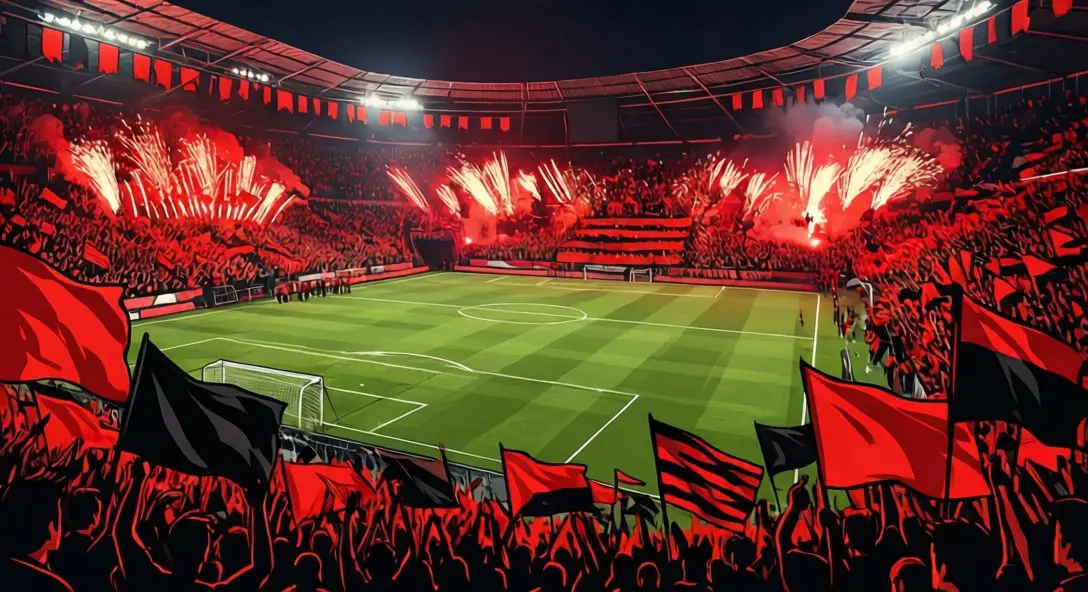
Those stripes. You know them instantly. Red and black, vertical, simple but striking. Kilpin chose them deliberately. "We will be a team of devils," he said. "Red as fire, black to invoke fear."

The nickname Rossoneri stuck. So did Il Diavolo. There's something about Milan that has always terrified opponents, even before a ball is kicked. Maybe it's the history. Maybe it's the mentality. Whatever it is, walking out at San Siro against the red and black still carries weight.

AC Milan players in red and black stripes during Champions League match
AC Milan's iconic red and black stripes on the European stage

San Siro: The cathedral

You can't talk about AC Milan without talking about their home. San Siro - officially the Giuseppe Meazza Stadium, but nobody calls it that - is one of football's great arenas. Built in 1926, holding over 75,000, it's seen things. The kind of nights that become folklore.

Here's what makes San Siro different: it's shared. AC Milan and Inter Milan play their home games on the same pitch. That's rare at this level. On derby day, there's no away dressing room in the traditional sense. Both teams are at home. Both sets of fans fill the stands. The atmosphere doesn't so much build as explode.

European nights hit different. The Curva Sud, Milan's hardcore ultras, turn the stadium into a cauldron. Visiting players talk about it afterwards. The noise, the lights, the sheer weight of history pressing down.

Tifosi creating spectacular tifo display at San Siro during Derby della Madonnina
The passion of the Rossoneri faithful at San Siro

Derby della Madonnina

Every city has its derby. But how many are named after a statue on a cathedral?

The Derby della Madonnina takes its name from the golden Virgin Mary atop Milan's Duomo. When these two meet, the city stops. Offices empty. Restaurants fill with people who don't even like football that much but can't miss this.

There used to be a class dimension to the rivalry. AC Milan drew support from the working class, dockers and factory workers. Inter attracted the bourgeoisie, the white-collar professionals. That's largely faded now - both clubs have supporters from every background - but the intensity hasn't dimmed.

Both teams play at San Siro. There's no home advantage. No familiar dressing room, no supportive crowd ratio. It's just 90 minutes of raw, unfiltered rivalry, and whoever handles it better wins.

The greatest defence ever assembled

If you know one thing about AC Milan, it's probably this: they know how to defend.

The late 1980s and early 1990s produced something special. Franco Baresi spent his entire career at Milan - 719 appearances, one club. He wasn't particularly big or quick. He just read the game better than anyone. By the time the striker had decided what to do, Baresi had already intercepted the pass.

Alongside him: Alessandro Costacurta, elegant and positionally perfect. Mauro Tassotti, versatile and technically gifted. And then there was Paolo Maldini.

Maldini made 902 appearances for Milan. His father Cesare had also captained the club. The name is woven into the fabric of the team. What made Paolo special was the economy of his game. He barely needed to tackle. He anticipated danger so early that he'd intercept or shepherd attackers away from goal without ever committing to a challenge.

This back four conceded 15 goals in the entire 1993-94 Serie A season. Fifteen. In 34 games. That record still stands, and it's hard to see anyone breaking it.

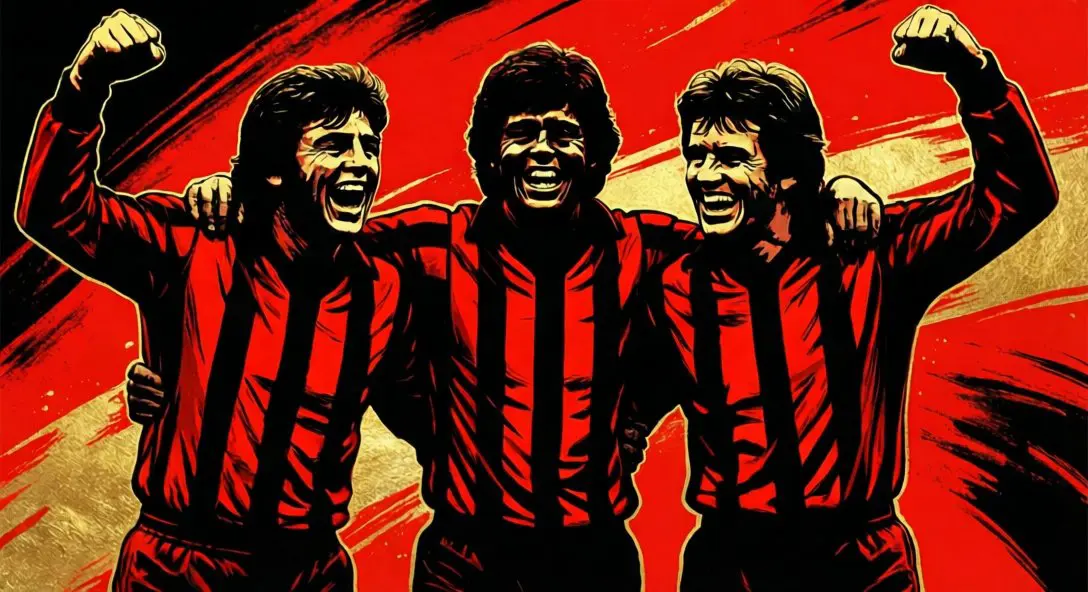
Dutch trio celebrating goal in iconic AC Milan kit
The legendary Dutch masters who defined an era

The Dutch masters

While the defence was pure Italian tactical sophistication, the attack was something else entirely. Dutch.

Marco van Basten. Ruud Gullit. Frank Rijkaard. Three players who transformed Milan into Europe's most feared team.

Van Basten was the complete striker. Elegant movement, devastating finishing, and the ability to score goals that shouldn't be possible. His volley in the 1988 European Championship final is legendary, but Milan fans saw that kind of quality regularly.

Gullit brought something different - power, pace, and an infectious joy. Those dreadlocks flying as he rampaged through midfields. He made football look fun in a way few players manage at that level.

Rijkaard was the brains of the operation. Defensive steel, creative vision, the ability to control a match from midfield.

Under Arrigo Sacchi, this team changed how football was played. They pressed high, moved as a unit, attacked and defended collectively. Back-to-back European Cups in 1989 and 1990. Pep Guardiola cites this Milan side as a major influence. That tells you everything.

One Club Man

Paolo Maldini made 902 appearances for AC Milan. When he finally retired at 41, the club retired his number 3 shirt with him. Only it wasn't really retired - they said if his sons ever played for Milan, they could wear it.

The Maldini Legacy

The Berlusconi years

Silvio Berlusconi bought AC Milan in 1986. For the next 31 years, he poured money and ambition into the club. Five European Cups. Eight Serie A titles. Countless other trophies.

Berlusconi understood something important: winning required investment, but it also required vision. He hired the best coaches - Sacchi, Capello, Ancelotti - and gave them the resources to build great teams.

The legends kept coming. Andriy Shevchenko arrived from Dynamo Kyiv and became one of Europe's deadliest finishers. Kaka won the Ballon d'Or in 2007 after dragging Milan to another Champions League. Filippo Inzaghi scored goals nobody else could score, appearing in exactly the right place at exactly the right moment.

Before all of them, there was Gianni Rivera. The Golden Boy. Ballon d'Or winner in 1969. He established Milan's reputation for elegant, artistic football long before the Dutch arrived.

AC Milan players celebrating 2021-22 Serie A title victory
The Rossoneri celebrate their 19th Scudetto

The difficult years

Berlusconi sold the club in 2017. What followed was messy. Chinese ownership, financial troubles, missed payments, sporting decline. Milan fell out of the Champions League places and stayed there. The glorious past felt very far away.

In 2022, RedBird Capital acquired the club for $1.3 billion. Gerry Cardinale's approach was different. No more lavish spending. Instead: financial sustainability, data-driven recruitment, long-term planning. A modern football operation, not a rich man's plaything.

The renaissance

The new approach worked faster than anyone expected.

Milan won their 19th Scudetto in 2021-22. Not by spending huge money, but by being smart. Stefano Pioli's coaching. Young talents like Rafael Leao and Sandro Tonali. A squad built through intelligent recruitment rather than chequebook signings.

For fans who'd suffered through the lean years, it was sweet. It proved something important: Milan could compete at the highest level without financial recklessness. The model works.

More than a football club

Milan is a fashion capital. Design, style, aesthetics - it's in the city's DNA. That cultural weight rubs off on the football club. The Rossoneri shirt isn't just sportswear; it's a fashion statement. You'll see it in music videos, on runways, in street style photos from Tokyo to New York.

This global appeal matters. AC Milan has supporters everywhere. From Brazil's favelas to Indonesia's coffee shops, those red and black stripes are recognised. The club has appeared in films, songs, literature. It represents something beyond football - a lifestyle, an aesthetic, an attitude.


European aristocrats

Seven European Cups. Only Real Madrid have more.

Milan's European pedigree isn't just about the numbers, though. It's about how they won. The 4-0 destruction of Barcelona in the 1994 final - one of the most complete performances in the Champions League's history. The 2005 final against Liverpool, the heartbreak of Istanbul. The revenge in 2007, when they met Liverpool again and got it right this time.

European nights at San Siro are something else. Players from opposing teams talk about it afterwards - the privilege and the intimidation of playing there.

What comes next

The challenge now is clear: keep competing at the highest level while staying financially sustainable. Milan's history suggests it's possible. This club has reinvented itself multiple times over 125 years.

The current squad is built around exciting young players. Developing talent rather than buying ready-made stars. It's smart, and it respects the club's tradition of nurturing players.

The fans still fill San Siro. They understand that success can't be guaranteed every season. What they demand is effort, commitment, respect for the shirt. That's non-negotiable.

On the Milan Philosophy

Football is played with the mind. Your feet are just tools. At Milan, we didn't just win matches - we changed how people thought about the game.

Arrigo Sacchi

The legacy

Walk through Milan's training ground and you feel the ghosts. Maldini. Baresi. Van Basten. Kaka. The seven European Cups in the trophy room. The weight of everything that came before.

From Herbert Kilpin's modest beginning in 1899 to the global brand of today, AC Milan has kept its identity. Passionate. Intimidating. Relentlessly successful. Red as fire. Black as fear.

The players change. The colours don't. Neither does the demand for excellence.

Forza Milan. Sempre Milan.