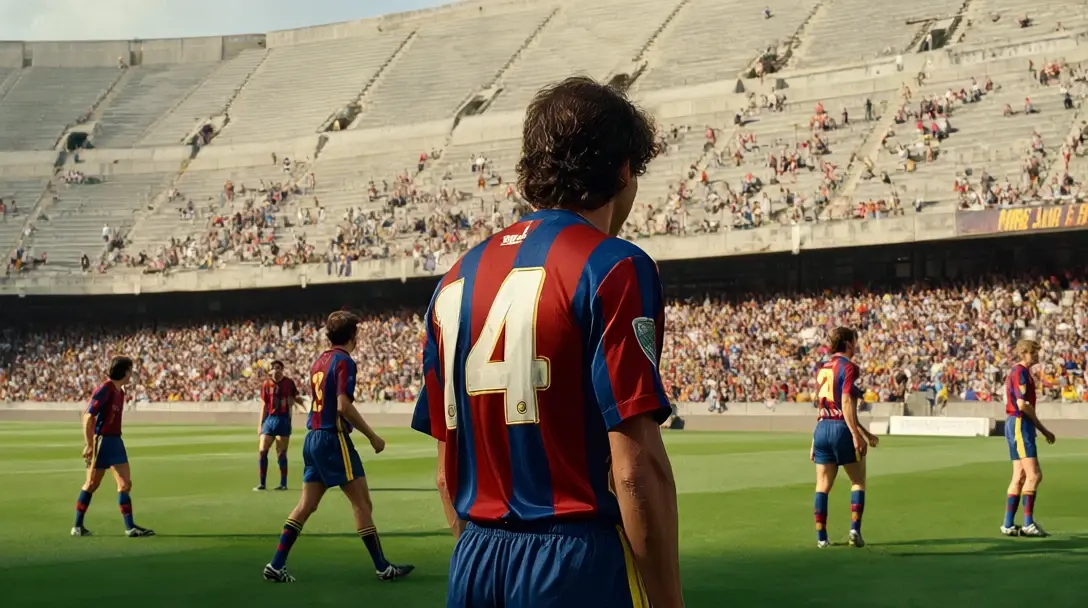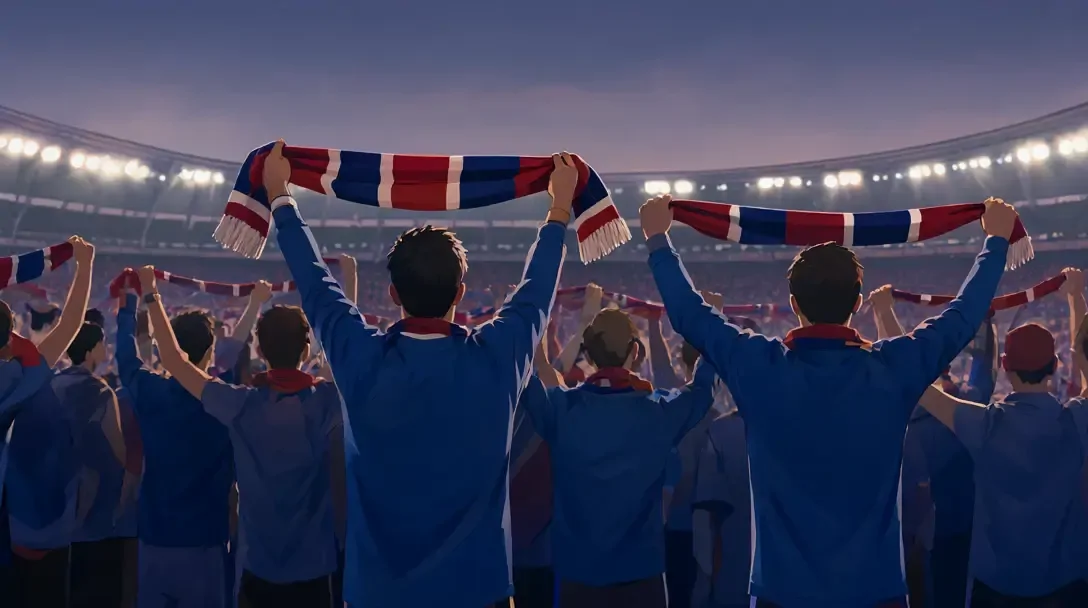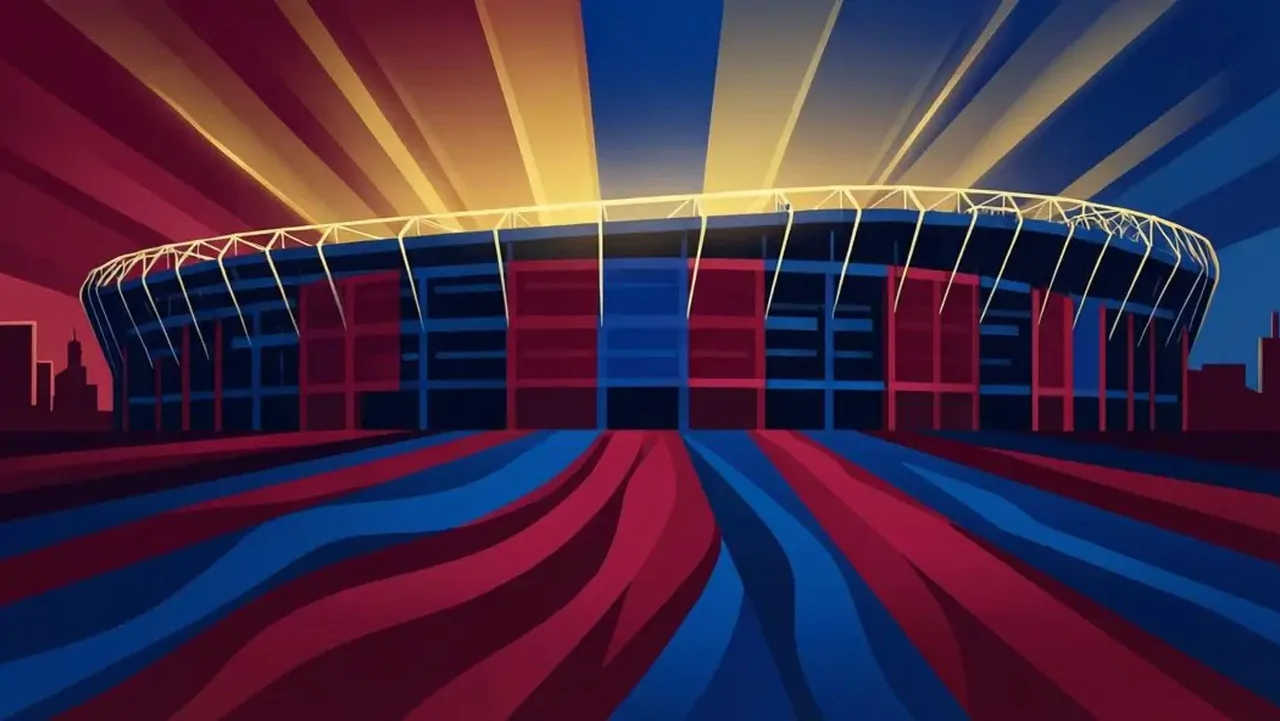
FC Barcelona blaugrana colors with Camp Nou architectural elements

FC Barcelona: The Story of "More Than a Club"

Jump to section

From a Newspaper Ad to Global Powerhouse

Walk through Barcelona on match day and you'll feel it. The streets thrum with anticipation. Scarves in blaugrana colors hang from balconies. Grandmothers who've never kicked a ball in their lives debate whether Xavi would have found space against that defense. This is what FC Barcelona means to Catalonia.

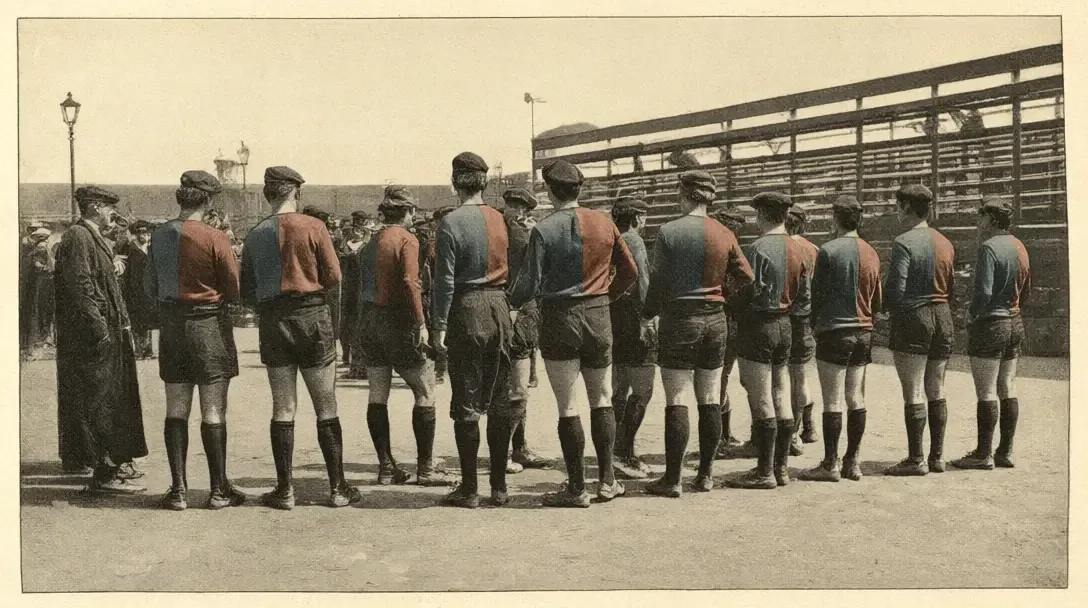
The club's motto, "Mes que un club" (More than a club), gets thrown around a lot. But spend any time here and you realize it's not marketing fluff. Barcelona football club has been part of Catalan identity since November 29, 1899, when a Swiss immigrant named Joan Gamper placed a newspaper ad looking for players. Eleven men showed up. They couldn't have imagined what they were starting.

Joan Gamper wasn't looking to build an empire. He just wanted to play football. The Swiss accountant had fallen in love with Barcelona the city and needed teammates. So he put an ad in the paper.

The eleven men who responded were a mixed bunch: Swiss, British, Catalan. They picked the blue and claret colors, supposedly matching the merchant guilds that backed them. And they got a nickname that stuck: "Cules." Back at the old Les Corts ground, fans sat on wooden benches with their backs to the street. Passersby could see their bottoms (cul in Catalan). The name became a badge of honor.

Barcelona won the first-ever La Liga title in 1929. But for decades, they were just another successful club. Good, not revolutionary. That changed when a skinny Dutchman walked through the door.
Expert Analysis

Johan Cruyff is the most important person in Barcelona's history. Messi is the greatest player, but Cruyff is the reason we have modern peak Barcelona.

Football Historian
Legendary Barcelona player silhouette in iconic pose
The legacy of Barcelona's greatest players lives on at Camp Nou

Cruyff: The Man Who Changed Everything

Johan Cruyff arrived in 1973 for a world-record fee. He was already a superstar, having won three Ballon d'Ors with Ajax. But what he did at Barcelona transcended individual brilliance.

As a player, he was something new: a forward who thought like a midfielder, a goalscorer who created as many chances as he finished. Barcelona won their first La Liga title in 14 years. The fans fell in love.

But Cruyff's real impact came when he returned as manager in 1988. That's when he installed the philosophy that still defines Barcelona today.

Possession. Movement. Players swapping positions constantly. Attack as the best form of defense. It sounds obvious now, but at the time it was radical. This was the foundation of what would become tiki-taka.

Cruyff's "Dream Team" won four straight La Liga titles and Barcelona's first European Cup in 1992 at Wembley. More importantly, they established a playing style that would influence football for decades. One of Cruyff's former players would later perfect it.

Tactical Philosophy

Possession of the ball, mobility, swapping positions and use of the entire pitch were the trademarks of Cruyff's coaching philosophy.

Coaches' Voice
La Masia youth academy with young players training
La Masia has produced generations of world-class talent

La Masia: Where the Magic Happens

You can't talk about Barcelona football club without talking about La Masia. The youth academy, properly established in 1979, is the heartbeat of the club. The name means "the farmhouse" - the old Catalan country house that first housed young players.

The graduates form a roll call of greatness. Lionel Messi. Xavi Hernandez. Andres Iniesta. Carles Puyol. Sergio Busquets. Gerard Pique. And now Lamine Yamal, Gavi, Alejandro Balde.

What makes La Masia different isn't just talent identification. Plenty of academies find good players. La Masia teaches them to play the Barcelona way from childhood. By the time a player reaches the first team, they don't need to learn the system. They've been living it for years.

The academy's peak moment? 2010. All three Ballon d'Or finalists were La Masia graduates: Messi, Xavi, Iniesta. In the Champions League final that year, seven of Barcelona's starting eleven had come through the academy. This wasn't just winning. This was vindication of an entire philosophy.

Academy Excellence

La Masia is an endless source of gems - Alejandro Balde, Gavi, Lamine Yamal, Fermin Lopez, Marc Casado, Marc Bernal, and now Dro Fernandez.

Football Analyst

Guardiola's Perfect Storm

When Pep Guardiola took over in 2008, Barcelona was in trouble. Two years without a Champions League. A trophyless season just finished. The dressing room was fracturing around Ronaldinho and Deco.

What happened next defies belief.

Guardiola, a La Masia graduate himself, took Cruyff's principles and refined them into something almost unbeatable. Tiki-taka became the buzzword: quick passing, constant movement, possession numbers regularly exceeding 70 percent. The logic was simple. If the other team never has the ball, they can't score.

Fourteen trophies in four seasons. Two Champions League titles. Three La Liga crowns. In 2009, they won six trophies in a calendar year - the first club ever to do it. The 5-0 win over Real Madrid in 2010? Still discussed in reverent tones. That was football as art.

The spine of that team was pure La Masia: Valdes in goal, Puyol and Pique at the back, Busquets anchoring midfield, Xavi and Iniesta conducting the orchestra, Messi doing things no human should be able to do. Homegrown excellence at its absolute peak.

Tactical Revolution

Under Guardiola's leadership, Barcelona devised a hypnotic style of play known as tiki-taka, marked by rapid passing, fluid movement, and maintaining possession.

Football Analysis

Messi: The Impossible Made Routine

Lionel Messi arrived at La Masia at 13. He was tiny, barely able to look his teammates in the eye. He had a growth hormone deficiency that threatened to end his career before it started. Barcelona agreed to pay for his treatment.

Good decision.

The numbers are absurd. 672 goals in 778 appearances. Ten La Liga titles. Four Champions League trophies. Six Ballon d'Or awards won in blaugrana colors. He was the first La Masia graduate to win the Ballon d'Or, proving you didn't need to sign superstars to get them.

But the statistics don't capture what made Messi special at Barcelona. It was the way he understood the system perfectly. The telepathic connection with Xavi and Iniesta. The goals that seemed to defy physics. The assists that only he could see.

When Barcelona forced him out in 2021, victims of their own financial mismanagement, Messi wept at his farewell press conference. So did plenty of fans. It felt like the end of something irreplaceable.

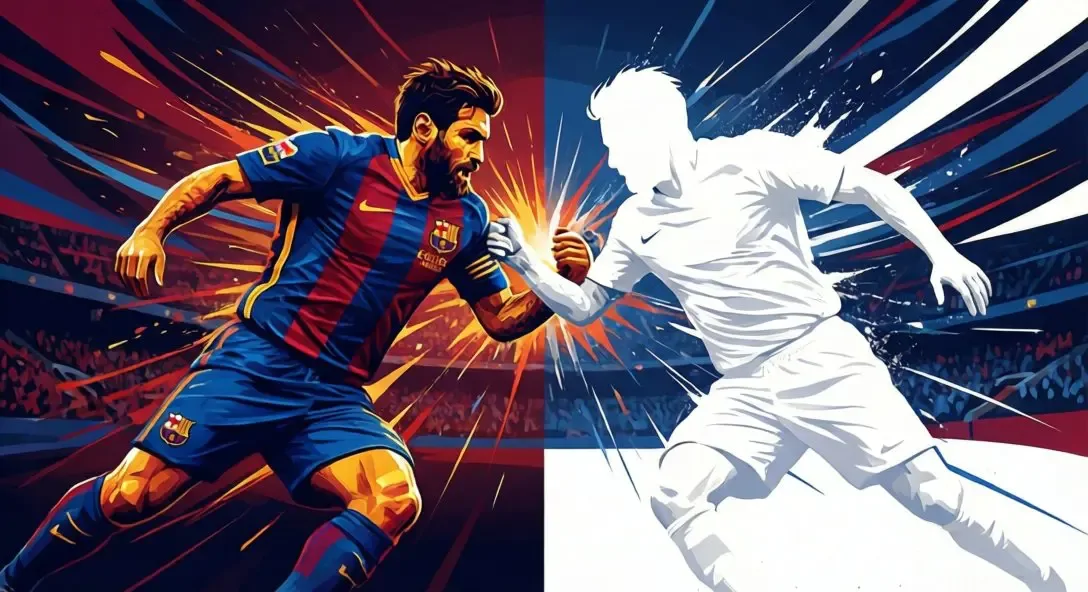
El Clasico rivalry Barcelona versus Real Madrid split composition
El Clasico - one of football's greatest rivalries

El Clasico: More Than a Football Match

Barcelona against Real Madrid. El Clasico. There's nothing else quite like it in football.

This isn't just rivalry. It's history, politics, and identity wrapped into 90 minutes. Real Madrid, historically the club of the Spanish establishment. Barcelona, the standard-bearers of Catalan resistance. Every match carries over a century of baggage.

The record is remarkably even. Across 262 competitive games: Barcelona 104 wins, Real Madrid 106, 52 draws. The goals: 436 for Barcelona, 442 for Real Madrid. Nobody dominates El Clasico for long.

Barcelona fans have their favorite memories. The 5-0 at the Bernabeu in 1974, Cruyff as captain, announcing Barcelona's arrival as a serious force. The 5-0 in 1994 with Romario running riot. The 6-2 at the Bernabeu in 2009, perhaps Guardiola's finest hour. And that 5-0 against Mourinho's Real Madrid in 2010, tactical humiliation at its most beautiful.

These matches aren't about three points. They're about proving whose philosophy, whose identity, whose way of seeing football is superior.

Camp Nou: The Cathedral

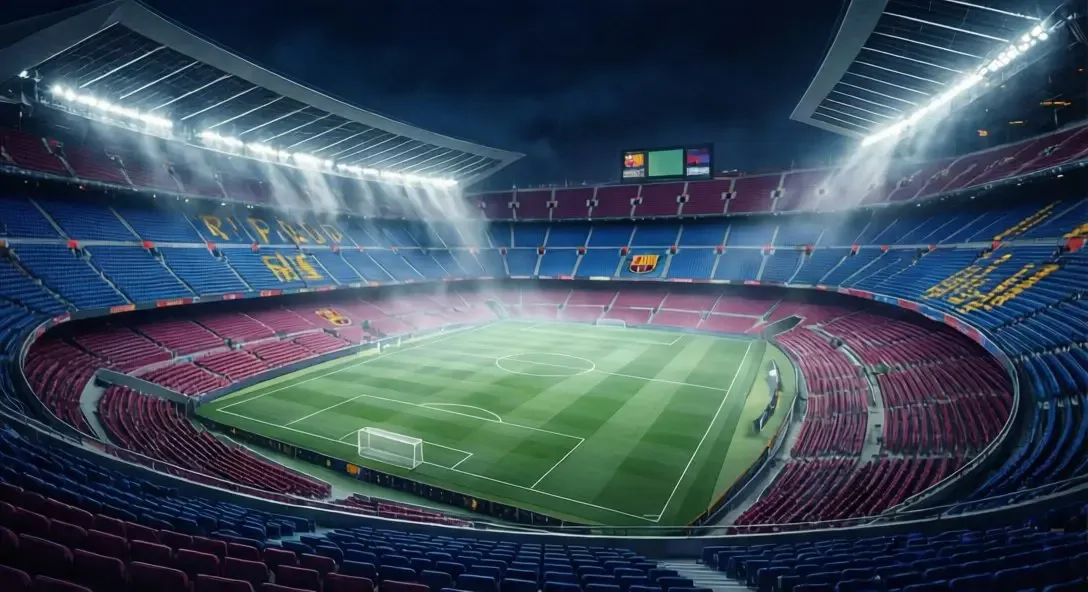
Before renovation, Camp Nou held 99,354 people. Largest stadium in Europe. Third-largest in the world. When nearly 100,000 Catalans roar together, it's not just noise. It's something primal.

The stadium opened in 1957 and has witnessed Barcelona's greatest moments. Cruyff's Dream Team lifting the European Cup. Messi's hat-tricks. The Champions League triumphs. The El Clasico victories that live forever in memory.

Since 2023, it's been transformed. The Espai Barca project has modernized everything. Partial reopening in November 2025 brought 45,401 fans back. By late 2027, it should hold 104,600 to 105,000 - still the largest in Europe.

The renovation isn't just about cramming in more seats. It's about revenue. When complete, the stadium should generate up to 400 million euros annually. For a club that nearly drowned in debt, that matters.

Camp Nou stadium at night with dramatic floodlights
Camp Nou - Europe's largest stadium, currently being transformed

The Crash and the Comeback

Let's not sugarcoat it. Barcelona's financial crisis was catastrophic.

At its worst, debt hit 1.45 billion euros. Total liabilities reportedly reached 2.5 billion. The causes? A bloated wage bill, COVID-19, terrible transfer decisions, and financial mismanagement that would make a first-year accounting student wince.

The most painful moment came in August 2021. Barcelona couldn't afford to register Lionel Messi under La Liga's financial fair play rules. The greatest player in club history, forced to leave for free. It felt like a failure of everything Barcelona claimed to stand for.

Joan Laporta, who returned as president in 2021, pulled what he called "financial levers." He sold future television rights. He sold studio assets. He slashed the wage bill. He promoted La Masia graduates instead of buying expensive replacements.

By 2026, Barcelona expects ordinary revenues exceeding 1.075 billion euros. Laporta declared the crisis over in February 2026. Not everyone believes him - the liabilities haven't vanished, and questions about sustainability remain. But the immediate bleeding has stopped.

Club President, February 2026

We have made Barca great again. Thanks to that support, we have recovered the economy, restored institutional prestige, pushed forward the Spotify Camp Nou, and made La Masia a reference again.

Joan Laporta

Flick and the Kids

Hansi Flick took charge in 2024, and he's brought something different. Not a disciple of Cruyff's philosophy in the pure sense, but a pragmatist who respects Barcelona's traditions while adapting to modern realities.

His 100th game in charge came in March 2026. That kind of stability matters at a club that chewed through managers after Messi left.

Flick's Barcelona doesn't obsess over possession like Guardiola's did. But they still attack. They still trust young players. They still play the Barcelona way, just with more flexibility. The false nine system appears when needed. Comebacks have become a trademark - this team doesn't know when it's beaten.

The star of this new era? Lamine Yamal. At 18, he's already one of the most exciting players in world football. His 2024/25 season brought 18 goals and the Aldo Rovira award. In March 2026, he scored his first La Liga hat-trick against Villarreal. Barcelona's present and future, wrapped up in one electrifying teenager.

He's not alone. Gavi, at 20, has come back from injury looking like he never left. Alejandro Balde, 21, has established himself among Europe's best young left-backs. Fermin Lopez keeps scoring important goals. All La Masia graduates. The academy keeps delivering.

Barcelona Manager, March 2026

We want to make the impossible possible.

Hansi Flick

Chasing the Sixth

As of March 2026, Barcelona leads La Liga. Real Madrid and Atletico Madrid are close behind, setting up a tense title race. Copa del Rey glory is within reach. And the Champions League? Barcelona wants number six badly.

The 4-0 win over Borussia Dortmund earlier this season proved this team can compete with Europe's best. Robert Lewandowski provides experience. Yamal and Raphinha bring youthful chaos. It's a different mix than the Guardiola years, but it works.

Flick's tactical flexibility helps. This isn't a team wedded to one system. Olmo drops deep to pull defenders out of position. Yamal and Raphinha attack inside channels. The pressing game, a Flick specialty, has added steel to Barcelona's traditional elegance.

More Than Football

To really understand Barcelona, you have to understand Catalonia.

During the Franco dictatorship (1939-1975), the Catalan language was banned. Catalan culture was suppressed. But Camp Nou became a sanctuary. Here, people could speak Catalan. Here, they could express their identity. Barcelona became a symbol of resistance.

That's why "Mes que un club" matters. It's not just branding. It's history.

In the modern era, Barcelona tries to stay politically neutral while respecting its members' views. The UNICEF partnership, started in 2006, reflects this commitment to something beyond football. Barcelona was the first club to wear UNICEF on their shirts - and they paid UNICEF for the privilege, not the other way around. The Barcelona Foundation works on education and social programs worldwide.

Young Barcelona star Lamine Yamal in dynamic action
Lamine Yamal represents Barcelona's exciting future

The Trophy Room

Barcelona's trophy collection is obscene. Eighty-one domestic titles, the most in Spain. Twenty-eight La Liga crowns. A record 32 Copa del Rey wins. Sixteen Supercopa de Espana titles.

In Europe, five Champions League trophies: 1992 at Wembley (Cruyff's Dream Team), 2006 in Paris (Ronaldinho's peak), 2009 in Rome (Guardiola's first), 2011 at Wembley again (Guardiola's masterpiece), 2015 in Berlin (the MSN trio at their devastating best).

The Champions League drought since 2015 stings. Barcelona hasn't progressed past the quarter-finals in years. Fixing that is priority number one.

What Comes Next

Barcelona heads into an uncertain future with reason for optimism.

Presidential elections are coming after Laporta stepped down in February 2026. The Camp Nou renovation needs to finish on time and budget. The balance between La Masia graduates and experienced signings needs maintaining. And that sixth Champions League trophy remains elusive.

But the pieces are in place. The financial recovery is real. The stadium will be spectacular. The young squad has talent to burn. Flick knows what he's doing. The DNA installed by Cruyff, perfected by Guardiola, embodied by Messi? It's still there.

The next chapter of Barcelona's story is being written right now. New heroes are emerging. A new stadium will host new memories. The pursuit of beautiful football continues.

For over 125 years, Barcelona has been something special. Long may it continue.

Professional headshot of Marcus Worthington, Senior Football Editor & Analyst

Marcus Worthington

Senior Football Editor & Analyst

Marcus Worthington is an experienced sports analyst and editor with over 12 years in sports journalism. Specializing in football tactics, league analysis, and long-form feature writing, Marcus provides in-depth coverage of Premier League, La Liga, and European competitions. His expertise extends to live score commentary and match result analysis, where his detailed understanding of game dynamics helps readers understand the story behind the scores. Marcus is known for his tactical breakdowns and ability to identify emerging trends in team performances.