Champions League

The Greatest Champions League Comebacks Ever (and the Odds That Wrote Them Off)

Istanbul, La Remontada, Anfield, Amsterdam and the Bernabeu: the nights the Champions League tore up the script, what the prices said at the time, and why most comeback bets still lose.

The Greatest Champions League Comebacks Ever (and the Odds That Wrote Them Off)
On this page

Dead and buried, until they weren't

Every Champions League knockout night comes with the same quiet promise. One side is 3-0 down on aggregate, the bookies have them priced like a raffle ticket, and somewhere in the ground a fan is still singing. Most nights the favourite strolls through. Every now and then, the whole thing goes up in smoke.

Those are the greatest Champions League comebacks, and they're what this piece is about. Istanbul in 2005, Barcelona's 6-1 against PSG, Liverpool's 4-0 against Barcelona at Anfield, Lucas Moura in Amsterdam, Rodrygo at the Bernabeu. You'll get the exact scores, how each one played out and, where the prices were published, what the market made of the underdog before kick-off.

The 2026/27 Champions League is about five weeks into its league phase, so the knockout rounds feel miles away. They're not. Come spring the two-legged ties are back, and so is the question every punter asks at 2-0 down: is this the night? We'll finish on how the markets price a comeback, where the value hides, and why "it happened at Anfield" is a terrible staking plan.

Quick verdict

Comebacks are legendary because they're rare: only one side in Champions League history has overturned a four-goal first-leg deficit. If you fancy the chasing team, back them To Qualify with a small stake and watch the first goal, because that's when the tie price moves hardest.

Champions League final comebacks: Camp Nou and Istanbul

Before the two-legged epics, two finals set the bar. Both were one-off matches, so there was no aggregate to chase. Just a scoreboard that looked finished.

Camp Nou, 26 May 1999: Manchester United 2-1 Bayern Munich

Mario Basler put Bayern ahead early in Barcelona, and for most of the night that was the story. Then came injury time. Teddy Sheringham equalised and Ole Gunnar Solskjaer won it, both after the 90 minutes were up, in front of 90,245 at the Camp Nou.

That gave Manchester United their first European Cup since 1968 and sealed the treble. The Premier League was wrapped up on the final day on 16 May, the FA Cup final against Newcastle followed on 22 May, and Barcelona came four days after that. Referee Pierluigi Collina later compared the noise at the end to a lion's roar.

Istanbul, 25 May 2005: AC Milan 3-3 Liverpool (Liverpool won 3-2 on penalties)

Milan were favourites and played like it. Paolo Maldini scored inside the first minute from an Andrea Pirlo free-kick, and Hernan Crespo added two more before the break. Three-nil at half-time in a European Cup final. Rafa Benitez's gamble on starting Harry Kewell had already come apart, with Kewell off injured after 22 minutes, and Dietmar Hamann replaced Steve Finnan at the interval.

Then came the Miracle of Istanbul. In roughly six minutes either side of the hour, Liverpool were level. Steven Gerrard headed in John Arne Riise's cross, Vladimir Smicer's 25-yarder squirmed past Dida, and Xabi Alonso followed up after Dida saved his penalty, given for Gennaro Gattuso's foul on Gerrard.

Jerzy Dudek's double save from Andriy Shevchenko late in extra time kept them alive. In the shoot-out Serginho and Pirlo missed, Riise missed for Liverpool, and Dudek saved from Shevchenko to end it. A side that had finished fourth in the Premier League the season before, and started this campaign in the third qualifying round, had won a fifth European Cup and kept the trophy for good. Gerrard was man of the match, and nobody argued.

Liverpool players in red celebrating in Istanbul's stadium after the 2005 final, the European Cup gleaming nearby
Istanbul 2005: from 3-0 down at half-time to a fifth European Cup.

La Remontada: Barcelona 6-1 PSG

8 March 2017 is the night every comeback still gets measured against. Three weeks earlier, on 14 February, PSG had hammered Barcelona 4-0 in Paris in the round of 16. Angel Di Maria scored twice, Julian Draxler and Edinson Cavani got the others. No side had ever come back from four down to win a Champions League tie.

Barcelona went for it from the first whistle. Luis Suarez scored in the third minute, Layvin Kurzawa turned the ball into his own net on 40, and Lionel Messi's penalty on 50 made it 3-0 on the night. Impossible had become merely unlikely.

Then Cavani scored on 62 minutes, and under the away goals rule that changed everything. Barcelona needed three more. With 88 minutes gone, it was still 3-1.

What followed is the most famous finish the competition has ever seen. Neymar scored on 88, slotted a penalty in the first minute of stoppage time, and Sergi Roberto struck at 90+5. "I told him: 'Get into the box! You're going to score!'" Neymar said afterwards. Barcelona won 6-5 on aggregate, the first team to recover from four goals down in a Champions League tie, and the night got a name of its own: La Remontada.

Barcelona 6-1 PSG, 8 March 2017

“I didn't know if I was dreaming. I have never known a noise like that.”

— Sergi Roberto, Barcelona midfielder

Barcelona on the wrong end: Roma and Anfield comebacks

Barcelona then spent the next two seasons finding out how it feels from the other side.

Roma 3-0 Barcelona, 10 April 2018

The quarter-final first leg at the Camp Nou finished 4-1 to Barcelona, helped along by own goals from Daniele De Rossi and Kostas Manolas. Edin Dzeko's late goal looked like a consolation. In Rome, Dzeko scored on six minutes, De Rossi tucked away a penalty on 58, and Manolas got the third on 82. The two men who'd scored own goals in Spain scored the goals that knocked Barcelona out. It finished 4-4 on aggregate and Roma went through on away goals.

"We did it when definitely nobody believed in us," said Dzeko.

Liverpool 4-0 Barcelona, 7 May 2019

A year later the semi-final looked over after one leg. Suarez opened the scoring at the Camp Nou on 1 May and Messi added a second-half double, the second a free-kick that was his 600th Barcelona goal. Barcelona 3-0 Liverpool.

It got worse for Liverpool before it got better: no Mohamed Salah, no Roberto Firmino. "Two of the world's best strikers are not available and we have to score four goals against Barcelona," Jurgen Klopp said before the game.

The bookmakers agreed. In bet365's pre-match prices on 7 May 2019, Liverpool were 18/1 (19.00) to qualify, Barcelona 1/50 (1.02), and the exact 4-0 Liverpool needed to go through in 90 minutes was 50/1 (51.00). Divock Origi scored early, Georginio Wijnaldum scored twice, and Origi finished it with the fourth. Liverpool then beat Tottenham 2-0 in the final in Madrid on 1 June for a sixth European Cup.

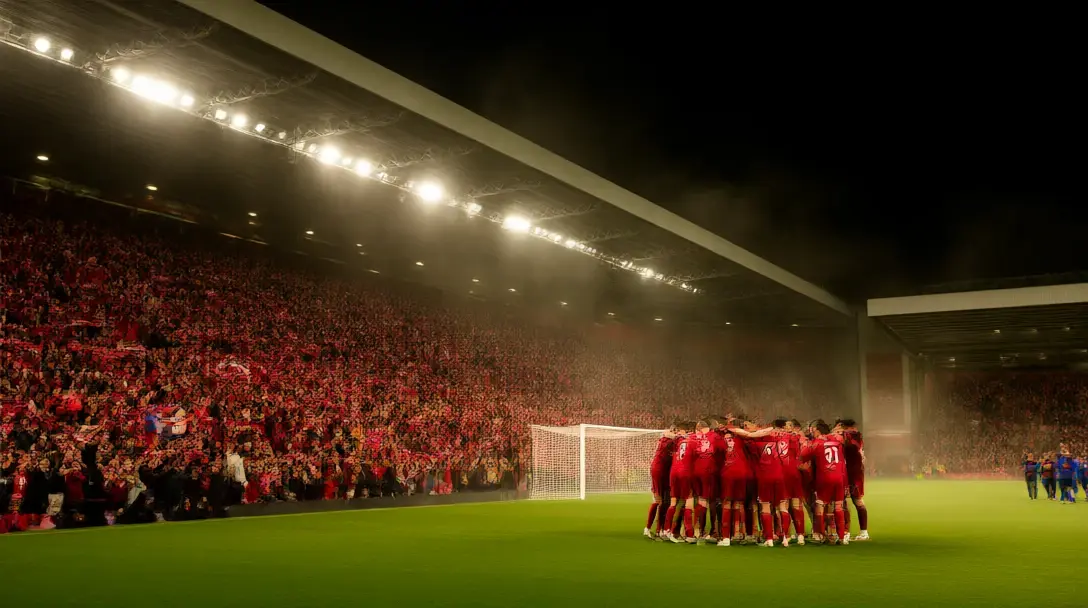
Anfield on a European night with the Kop packed in red and Liverpool players celebrating in front of it
Anfield, 7 May 2019: three goals needed, four scored.

The away-goals heists of 2019: United, Ajax and Spurs

The 2018/19 knockout rounds served up a run of comebacks that would be remarkable over a decade, never mind one spring. Two of them turned on away goals, a rule that's since been binned.

Real Madrid 1-4 Ajax, 5 March 2019

Real Madrid had won the previous three Champions Leagues and four of the last five. They won the first leg 2-1 in Amsterdam, which looked like job done. Back at the Bernabeu, Ajax won 4-1 and went through 5-3 on aggregate. The holders were out in the round of 16.

PSG 1-3 Manchester United, 6 March 2019

The very next night, United did something stranger still. They'd lost the first leg 2-0 at Old Trafford to goals from Presnel Kimpembe and Kylian Mbappe, their first ever two-goal home defeat in Europe. Romelu Lukaku scored after two minutes in Paris, Juan Bernat equalised on 12, and Lukaku struck again on 30.

PSG still held the aggregate lead deep into added time. Then Kimpembe handled, and Marcus Rashford scored the penalty at 90+4. It finished 3-3 on aggregate and United went through on away goals, the first team in Champions League history to advance after losing a home first leg by two goals or more.

Ajax 2-3 Tottenham, 8 May 2019

Ajax rode that momentum into the semi-final and won 1-0 at Tottenham. In Amsterdam, Hakim Ziyech's first-time finish from Dusan Tadic's cut-back made it 3-0 on aggregate before half-time. Spurs, a club that had lost its three previous semi-finals, looked finished.

Lucas Moura had other ideas. Three clinical finishes, the last from Dele Alli's flick, shot across Andre Onana. 3-3 on aggregate, Spurs through on away goals, and Mauricio Pochettino in tears at the final whistle. Moura became only the fifth player to score a hat-trick in a Champions League semi-final.

PSG 1-3 Manchester United, 6 March 2019

“We always believed. We set out our plan, and it wasn't about keeping the ball. The plan was to get the first goal and be in the game in the last five or ten minutes – and we were.”

— Ole Gunnar Solskjaer, Manchester United caretaker manager

Real Madrid 2022: the never-say-die run

UEFA scrapped the away goals rule from the 2021/22 season. Level ties now go to 30 minutes of extra time, then penalties. Real Madrid promptly put together a whole campaign of comebacks under the new rules.

PSG, round of 16

Mbappe won the first leg for PSG at 90+4 in Paris on 15 February, then scored again in Madrid on 9 March to make it 2-0 on aggregate. Karim Benzema answered with a hat-trick in 17 minutes, on 61, 76 and 78. Real Madrid 3-1 PSG, 3-2 on aggregate.

Chelsea, quarter-final

Real won 3-1 at Stamford Bridge, then lost 3-2 at home after extra time. They went through 5-4 on aggregate, the sort of tie they seemed to survive on muscle memory.

Manchester City, semi-final

City won the first leg 4-3 and led 1-0 in Madrid, 5-3 on aggregate, with 88 minutes gone in the second leg. Phil Foden missed from a yard out, and Thibaut Courtois kept out Jack Grealish with his foot. Then substitute Rodrygo scored on 90 and again on 90+1, two goals in about a minute, to make it 5-5. Real won it in extra time, 6-5 on aggregate, and beat Liverpool 1-0 in the final at the Stade de France on 28 May.

How rare are Champions League comebacks?

Highlight reels make comebacks look routine. UEFA's own record book tells a different story. In the history of the Champions League, an away team has overturned a first-leg deficit just seven times. Home sides in the second leg have managed it more often, but only once from four goals down and four times from three.

The three-goal club includes a name that's slipped out of most people's memories: Deportivo La Coruna, who lost 4-1 to AC Milan in 2003/04 and then beat them 4-0 in Spain. The newest member arrived last season. Bodo/Glimt, who'd knocked out Inter in the play-offs, beat Sporting CP 3-0 in Norway. Back in Lisbon, Sporting levelled the tie through Goncalo Inacio, Pedro Goncalves and a Luis Suarez penalty 12 minutes from time. Maximiliano Araujo then scored within two minutes of extra time, and substitute Rafael Nel added a fifth in the 121st minute.

Tie Season First-leg deficit Second leg
Barcelona v PSG 2016/17 4-0 Barcelona won 6-1, 6-5 agg
Deportivo v AC Milan 2003/04 4-1 Deportivo won 4-0, 5-4 agg
Roma v Barcelona 2017/18 4-1 Roma won 3-0, away goals
Liverpool v Barcelona 2018/19 3-0 Liverpool won 4-0, 4-3 agg
Sporting v Bodo/Glimt 2025/26 3-0 Sporting won 5-0 aet, 5-3 agg
Juventus v Atletico Madrid 2018/19 2-0 Juventus won 3-0, Ronaldo hat-trick
Atalanta v Dortmund 2025/26 2-0 Atalanta won 4-1, 4-3 agg

Two-goal turnarounds crop up more often, such as Barcelona's 4-0 against AC Milan in 2012/13 and Bayern's 6-1 against Porto in 2014/15. What no table shows you is every second leg where the side 2-0 or 3-0 up simply went through. That list is far, far longer. We remember Istanbul precisely because it almost never happens.

Comeback betting odds: what the prices were really saying

Liverpool at 18/1 with bet365 before the Barcelona second leg (pre-match prices, 7 May 2019) is the cleanest example you'll find of a market writing a team off. Here's what those prices meant as plain probabilities.

Implied probability (fractional a/b) = b / (a + b)

Liverpool to qualify   18/1  (19.00)  = 1 / 19   ≈ 5.3%
Liverpool to win 4-0   50/1  (51.00)  = 1 / 51   ≈ 2.0%
Barcelona to qualify   1/50  (1.02)   = 50 / 51  ≈ 98.0%

Add the two qualification prices together and you get more than 100%. That extra is the bookmaker's margin, and it's built into every price you see. A £10 bet on Liverpool at 18/1 returned £190 including the stake. The same £10 on Barcelona at 1/50 would have returned £10.20, had it come in.

The markets that matter in a two-legged tie

  • To Qualify. The tie market, priced off the first-leg score, and it moves hard with every goal in-play. It pays if your team goes through by any route, extra time and penalties included.
  • Match Result. Only half the picture in a second leg. A 2-1 win is no use to a side 3-0 down, so always check whether you're backing the leg or the tie.
  • Correct Score. Lets you target the exact scoreline a comeback needs, as the 50/1 about Liverpool 4-0 showed. The odds are long because one goal either way kills it.
  • Asian handicap. Lines such as -1.5 or -2.5 on the chasing side give you cleaner exposure to "win by enough" than a straight result bet.
  • Next goal and total goals. When a side has to attack, goals tend to follow, at both ends. A lot of the in-play action lives in these markets.

Cash out is worth a word too. It's the bookmaker's offer to settle your bet early at a price they set, with their margin built in. Handy sometimes, never free money. Our live betting guide covers the in-play side in more depth.

Where in-play value can hide

Our view: comebacks create value because the market has to price something rare in real time, with sentiment pulling both ways. A red card, an injury, an early goal for the chasing side or a favourite sitting too deep can all shift the tie price faster than the game itself is changing. That's when a sharp eye earns its keep.

Value isn't the same as likely, though. An 18/1 shot that should be 14/1 is a good bet that still loses most of the time, and backing every side 3-0 down would lose far more often than it wins. If you'd rather act on the swings than sit on one ticket, our guide to in-running trading on football explains how it works.

Close view of a pen and folded betting slip on a bookmaker's counter with blurred football screens behind
18/1 to qualify against 1/50: the market had already written the tie off.

Our betting angles for comeback nights

  • Back the tie, not the night. If you fancy a comeback, To Qualify is the market that pays for it. A second-leg win that falls short pays nothing on the tie.
  • The first goal is everything. Solskjaer's plan in Paris was to score first and be in it late. When a chasing side scores early, look at the tie price straight away rather than waiting for half-time.
  • No away goals means more extra time. Level aggregates now go to 30 minutes and penalties, so extra-time and shoot-out markets come into play more often than in the Roma or Spurs era.
  • Late goals happen, so price them in. Barcelona scored three from the 88th minute on, Rashford hit 90+4, Rodrygo scored twice in about a minute. Laying a chasing side's tie price late on is rarely as safe as it feels.
  • Respect the odds-on favourite. Barcelona at 1/50 lost, but for every Anfield there are far more nights when the heavy favourite cruised through. Upsets make headlines because they're rare.
  • Small stakes on long shots. If you want a piece of the next Istanbul, treat it as a fun-sized punt, not a plan. Liverpool's 18/1 was roughly a one-in-19 shot on the bookmaker's own numbers.

Whatever you back in the knockout rounds, set your stake before kick-off and stick to it, however loud the stadium gets.

Topics

Professional headshot of Marcus Worthington, Senior Football Editor & Analyst

About the author

Marcus Worthington

Senior Football Editor & Analyst

Marcus Worthington is an experienced sports analyst and editor with over 12 years in sports journalism. Specializing in football tactics, league analysis, and long-form feature writing, Marcus provides in-depth coverage of Premier League, La Liga, and European competitions. His expertise extends to live score commentary and match result analysis, where his detailed understanding of game dynamics helps readers understand the story behind the scores. Marcus is known for his tactical breakdowns and ability to identify emerging trends in team performances.