In-Running Trading: How to Trade Football Matches for Guaranteed Profit
Football Trading Guide

In-Running Trading: How to Trade Football Matches for Guaranteed Profit

Jump to section

Introduction

Ever watched a football match and thought you knew what would happen next? What if you could turn those predictions into profit—not by gambling on the final result, but by trading the ups and downs of live matches?

In-running trading (also called in-play trading or live betting) has changed how people approach football trading. Unlike traditional betting where you place your wager before kick-off and wait 90 minutes to learn your fate, in-running trading lets you react to the game as it unfolds. You enter and exit positions like a stock trader monitoring market fluctuations.

The phrase "guaranteed profit" isn't marketing hype here. It's a mathematical reality once you understand how to hedge positions and trade out of bets at the right moment. But here's the reality check: achieving consistent profits requires knowledge, discipline, and a completely different mindset from casual betting.

What Is In-Running Trading?

In-running trading means placing bets on football matches after kick-off with the intention of closing your position before the final whistle. You're not trying to predict who will win—you're exploiting price movements as odds fluctuate in response to on-field events.

Think of it like day trading on the stock market. Instead of buying and selling shares, you're backing and laying outcomes on betting exchanges like Betfair or Betdaq. When you back something, you're betting it will happen. When you lay something, you're betting it won't happen (essentially acting as the bookmaker).

The difference? Traditional bettors are stuck with their decisions. Traders can cut losses, secure profits, or reverse positions instantly based on what they're watching.

What Makes In-Running Trading Different?

Aspect Pre-Match Betting In-Running Trading
Information Access Limited to historical data and team news Real-time match events visible as they happen
Odds Movement Gradual shifts based on betting volume Rapid changes driven by goals, cards, momentum
Profit Source Predicting the final outcome correctly Exploiting price inefficiencies and overreactions
Time Horizon Until match ends Minutes to hours
Risk Management Single bet placement—you're committed Multiple entry and exit points to manage risk

In-play trading gives you the ability to react. A goal changes everything. A red card transforms the match dynamic. A dominant performance that hasn't produced goals yet creates opportunity. These moments create price movements you can profit from—regardless of who eventually wins.

How "Guaranteed Profit" Actually Works

The phrase "guaranteed profit" gets thrown around a lot in trading circles, so let's be precise about what it means. In in-running trading, profit becomes guaranteed when you hedge or trade out of your position.

Here's a simple example:

  • You back Team A at odds of 3.00 with £100 stake
  • Your potential profit: £200 (3.00 × £100 - £100 stake)
  • Team A scores early and their odds drop to 1.80
  • You now lay Team A at 1.80 with a £138.89 stake

The result? If Team A wins, you win £200 from your back bet but lose £88.89 from your lay bet—net profit £111.11. If Team A doesn't win, you lose your original £100 but win £138.89 from the lay bet—net profit £38.89. Either way, you're in profit.

This mathematical certainty is what traders mean by "guaranteed profit." It's not about predicting the future—it's about locking in gains when the market moves in your favor.

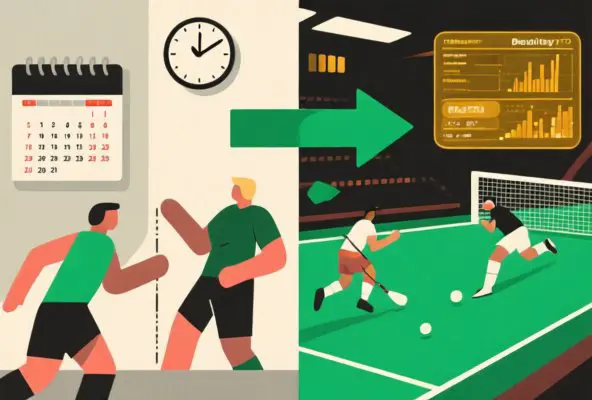
Editorial illustration comparing pre-match betting with in-play trading
In-play trading provides real-time advantages unavailable in pre-match betting

Strategy Selection Mindset

Before diving into specific strategies, remember this fundamental principle: successful trading isn't about predicting the future—it's about managing risk and exploiting price movements as they happen. The following strategies have been proven effective by professional traders, but they all require discipline, patience, and proper bankroll management.

Greed kills traders. Take your profits when available rather than digging for too much gold in each individual trade.

UK Football Trading

Essential In-Running Trading Strategies

Professional football traders don't rely on gut feeling or lucky hunches. They use proven trading strategies developed through years of experience and countless hours of analysis. Here are the most effective approaches that consistently profitable traders use.

1. Lay The Draw (LTD)

The Lay The Draw strategy is the most famous football trading approach—and for good reason. When executed correctly, it offers one of the highest strike rates in trading strategies.

How it works:

  1. Identify matches with high goal probability using statistics
  2. Lay the draw (bet against a draw) before kick-off or early in the match
  3. Wait for a goal—typically from the stronger team
  4. After the goal, the draw odds increase dramatically
  5. Back the draw at the higher odds or simply trade out for profit

Why it works: Football has become increasingly attacking, especially in top leagues. Strong teams playing at home against weaker opposition frequently score, and when they do, the draw becomes much less likely—causing those odds to spike.

The key to success: Team selection. This strategy fails when you apply it randomly. You need to filter matches carefully:

  • Home teams with strong attacking records (recent goals scored)
  • Away teams with poor defensive records (recent goals conceded)
  • Teams that need to win (league standings, relegation battles, title races)
  • Avoid defensive-minded teams or low-scoring leagues

Variations:

  • Late LTD: Enter the position 20-30 minutes into the match when draw odds have naturally dropped, requiring less stake to achieve the same profit
  • First Goal Insurance: Place a small cover bet on 0-0 correct score to protect against the worst-case scenario

With proper filtering, experienced traders achieve 70-80% strike rates with average profits of 2-4% per trade. The risk? The match ends 0-0 and you lose your stake—which is why careful selection is crucial.

2. Backing the Home Favourite (Late Value)

This strategy capitalizes on one of the most predictable psychological patterns in football betting: market overreaction.

The scenario: A strong home team expected to win 2-0 or 3-0 reaches the 60th minute with the score still 0-0. The market panics. The home team's odds drift from 1.50 to 2.50 or higher. Everyone assumes they've "choked."

How it works:

  1. Identify home teams with clear statistical superiority
  2. Wait until the second half if the score remains 0-0
  3. Back the home team at the inflated odds (market panic)
  4. Trade out after the expected late goals occur

Why it works: Professional football is different from the amateur game. Fitter, stronger, better-organized teams often score late when opponents tire. The market sometimes forgets this, creating value.

Key indicators to look for:

  • Home team dominating possession and shot count
  • Crowd pressure mounting visibly
  • Away team defending desperately (substitutions, time-wasting)
  • Historical data showing the team frequently scores late

Risk profile: This is a high-risk, high-reward strategy. When it works, you can see returns of 300-400% on your stake. When it fails—and the underdog holds on for the draw or scores a shock winner—you lose your entire stake. It requires strong nerves and strict bankroll management.

3. Under 2.5 Goals (Time Decay Strategy)

This strategy exploits one of the most reliable phenomena in in-running trading: time decay.

How it works:

  1. Back Under 2.5 Goals before kick-off or early in the match
  2. Hold your position for 10-20 minutes
  3. Trade out as odds naturally shorten due to time passing
  4. Bank profit from time decay, not from actual goals

The mathematics: Every minute that passes without a goal makes the under 2.5 goals outcome more likely. Therefore, the odds shorten. You're not betting on what will happen—you're betting on what hasn't happened yet.

Best conditions:

  • Low expected goals (xG) matchups between defensive teams
  • Poor weather affecting playing conditions
  • Unimportant matches where teams lack motivation
  • Teams with conservative tactical approaches

Time windows: Most effective for 10-20 minute holds. Avoid the final 15 minutes when goal risk increases dramatically due to desperation tactics and fatigue.

Profit potential: Small but consistent—typically 1-3 ticks per trade. The key is volume and discipline, not hitting home runs.

Bet Angel Founder

Scalping is like picking up pennies in front of a steamroller. Market selection is key—you need markets that won't move dramatically against you.

Peter Webb

More In-Running Trading Strategies

4. Over 2.5 Goals Trading

The natural complement to the time decay strategy—profiting from expected goals without needing to predict the exact final score.

How it works:

  1. Identify high-probability goal matchups (attacking teams, poor defenses)
  2. Wait for optimal trading windows (team pressure, corners, dangerous attacks)
  3. Back Over 2.5 Goals
  4. Trade out after 1-2 goals are scored

Best scenarios:

  • Attacking teams versus defensive teams (style mismatch)
  • Teams that need to win (league position implications)
  • High expected goals (xG) from statistical models
  • Late-game situations when trailing teams push forward desperately

Exit strategy:

  • After 1 goal: Secure a small profit immediately
  • After 2 goals: Larger profit but higher risk of goal drought
  • Stop-loss: If no goals occur within your predetermined timeframe

The advantage: You don't need to predict who will win or the exact score—just that goals will come. In modern attacking football, this happens frequently in the right matchups.

5. Lay the Leading Underdog

This countertrend strategy appeals to traders who love backing statistical reversion.

The scenario: A strong favorite concedes an early goal—a shock lead for the underdog. The market overreacts dramatically. The favorite's odds drift from 1.40 to 3.00 or higher, while the underdog's odds crash to extremely low levels.

How it works:

  1. Identify matches where a strong favorite faces a clear underdog
  2. Wait for the favorite to concede a shock early goal
  3. Lay the underdog at their now-low odds
  4. Wait for the expected comeback or trade out at reduced odds

Risk/reward profile:

  • Risk: Low stake required (you're laying at low odds)
  • Reward: High percentage returns when the favorite equalizes
  • Strike rate: 60-70% with proper team selection

Critical success factors:

  • Confirm that statistics support the favorite's superiority (shots, possession, xG)
  • Check for red cards (a sending-off invalidates this strategy completely)
  • Ideal timing: second half (less time for comeback, but underdog fatigue helps)

6. In-Play Scalping

For traders who prefer making many small profits rather than waiting for big market moves, scalping offers a different approach to Betfair trading.

What is scalping? Making multiple tiny profits from rapid-fire trades during stable market periods—typically from 1-3 tick movements, holding positions for seconds or minutes at most.

How it works:

  1. Enter the market during low-volatility periods (no recent goals/cards)
  2. Place a back bet at the current price
  3. Immediately place a lay bet 1-2 ticks higher
  4. Profit when both orders are matched
  5. Repeat 20-50+ times per session

Why it's challenging: You're competing against professional traders with faster connections, better software, and years of experience. One goal against your position can wipe out dozens of successful scalps.

Requirements for success:

  • High-speed internet (hardwired connection preferred)
  • Specialized trading software (Geeks Toy, Bet Angel, Cymatic)
  • High liquidity markets (Premier League, Champions League)
  • Extreme discipline and emotional control
  • Distraction-free environment

Realistic earnings:

  • Beginners: £10-30 per 2-hour session
  • Experienced: £50-150 per session
  • Full-time potential: £1,000-3,000 per month (for the top 5% of scalpers)
Editorial illustration of profit concepts with upward trends and green indicators
Trading out locks in guaranteed profit regardless of match outcome

The Mathematics of Trading Out

Understanding when and how to exit positions is what separates traders from gamblers. Here's the practical mathematics you need to master for successful football trading.

Trading Out Calculation

When you want to lock in a guaranteed profit, you need to calculate the correct stake for your opposing bet.

Lay Stake Required = (Back Stake × Back Odds) ÷ Current Lay Odds

Example:
- Original position: Back £100 at 3.00
- Current odds after market movement: 2.50
- Calculation: (100 × 3.00) ÷ 2.50 = £120 lay stake
- Guaranteed profit: £20 regardless of final result

When to Trade Out

Professional traders have clear rules for exiting positions:

Profit Targets: Pre-determined profit levels that trigger an automatic exit (e.g., "I'll trade out when I hit £30 profit")

Market Reversals: When momentum shifts against your position (e.g., you backed the favorite and they just had a player sent off)

Event Risk Approaching: Times when match events become more likely (late in the match when teams commit players forward)

Time Stops: Exiting at a planned time regardless of profit (e.g., "I'll close this position at the 70th minute")

Trading Out Methods

Full Green Up: Distributing profit equally across all outcomes so you win the same amount no matter what happens

Partial Green: Securing most of your profit but leaving a small "runner" on one outcome in case of further favorable movement

Stop Loss: Cutting losses at a predetermined level to prevent small losses from becoming catastrophic ones

Free Bet: Arranging your position so your original stake is returned, but profit remains on one outcome (zero risk, potential upside)

Editorial illustration of risk management with balance scales and protective elements
Proper risk management is the foundation of successful trading

Risk Management: The Foundation of Success

Every successful trader agrees on one thing: risk management matters more than strategy. Without proper bankroll management, even the best trading system will eventually fail.

The Golden Rules of Bankroll Management

1. Never risk more than 1-2% of your total bankroll on a single trade

If you have £1,000, your maximum risk per trade should be £10-20. This conservative approach ensures you survive the inevitable losing streaks that every trader experiences.

2. Never risk more than 10% of your bankroll in a single session

Set a hard stop-loss for each day. When you hit 10% of your bankroll in losses, stop trading. No exceptions. No "I'll win it back."

3. Take mandatory breaks after 3 consecutive losses

Three losses in a row often indicates emotional state issues or poor market conditions. Step away, reassess, and return with a clear head.

4. Scale stakes to confidence level

Use a points-based system:

  • 1 point: Low confidence/value
  • 2 points: Medium confidence
  • 3 points: High confidence

As your bankroll grows, your points increase in monetary value—but the percentage risk remains constant.

Bankroll Progression Example

Starting Bankroll: £1,000
Max Risk Per Trade (2%): £20
Monthly ROI Target (5%): £50
Yearly Goal: 60% return (£600)

This might not sound like much—but remember, this is scalable and can be done alongside other income sources. And unlike a savings account, your "interest" comes from 2-4 hours of engaging work during matches you'd likely watch anyway.

Position Sizing

The size of your positions should reflect both your confidence level and your recent performance:

  • Reduce stakes after losses—never increase to "win back" money
  • Increase gradually with proven success—don't jump stakes based on one good week
  • Never chase losses with larger bets—this is the fastest route to bankruptcy
  • Accept that variance is normal—even the best traders have losing weeks

Diversification

Don't rely on a single strategy or market type. Successful traders:

  • Trade multiple strategies across different match situations
  • Focus on various leagues and competitions
  • Operate in different time windows (first half, second half, late goals)
  • Avoid overexposure to any single outcome
Editorial illustration of trading software interface with charts and data visualization
Specialized trading software provides speed and information advantages

Essential Tools and Software for In-Running Trading

While it's possible to trade using only the Betfair website, serious traders invest in specialized tools that provide speed, information, and automation advantages.

Trading Software Comparison

Software Annual Cost Strengths Best For
Geeks Toy £60 Speed, customization, ladder interface Scalpers, advanced traders
Bet Angel Professional £149.99 Automation, advanced tools, modelling Automation users, multi-market traders
Bet Angel Trader £60 Ease of use, learning materials Beginners, intermediate traders
Cymatic £59.99 Modern interface, excellent training mode All levels, great value
Gruss £60 Excel integration, automation capabilities Automation enthusiasts
FairBot £99 Charting, technical analysis features Technical traders

Must-Have Software Features

Ladder Interface: Shows all available prices vertically, making it easy to see market depth and place precise bets at specific odds levels

One-Click Betting: Eliminates the delay of confirming bets—critical when every second counts in fast-moving markets

Position in Queue: Shows where your bet sits in the queue to be matched, helping you understand whether your price will be taken

Charts and Graphs: Visual representation of price history helps identify patterns and support/resistance levels

Training Mode: Practice trading without risking real money—essential for learning strategies

Free Alternatives for Beginners

Betfair Exchange Website: Completely free with basic charting and cash-out functionality. Sufficient for learning the basics.

Betdaq Pro: Offers basic trading features at no cost—a good practice environment.

Mobile Apps: The Betfair Exchange app provides on-the-go access, though not recommended for serious trading due to slower execution.

Data and Statistics Sources

Free Resources:

  • FlashScore: Live scores and in-play statistics
  • SoccerWay: Historical data and form guides
  • WhoScored: Advanced metrics including expected goals (xG)
  • Infogol: Expected goals models and predictions

What metrics matter most?

  • Goals scored and conceded (recent form)
  • Expected goals (xG) for quality chances
  • Head-to-head records between teams
  • Home and away performance splits
  • Injury and suspension news

Common Mistakes That Destroy Bankrolls

Understanding what not to do is just as important as learning correct strategy. Here are the mistakes that consistently lose traders money in in-running trading.

1. Emotional Trading

Chasing losses: Increasing stakes to recover from previous losses—a psychological trap that almost always leads to bigger losses.

Revenge trading: Trying to immediately "get back" at the market after a bad beat, usually with poorly thought-out positions.

Overconfidence after wins: Increasing stakes dramatically after a few successful trades, forgetting that variance swings both ways.

Trading when angry or tired: Emotional states cloud judgment and lead to poor decisions. Professional traders treat trading like a business, not an emotional outlet.

2. Poor Strategy Selection

Using the same strategy in all markets: A strategy that works in the Premier League might fail completely in lower divisions where dynamics differ.

Trading unsuitable matches: Applying Lay The Draw to teams that rarely score, or backing overs in defensive-minded leagues.

Ignoring market conditions: Trading during low liquidity periods when you can't enter or exit positions efficiently.

No statistical validation: Trading based on "feel" rather than data and historical performance.

3. Inadequate Preparation

No pre-match research: Entering markets without knowing team news, injuries, or tactical setups.

Missing key information: Not checking weather conditions, team motivation, or fixture congestion.

No trading plan: Entering markets without clear entry, exit, and stop-loss rules.

4. Stake Mismanagement

Betting too large a percentage: Risking 5-10% of your bankroll on single trades guarantees eventual bankruptcy.

Increasing stakes after losses: The classic gambler's ruin pattern—trying to win back losses with larger bets.

No stop-loss discipline: Letting losing positions run instead of cutting losses at predetermined levels.

Greed: Holding for too much profit instead of securing reasonable gains when available.

5. Technical Failures

Slow internet connection: In in-running trading, seconds matter. A lagging connection costs money.

Unreliable software: Using free or poorly designed software that crashes or misfires during critical moments.

Not practicing enough: Jumping into real-money trading without extensive practice in training mode.
Professional Trader

The biggest mistake beginners make is trying to trade everything at once. Football trading is much easier when you focus on one market and learn how prices move during a match.

Caan Berry

Realistic Expectations: What's Actually Possible?

Let's cut through the hype and look at what realistic football trading earnings look like.

Beginner Expectations (First 6 Months)

Your primary goal: Learn without losing significant money. That's it. If you break even during your first six months while developing skills, you're doing well.

Realistic monthly target: Break even to +5% ROI
Daily income potential: £10-30 (2-4 hours of focused trading)
What to focus on: Strategy mastery, not profit. You're still in the learning phase.

The first six months should be about education. Use practice modes extensively. Start with minimum stakes. Accept that you're paying tuition to the markets while developing your skills.

Intermediate Expectations (6-24 Months)

Monthly target: +5-10% ROI on your bankroll
Daily income potential: £30-100
Main challenge: Scaling stakes responsibly while maintaining discipline

At this stage, you've developed a few trading strategies that work for you. You understand risk management. You keep detailed records. You're not getting rich, but you're consistently profitable.

Advanced Expectations (2+ Years)

Monthly target: +10-20% ROI
Daily income potential: £100-300+
Focus: Maximizing expected value (EV) opportunities and adapting to market changes

Few traders reach this level. Those who do typically treat trading as a serious business, maintain emotional discipline, and continuously refine their approach based on detailed performance analysis.

The Reality Check

Here's what most "get rich quick" trading courses won't tell you:

  • 70-80% of traders lose money long-term—the same percentage as traditional sports bettors
  • Only 5-10% achieve consistent profitability year after year
  • 1-2% reach professional/full-time level and make a living exclusively from trading
  • Most profitable traders have other income sources initially—it's not a quick path to quitting your job

Costs of trading:

  • Betfair Commission: 5% (reduces with volume, but still significant)
  • Premium Charge: Up to 60% on very profitable accounts
  • Software: £60-£150 per year
  • Data Services: £0-£100+ per month for advanced metrics
  • Losing Streaks: Inevitable, even for skilled traders

Getting Started: Your First Steps

Ready to try in-running trading? Here's how to start without blowing up your bankroll.

Step 1: Learn the Basics

  • Open accounts on Betfair Exchange and Betdaq (start with Betfair for liquidity)
  • Spend at least two weeks watching markets without trading
  • Observe how odds move during different match situations
  • Read everything you can about the strategies that interest you

Step 2: Choose Your Software

Download trial versions of Geeks Toy, Bet Angel, or Cymatic. Use their training modes extensively. Practice the mechanics of backing, laying, and trading out until it becomes second nature.

Step 3: Develop One Strategy

Don't try to learn everything at once. Pick one strategy—Lay The Draw is recommended for beginners—and master it:

  • Create your filtering criteria for match selection
  • Define your entry and exit rules clearly
  • Practice the strategy in training mode for at least 50 matches

Step 4: Start Small

When you're ready to risk real money:

  • Begin with minimum stakes (£2 minimum on Betfair)
  • Focus on learning, not earning
  • Record every trade in a spreadsheet
  • Review your performance weekly

Step 5: Build Your Track Record

Before increasing stakes:

  • Show consistent profitability over at least 100 trades
  • Demonstrate proper risk management throughout
  • Identify and eliminate mistakes from your trading
  • Develop confidence in your approach

The Psychology of Successful Trading

Technical skills matter, but psychological discipline separates winning traders from the 80% who lose.

The Professional Mindset

Treat trading as a business, not gambling: Successful traders have business plans, track performance, and make decisions based on data—not hunches.

Focus on process, not outcomes: You can control your decisions and strategy execution. You can't control individual match results. Evaluate yourself on making good decisions, not just immediate profits.

Accept losses as the cost of doing business: Every trader loses. Every single one. The difference is that pros expect losses, plan for them, and don't let them affect future decisions.

Emotional detachment from money: This is hard, but necessary. Treat each trade as a number in a spreadsheet, not money you desperately need to win.

Common Psychological Traps

Fear of Missing Out (FOMO): Jumping into trades because you see others making money, rather than because your criteria are met.

Analysis Paralysis: Overthinking and missing opportunities because you want perfect information—which never exists.

Tilt: Emotional trading after a bad beat, leading to poor decisions and larger losses.

Confirmation Bias: Seeking information that confirms what you want to believe while ignoring contradictory data.

Discipline Techniques

Pre-defined trading plan: Before you open a position, know exactly:

  • Your entry point
  • Your exit point for profit
  • Your stop-loss level
  • Your maximum stake

Set session time limits: Decide in advance how long you'll trade. Stop when the clock hits your limit, regardless of whether you're up or down.

Maximum daily loss limits: Never exceed 10% of your bankroll in losses per day. When you hit the limit, stop. Period.

Accountability partner: Have someone who reviews your trading records and provides honest feedback on your discipline and decision-making.

Editorial illustration of trading psychology with abstract mind focus and discipline elements
Emotional discipline separates successful traders from the majority who lose

Final Thoughts: Is In-Running Trading Right for You?

In-running trading offers legitimate opportunities for disciplined, educated individuals to generate profits from football matches. The "guaranteed profit" concept is mathematically sound when you properly hedge and trade out of positions.

But—and this is a massive but—it's not easy money. It's not a path to quick wealth. It's not suitable for people looking for excitement or gambling thrills.

In-running trading is right for you if:

  • You enjoy analysis and statistics
  • You have emotional discipline
  • You're willing to invest time in learning (6-12 months minimum)
  • You can accept variance without getting emotional
  • You're satisfied with gradual, consistent gains rather than jackpots
  • You treat it as a serious business, not entertainment

In-running trading is NOT right for you if:

  • You're looking to get rich quick
  • You struggle with emotional control
  • You want action and excitement
  • You can't handle losing streaks
  • You're not willing to study and practice extensively
  • You need immediate income

The traders who succeed aren't necessarily the smartest people or the biggest football experts. They're the ones with the discipline to follow a plan, the patience to wait for the right opportunities, and the emotional control to stick to their rules when things go wrong.

Start small, expect to learn slowly, and focus on becoming consistently profitable over time rather than hitting one big score. That's the realistic path to successful football trading.

Professional headshot of Caleb Harrington, Senior Football & Betting Analyst

Caleb Harrington

Senior Football & Betting Analyst

Caleb Harrington is an experienced sports analyst and writer with over 8 years of expertise in football betting markets and tennis predictions. A graduate of Sports Journalism, Caleb combines deep statistical knowledge with an engaging writing style to make complex betting concepts accessible to all readers. He's particularly known for his data-driven approach to Premier League analysis and his insightful coverage of major tennis tournaments. When he's not analyzing odds or writing match previews, Caleb enjoys exploring emerging trends in sports betting technology and strategy.