Football Pools

History of the Football Pools: How Littlewoods and the Treble Chance Gripped Britain

Four thousand coupons outside Old Trafford, a Pools War with the Football League, retired footballers deciding matches that never happened and a £3 million line of 2-2 draws. This is the story of Britain's great Saturday habit.

History of the Football Pools: How Littlewoods and the Treble Chance Gripped Britain
On this page

The football pools coupon that became a national habit

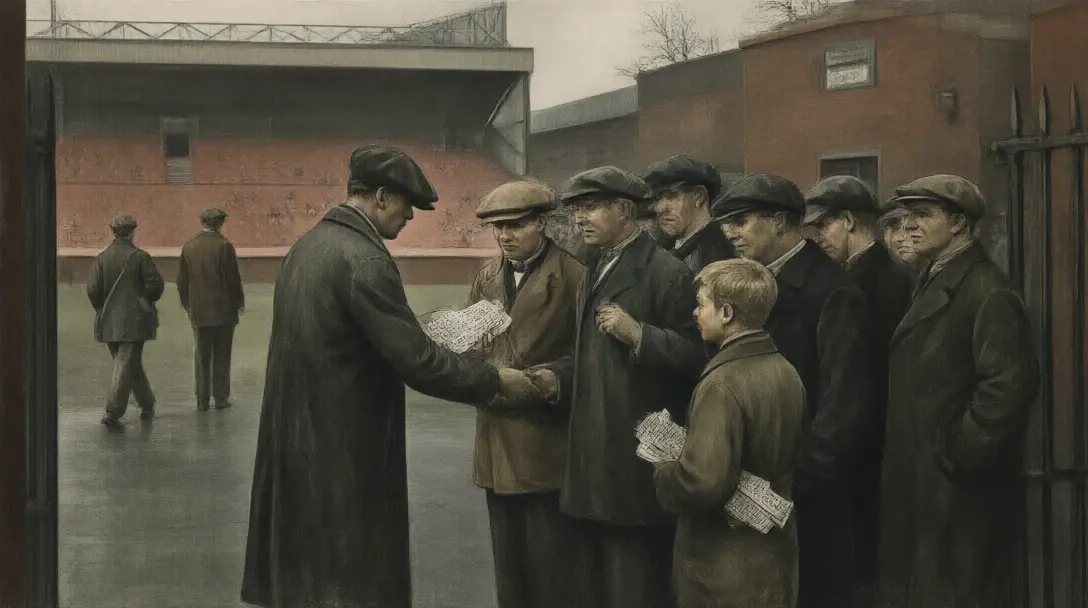
Picture a man outside Old Trafford in 1923 with a stack of 4,000 printed coupons and a few local lads earning pennies to help him hand them out. His name was John Moores. The scrap of paper he was pushing on Manchester United fans would become one of the great British weekly rituals.

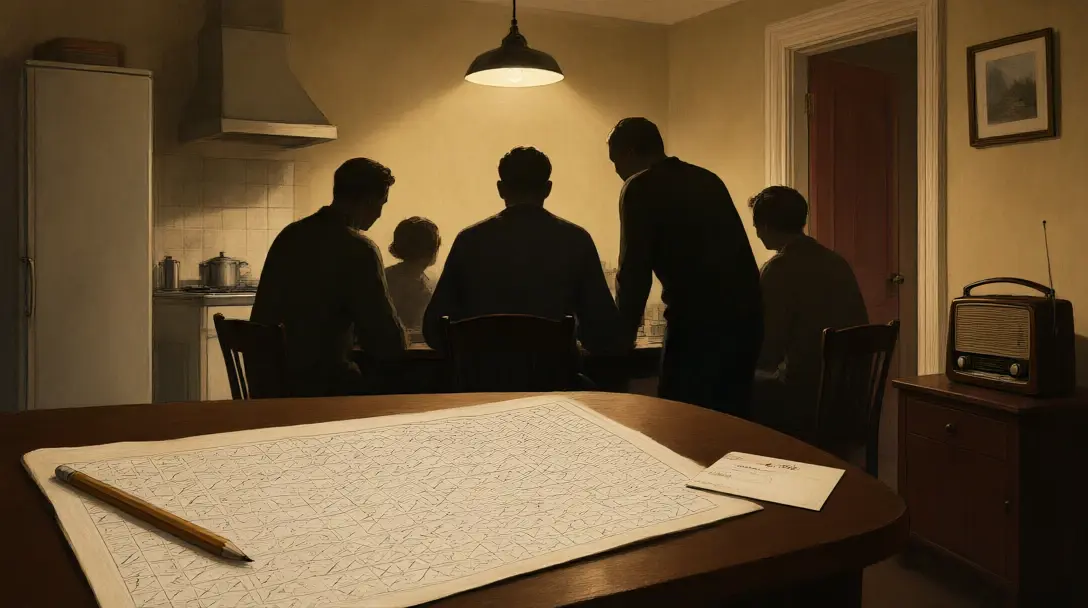
For decades, millions of households did the football pools. They crossed boxes at the kitchen table, posted the coupon and waited for the Saturday results to tell them whether this week's line of eight was finally the one. It cost next to nothing, the whole street talked about it, and the jackpot could make an ordinary family rich overnight.

In the eyes of the law the pools were never quite betting and never quite a lottery. They were a peculiarly British invention, and their story has everything: a business that nearly died in its first year, a fixtures war with the Football League, a points system built around the score draw, a panel of ex-players calling phantom results, some enormous wins, and the 1994 arrival that knocked the whole thing sideways.
Quick verdict

The pools were Britain's first mass-market jackpot, and the Treble Chance was a stroke of genius: it built life-changing prizes on the score draw, the hardest result in football to call. The lesson still holds for today's punter. In any pool your dividend shrinks when everyone backs the same outcome, so know whether you're sharing a pot or taking a price.

How Littlewoods began: 35 coupons and a near miss

Prediction contests were nothing new. On 10 September 1887 the Cricket and Football Field newspaper offered a guinea to anyone who could call four football results the following Saturday. Readers cut out a coupon and posted it, so entry cost nothing but the stamp. By 1910 The Umpire was dangling a £300 first prize for six correct results.

The pools model itself came from Birmingham. In October 1922 John Moores, Colin Askham and Bill Hughes heard about John Jervis Barnard, who ran a "football pool": every stake went into one pot, 10% came off for management costs and the rest went to the winners. Barnard was struggling to make it pay. The three men reckoned they could do better, and on 1 February 1923 they launched the Littlewood Football Pool from a small rented office in Liverpool.

The start was brutal. Of the 4,000 coupons Moores handed out at Old Trafford, 35 came back. Total stakes came to £4 7s 6d, the 10% cut didn't cover the costs, and the winning dividend was £2 12s. A print run of 10,000 coupons in Hull did even worse. Exactly one was returned.

Midway through the 1924/25 season the business was still losing money. Each partner had put in £200, and Hughes and Askham wanted out. Moores bought their shares by giving each of them their £200 back, then carried on alone. By 1930 he was a millionaire.

From pools to the high street

Moores used his pools customers as a springboard. The first Littlewoods mail-order catalogue went out to pools subscribers in 1932, and the first high-street store opened in Blackpool in 1937. At its height Littlewoods employed around 25,000 people, and in 1982 it was the largest private company in Europe.

Man in a flat cap hands out football pools coupons to cloth-capped supporters outside Old Trafford in 1923
Handing out coupons at Old Trafford in 1923: 35 came back.

Vernons, Zetters and the Pools War of 1936

Moores didn't have Merseyside to himself for long. Vernons started up in Liverpool in 1925, and Zetters followed in London in 1933. The whole industry stood on one clever legal argument: the pools were competitions of skill rather than chance, which kept them outside the gambling laws of the day. Entries were binding in honour only, and typically between a quarter and a half of the stakes came back as prizes.

Politicians didn't like it. In 1934 the big firms (Littlewoods, Vernons, Zetters, Cope's, W.S. Murphy of Edinburgh and Western Pools of Newport) formed the Football Pool Promoters' Association. When a Royal Commission report suggested prohibiting the pools, the companies told their customers to write to their MPs, and the proposals were dropped. The Betting and Lotteries Act, passed on 27 March 1934, restricted pool betting instead of banning it.

The money explains why everyone fought so hard. By 1936 the 28 pools companies were taking almost £30 million a year, and pools traffic made up four million of the six million postal packets sent across the UK every week.

The Pools War of 1936

Then the Football League tried to kill the coupon before it could be printed. In 1936 it held back the fixture list so the firms couldn't get coupons out in time, announcing long-trip games on a Thursday evening and the rest on a Friday evening. The pools companies simply printed coupons listing the home sides only and picked up unofficial leaks for the rest. After two weekends the League gave in, and the war ended on 9 March 1936. Less than a month later, on 3 April, a bill to ban the pools was thrown out by 287 votes to 24.

War, mergers and the Unity Pool

The Second World War brought a different headache. The Post Office refused to carry the mountain of coupons as non-essential mail, so the seven largest firms clubbed together in a Unity Pool with joint coupons. The industry kept reshuffling around the edges: Barnard sold to Cope's in 1938, Brittens started in Leicester in 1946, and Littlewoods absorbed Sherman's of Cardiff in 1961. Clubs spotted the potential too. Dundee United set up its own pools competition in 1956 to fund Tannadice.

The Treble Chance: how the pools scored score draws

The game that defined the pools arrived in 1946. The Treble Chance gave players the coming week's matches and asked them to pick a "line" of eight whose results would score the most points, marked with crosses on the printed coupon. Penny Points and Penny Results had been the favourites until then. The Treble Chance offered a potentially huge jackpot when no other form of gambling in the UK did, and Britain went for it in a big way.

By 1947 pools revenue had hit £70 million a year, with more than 90% of it going to Littlewoods, Vernons, Sherman's and Cope's. Nearly 15 million postal packets went through the system every week, and by the 1950s around 100,000 people worked in the industry.

The scoring is the bit everyone remembers. You wanted draws, and ideally draws with goals in them.

Result Classic Treble Chance points Classic Pools today
Score draw (1-1, 2-2 and so on) 3 3
No-score draw (0-0) 2 2
Away win 1.5 1
Home win 1 1

Eight score draws gave you the magic 24 points. The system got tweaked over the years, including a one-season experiment where 1-1 was worth 3 points and higher-scoring draws 2.5. At its peak the Littlewoods Treble Chance paid out up to six dividends, and during the British summer the coupon switched to Australian matches so the weekly habit never had a break.

Why 24 points was so hard to land

The clever part of the Treble Chance was that it rewarded the hardest result in football to call. You can reason your way to a home or away win through form, quality and home advantage. Score draws are fickle, and because luck plays such a big part in football results, a long coupon of fixtures usually threw up only a handful. The pools industry lived on that scarcity.

You can see how fast the odds stack up with a simple model. Say every game you pick has the same chance, p, of ending as a score draw, and the games are independent. This is purely an illustration, not the real odds of any coupon.

P(all 8 picks are score draws) = p^8

p = 0.25  ->  0.25^8 = 0.0000153  ->  roughly 1 in 65,536

Even if you found eight fixtures where a score draw was a genuine one-in-four shot, you'd land the full house about once in 65,536 tries. That's why players covered more selections than they needed, why bigger permutation entries cost more, and why the top line paid life-changing money. For how draws are priced in today's fixed-odds markets, our draw betting strategy guide gets into the detail.

On Watford 3-0 Liverpool in 2020

“You look at the stats and everything points to a Liverpool win and yet you get a 3-0 home win, which just shows how unpredictable it can be.”

— Ian Callaghan, Liverpool's record appearance holder and Pools Panel member

The Pools Panel: calling games that never happened

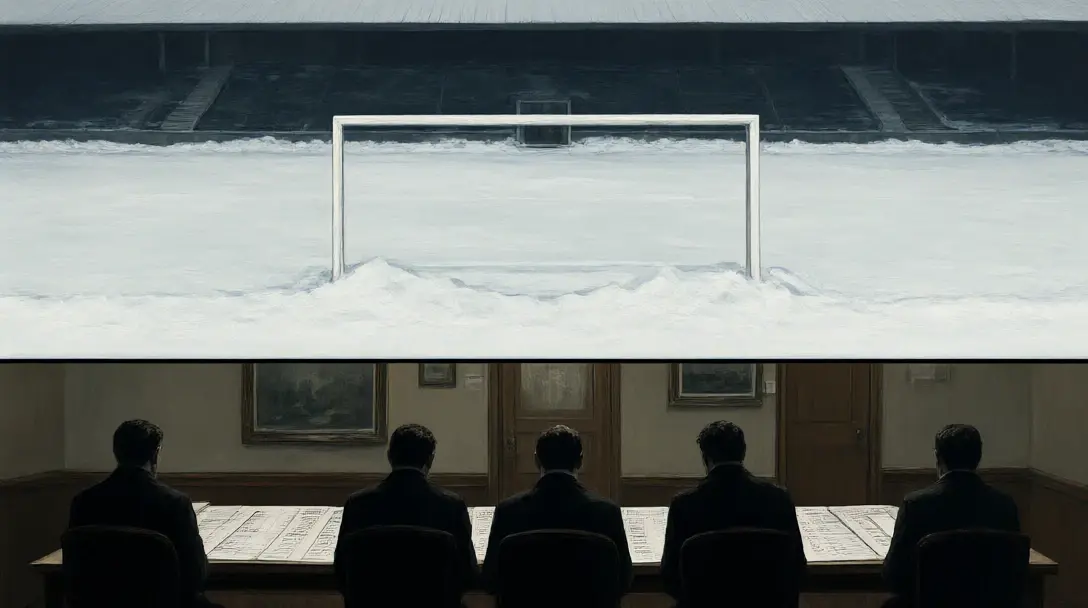
Only in Britain. In January 1963 the Big Freeze wiped out fixture after fixture, and without results the pools couldn't pay out. The fix was the Pools Panel, a board that decides what would have happened in postponed matches, purely for pools purposes.

The first panel was football royalty: Ted Drake, Tom Finney, Tommy Lawton and George Young, with former referee Arthur Ellis. Their first verdicts, on 23 January 1963, called 7 draws, 8 away wins and 23 home wins, and they went out on television.

A rotating cast of legends

By 1969 Raich Carter had joined a line-up including Neil Franklin, George Swindin, Arthur Ellis, Stan Mortensen and Ian McColl, chaired by Sir Ronald Howe and meeting at the Connaught Rooms in London. By 1994 the panel was Ellis, Gordon Banks, Roger Hunt, Tony Green and Maurice Peston, sitting at the London Hilton on Park Lane. Gerald Nabarro and Ronnie Simpson also served over the years.

The panel sits in private on Saturdays from November to April, releasing its verdicts once the live matches have reached half-time, before any final results are known. By 2016 it was down to Banks, Green and Hunt. After Gordon Banks died in February 2019, Ian Callaghan and David Sadler joined, with Tony Green carrying on.

Snowbound frozen football pitch in the 1963 Big Freeze with silhouettes of a pools panel deliberating at a table
The Big Freeze of 1963 gave birth to the Pools Panel.

Biggest football pools wins: the Saturdays that changed lives

For most players the pools meant a small weekly flutter and the odd modest dividend. For a lucky few, one line of crosses rewrote everything, with sums that sit comfortably alongside the greatest betting coups in history. Here are the landmark British wins.

Year Winner Prize Landmark
1957 Nellie McGrail, Stockport £205,235
1972 Cyril Grimes, Liss, Hampshire £512,683 First win over £500,000
1979 Irene Powell, Port Talbot £882,000 First win over £750,000
1986 Hospital workers' syndicate, Roundway Hospital, Devizes £1,017,890 First million-pound win
1991 Rodi Woodcock £2,072,220 First double-millionaire
1993 Judy Smith, Isle of Portland £2,077,683.60 UK record at the time
1994 Yew Tree Inn syndicate, Worsley £2,924,622 Won on the National Lottery's first weekend
2010 Michael Elliott, Brechin £3,001,511 Highest-ever jackpot, from eight 2-2 draws

Michael Elliott's record is our favourite bit of pools folklore. His eight 2-2 draws came from matches in Spain, Scotland and England, which shows how far the coupon had travelled from its Football League roots.

Spend Spend Spend

The most famous winners of all never held a record. On 23 September 1961, Keith Nicholson of Castleford won £152,319. He and his wife Viv got through the money at speed: sports cars, fur coats, jewellery, holidays. Keith died when he crashed his Jaguar on 30 October 1965, and Viv was later declared bankrupt. Her story became the musical Spend Spend Spend, which debuted in 1998 and ran in the West End. Viv died in April 2015, aged 79.

Arriving at King's Cross to collect £152,319

“They were reporters, and they all asked: 'What are you going to do now?' And there I was, wearing a pair of tights I had to borrow from my sister, and I said I was going to 'spend, spend, spend'.”

— Viv Nicholson, 1961 football pools winner

How football pools money helped rebuild British football

Plenty of pools money found its way back into the game. From 1975, 2.5% of entry fees went to what became the Football Trust, which started life as the Football Grounds Improvement Trust to help clubs meet the costs of the Safety of Sports Grounds Act 1975.

Its big moment came after the Taylor Report, when English football had to rebuild its stadiums. In October 1990 Chancellor John Major cut the tax on pools competitions such as spot-the-ball to help fund the Trust's work. The pools carried a heavy tax burden, and in 1991 the levy on turnover came down from 40% to 37.5%.

All told, the pools companies have given more than £1.1 billion to sports-related causes. In 2009/10 alone another £6 million went out, backing projects such as Every Player Counts (a disability football programme across 44 Football League clubs), Premier League Health, and Fit for Football Fit for Life with 30 Scottish clubs. Littlewoods can also claim to be the first sponsor of the FA Cup.

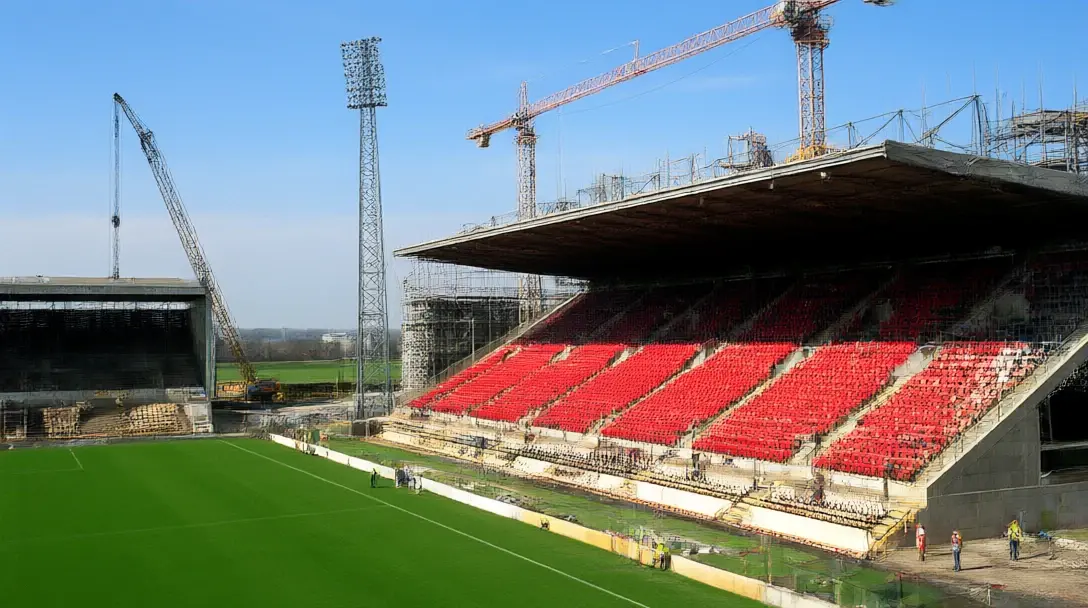
All-seater stand under construction at a British football ground with cranes and workers in hard hats
Pools money helped clubs build safer, all-seater grounds.

The National Lottery and the decline of the pools

The killer blow landed in 1994. The National Lottery offered a huge, simple jackpot with no football knowledge needed, and the pools never recovered. By 2007 the army of players had shrunk to around 700,000.

The big names went one by one. Vernons, owned by Ladbrokes since 1989, closed its pools operation in February 1998, ran an "Easy Play" lucky dip linked to the National Lottery in 1998-99 and later started up again. In 2000 Littlewoods Pools was sold for around £160 million to Rodime, a shell business part-owned by the Bank of Scotland, at a time when about a million people still played every week. It became Littlewoods Gaming, part of Sportech.

One brand standing

Sportech then hoovered up the rest, buying Zetters in 2002 and Vernons in 2007. The combined business became The New Football Pools, moved online at footballpools.com in summer 2008, and now goes by The Football Pools. Sportech sold it to private equity firm OpCapita in 2017 for £83 million.

The original Littlewoods company was wound up in 2005, and its old pools headquarters in Liverpool, empty since 2003, caught fire on 2 September 2018. The Littlewoods name lives on through The Very Group's Littlewoods.com, and the National Football Museum holds the Littlewoods Football Pools Collection. The game itself carries on online: the Classic Pools, a direct descendant of the Treble Chance, sits alongside smaller games such as the Premier 6, 10 and 12, Goal Rush and Jackpot 12.

Key dates in football pools history

Date What happened
10 Sep 1887 Cricket and Football Field offers a guinea for four correct results
1 Feb 1923 Littlewood Football Pool launched in Liverpool
1925 / 1933 Vernons (Liverpool) and Zetters (London) founded
9 Mar 1936 Pools War with the Football League ends
1946 Treble Chance launched
Jan 1963 Pools Panel formed during the Big Freeze
1975 2.5% of entry fees starts funding the Football Trust
1994 National Lottery launches
2010 Michael Elliott wins a record £3,001,511
2017 The Football Pools sold to OpCapita for £83m

What the pools teach today's punter

The pools were a pool in the purest sense. Everyone's stake went into one pot, the operator took its slice and the winners shared the rest. The Tote works on the same principle, and our guide to Tote and pool betting explains how pooled dividends differ from the fixed odds you take with a bookmaker.

Our angles from a century of pools:

  • Know whether you're in a pool or taking a price. In a pool your return depends on how many others got it right, so a popular result pays less even when you win.
  • The takeout matters. Littlewoods' 10% cut in its first week didn't even cover its costs, and the old pools firms typically returned between a quarter and a half of stakes as prizes. Always ask how much of the pot comes back.
  • Draws are the hardest result to call. The Treble Chance built a jackpot on that fact, and it's still why the draw is the most overlooked market in fixed-odds football.
  • Long-odds dreams are entertainment, not a plan. The maths above shows how quickly eight-from-eight odds explode. Put on jackpot games only what you'd happily spend on a night out.
  • Small stakes still add up. A cheap weekly coupon over a whole season is a real spend, so budget for it like any other bet.
  • Enjoy the ritual. Half the fun of the pools was the Saturday routine, the chat and the shared hope. That's a healthy way to treat any small-stakes game.

Whatever you play, set your stake before the weekend starts and stick to it, win or lose.

Topics