Professional NFL betting scene with modern sports betting interface and analytics dashboard
Complete Guide

NFL Betting Strategy Guide: How to Bet on Football & Win

Jump to section

What You're Up Against

The NFL drives over $35 billion in annual betting handle across U.S. sportsbooks. More money flows through NFL betting than any other sport in America. Yet most bettors lose.

The difference between winning and losing isn't luck—it's having a system. Professional handicappers don't rely on gut instinct or gut feelings. They use analytical frameworks that casual bettors ignore.

Whether you're learning how to bet on NFL games for the first time or looking to sharpen your approach with advanced point spread betting and NFL prop bets, this guide breaks down what actually works.

Let's talk numbers. Point spreads account for about 45% of all NFL wagers. Totals (over/under) represent 30%. Moneylines make up the remaining 25%.

The breakeven win rate at standard -110 odds is 52.38%. Professional bettors aim for 54-56%. That gap seems small—just a few percentage points—but over hundreds of bets, it's the difference between profitability and bleeding money.

The market is efficient. Inefficiencies exist, but you have to know where to look. Success means understanding key numbers, managing your bankroll properly, shopping lines across multiple sportsbooks, and avoiding the emotional traps that wreck most recreational bettors.

Key Insight

Professional NFL bettors approach the market with systematic discipline rather than emotional reactions to team narratives. The difference between sharp and recreational bettors lies in process, not just results.

ACR Poker Advanced Strategies
NFL point spreads and key numbers visualization with abstract football field showing critical margins
Key numbers like 3 and 7 are critical margins in NFL point spread betting

Point Spread Betting: Where Most NFL Action Happens

Point spreads level the playing field between mismatched teams. When you see Baltimore Ravens -7.0 versus New York Jets +7.0, the Ravens must win by 8 or more points to cover. The Jets can lose by up to 6 points—or win outright—and you'd still cash that ticket.

Key Numbers Are Everything

This is the most important concept in point spread betting: key numbers are the margins of victory that happen most often.

Since 1989, about 15.39% of NFL games end with a 3-point margin. Another 8.74% end with a 7-point margin. Those two numbers alone cover nearly one-quarter of all games ever played.

Half-points around key numbers dramatically change your win probability. Getting +3.5 instead of +3 provides legitimate value because 3-point margins happen so frequently. Conversely, laying -7.5 when you could have -6.5 costs you expected value.

The next most common margins: 6 points (5.84%), 10 points (5.81%), 4 points (5.18%), and 14 points (4.92%). Keep these frequencies in mind when evaluating spreads, especially when shopping lines across books.

Bet Early, Bet Often (Well, Not Too Often)

The optimal strategy: place bets Sunday through Tuesday when opening lines first appear. Public money typically moves markets Wednesday through Saturday. Early week lines frequently offer 1-2 points of additional value, particularly around key numbers.

Shop Lines Like Your Profit Depends On It (It Does)

Every point matters. Bet 400 moneylines at -110 and you'll break even at 210-190. Secure -105 odds instead? You profit $1,000 on the same record. That impact compounds across a full season.

Keep accounts at 5+ sportsbooks and compare lines before every wager. Securing -2.5 instead of -3 on a key number generates 7-9% additional ROI over time. This one habit separates profitable bettors from break-even players.

Watch the Juice, Not Just the Spread

Line movement tells a story. When a favorite of -7 (-110) climbs to -7 (-115) or -7 (-120), expect a spread adjustment to -7.5 if bets keep coming in on the favorite. Track these juice changes to anticipate spread movements—bet favorites early before they get more expensive, or wait on underdogs for better numbers.

Quarterback Injuries Move Lines More Than Anything Else

The most critical position on the field is quarterback. When a team loses its starting QB, expect a more significant adjustment than if a running back, receiver, or any other position goes down.

Cluster injuries at specific position groups also move spreads. Offensive line injuries affect quarterback protection and can swing lines significantly.

Current Form Beats Season Records

NFL Week 1 results don't mean much when betting NFL Week 15 odds. Focus on the three most recent games and opponents. Current form, recent injury trends, and upcoming matchups matter far more than season-long records.
On Key Numbers

Roughly 15% of games end with a three-point margin of victory, and 9% end with a seven-point margin. There is a much bigger difference between a -6.5 favorite and a -7.5 favorite than there is between a -4.5 favorite and a -5.5 favorite.

Ben Solak, ESPN

Moneyline Betting: When to Skip the Spread

Moneyline betting is simple: pick the winner. No point spreads involved. Favorites show negative odds (risk to win $100), while underdogs carry positive odds (win on $100 bet).

Tampa Bay Buccaneers -125 means risking $125 to win $100. Dallas Cowboys +105 wins $105 on a $100 bet.

When Moneylines Beat Spreads

Underdogs of 3-7 points in divisional games or situational letdown spots often justify moneyline consideration. Favorites beyond -7 rarely justify laying points—take the moneyline instead.

Heavy Favorites Are Bankroll Killers

Big moneyline favorites feel safe. They can drain your bankroll fast. Here's a concrete example:

Bet $100 on five moneyline favorites at -250 odds each
Go 3-2 (60% win rate - respectable!)
Wins: 3 × ($100 × $100/$250) = 3 × $40 = $120
Losses: 2 × $100 = $200
Net result: $120 - $200 = -$80 loss

Even with a winning record, heavy favorites produce net losses due to poor risk-reward ratios.

Home Underdogs Offer Value

Home-team underdogs provide legitimate value, especially smaller point spread underdogs getting +3 or less. Some bettors prefer the short moneyline underdog instead of laying -110 on the spread.

Home underdogs of 7-10 points in divisional games win outright at 38% rates but are priced at 30% implied probability. That's consistent value.

Time Your Moneyline Bets

If the betting public will flock to the favorite, bet that moneyline earlier in the week before the bulk of bets show up closer to kickoff and increase the price. Siding with the underdog? Wait until the line adjusts to get a higher payout.

Over/Under (Totals) Betting Strategies

Over under betting means wagering on whether the combined score of both teams will go over or under a set number. Standard odds are -110 on both sides.

Bills vs. Rams with a total of 52? Final combined score of 53 means Over bets win. 51 or less and Under bets win.

Match Offense Against Defense

Start with offensive and defensive metrics. Then consider how specific matchups might create scoring opportunities—or limit them.

Weather Changes Everything

Wind affects final scores more than any other weather factor. Strong winds make deep passes nearly impossible, plague punts, and push field goals and extra points wide. Wind speeds above 15 mph reduce scoring by 3-5 points per game on average.

Rain impacts totals by 2-3 points, but less dramatically than wind.

Injuries Hit Totals Hard

Quarterbacks have the biggest influence on Over/Under odds, followed by standout receivers and star running backs. Beyond elite skill position players, most single-player injuries won't move totals significantly.

Multiple injuries to an offensive line or starting cornerback group? That can have major impacts.

Pace of Play Matters

Pace-of-play overs with two fast-tempo offenses show historical profitability. Division game unders and weather-based unders in outdoor stadiums during November-December show the highest exploitable edge.

There's No Magic Over or Under Bias

The edge comes from finding specific spots where totals are mispriced by 3+ points—not from defaulting to over or under bias.

NFL Prop Betting: The Fastest-Growing Market

NFL prop bets are wagers on individual player performance, not game outcome. These markets have grown exponentially in recent years and are now one of the most popular ways to wager on the NFL.

For a deeper dive into finding value in player and team props across all sports, check out our comprehensive prop betting strategy guide.

Game Script Drives Player Opportunities

Don't load up on overs for a team projected to lose by 14+ points. Game script may limit opportunities. Favorites expected to win comfortably might see increased passing volume in the second half.

Check Weather Before Locking Props

Check weather reports before locking in any prop bets, especially passing and kicking props. Wind above 15 mph should immediately make you consider unders on passing totals and field goal attempts.

Averages Lie. Medians Tell the Truth.

Look at median performance, consistency, and context of previous games. A player with one 150-yard game and four games under 40 yards averages 70 yards. The median tells a different story.

Shop Prop Lines Aggressively

Half-yard differences in prop lines dramatically change win rates. Multiple sportsbook accounts aren't optional for prop betting success—they're essential.

Consider Betting Unders

Betting unders feels less exciting. It provides mathematical advantages that compound over time.

Know Your Defensive Matchups

Use WR/CB matchup tools to identify favorable or unfavorable individual matchups. A #1 receiver facing a team's #3 cornerback due to injury presents a significant advantage.

Check Lines Early for Soft Openings

Look for soft opening lines before sharp bettors correct them. Monday and Tuesday often present the best prop betting opportunities.

Editorial illustration of live NFL in-game betting with dynamic odds dashboard
Live NFL betting requires real-time analysis and quick decision-making

Prop Betting Strategy

Strive to take unders on player props. Over the past three seasons, single-game rushing yardage overs have never beaten the closing line at ESPN BET more often than not; they've won 47.8%, 45.5% and 47.0% of the time. The same is true of rush attempts and receptions.

Ben Solak, ESPN

Live and In-Game Betting Strategies

Live betting means wagering on games after they've started, with odds shifting in real-time based on game events. This fast-growing market offers unique opportunities for disciplined bettors.

For a comprehensive guide to in-play betting strategies across football and other sports, see our complete guide to live betting explained.

Watch the Game You're Betting

Live betting requires real-time observation to identify value. Box scores and game trackers miss context that affects outcomes.

First Quarter Reveals a Lot

The first 15 plays for both offenses and defenses are scripted. This matters for live betting angles. Early game script can reveal mismatches not evident in pre-game analysis. When a team's offensive line dominates the line of scrimmage, live spreads may offer value before odds adjust.

Statistical Dominance vs. Scoreboard Reality

Yardage and time of possession advantages often correct by game's end. When you see statistical dominance that hasn't translated to points yet, live betting opportunities emerge.

Don't Overreact to Single Events

Base decisions on sustained patterns, not isolated events. An interception or fumble might shift live odds dramatically. If the overall game flow favors one team, the overreaction creates value.

Use Cash Out Features Wisely

Cash out lets you withdraw a bet mid-game. Your team is down by two touchdowns at half? You might decide to cash out what you can and cut your losses. This works for risk management, but understand you're often paying a premium for early exit. For deeper strategies on cash-out decisions, check out our guide to cash out betting strategies.

Live betting opportunities emerge when the market overreacts to game events. Statistical advantages that haven't translated to points yet can create valuable betting spots. Let's examine the critical discipline that separates professional bettors from amateurs.

Live Betting Edge

If a quality team trails by 10+ points at halftime but dominated total yards and time of possession, the live spread often presents value. The analytics show that teams with 150+ yard advantages at halftime but trailing on the scoreboard win 64% of second halves against the spread.

Sharp Football Analysis

Bankroll Management: What Separates Pros from Amateurs

No NFL betting strategy matters without proper bankroll management. This discipline separates professional bettors from recreational players who eventually go bust.

For comprehensive coverage of bankroll protection strategies, unit sizing, and risk management, read our complete guide to bankroll management in betting. You can also explore advanced techniques like the Kelly Criterion for optimal bet sizing.

Flat Betting Works Best

Start with $1,000? Every play risks $30. Starting with $100? Every play risks $3. This approach protects your bankroll during inevitable losing streaks while maximizing growth during winning periods.

Never Change Unit Size Based on Results

Consistent bet sizing protects your bankroll during variance. Doubling down after wins is emotional betting, not strategic decision-making. Chasing losses is the fastest way to deplete your bankroll.

Adjust by Bet Type

Risk 1-2% of total bankroll per standard bet, but adjust based on confidence and bet type. Spread bets with 2+ points of value justify 2% exposure. Speculative moneyline underdogs should stay at 0.5-1%.

Tiered Approach:

  • Standard spread bets with value: 1-2% of bankroll
  • Quality totals: 1-2% of bankroll
  • Speculative moneyline dogs: 0.5-1% of bankroll
  • Maximum any single bet: 5% of bankroll

Track Everything

Track all bets with type, odds, result, and notes to identify profitable versus unprofitable strategies. You can't improve what you don't measure.

Bankroll Management

We encourage most bettors to embrace a flat-betting approach. Flat betting means betting the same amount on every game and risking only 1% to 5% of your bankroll per play. A good medium is 3% per play.

Action Network
Bankroll management concept with stacked coins and protective shield
Proper bankroll management separates professional bettors from amateurs

Common NFL Betting Mistakes That Destroy Bankrolls

Even experienced bettors fall into these traps. Recognizing and avoiding them is essential for long-term profitability.

1. Poor Bankroll Management

Changing unit size based on results is among the most common and costly mistakes.

2. Betting Too Many Games

Stay disciplined and limit plays to your most confident games. Quality over quantity wins in NFL betting.

3. Emotional Betting and Public Bias

Betting on your favorite team or against a rival rarely leads to good decisions. Remove emotion from the equation.

The market often overreacts to recent performance. "Buy on bad news and sell on good news" applies to NFL betting as much as stock trading.

5. The Gambler's Fallacy

Each game is an independent event with its own probabilities. Past results don't influence future outcomes the way our intuition suggests.

6. Not Shopping for Lines

As noted earlier, getting -105 instead of -110 on 400 bets turns a break-even scenario into $1,000 profit. This single habit can transform your results.

7. Unrealistic Expectations

You need 52.38% just to break even at standard -110 odds. Professional bettors aim for 54-56%, not 70%. Adjust your expectations accordingly.

8. Ignoring Sharp Action

When public money and line movement disagree, the smart money usually knows something you don't.

Advanced Strategy: Hedging Your Bets

Hedging means placing a second bet against your original wager to reduce risk or lock in profit. It's "the fine art of covering your behind" and can be a powerful tool when used correctly.

When to Consider Hedging

Parlay Insurance: You have a 4-leg parlay with three winners and the final game approaching. You might bet against your parlay outcome to guarantee profit regardless of the final result.

Futures Bets: You bet a team to win the Super Bowl at long odds and they reach the championship game. You could hedge by betting their opponent to guarantee some return.

Live Game Swings: You bet on a team that takes a large lead. You might hedge with a live bet on the opponent to lock in profit regardless of final outcome.

The Trade-Offs

Pros:

  • Locks in profit
  • Reduces variance
  • Provides emotional relief during high-stakes situations

Cons:

  • Reduces maximum potential payout
  • Additional vig costs
  • Can reduce long-term ROI if overused

Best Practice: Use Hedging Strategically

Use hedging for risk management in specific situations, not habitually on every bet. The key is identifying spots where the guaranteed profit outweighs the opportunity cost of reduced maximum payout.

NFL betting strategy analysis with pathway routes and strategic elements
Advanced NFL betting strategies require analytical thinking and calculated decisions

Advanced Strategy: Middling Opportunities

How Middles Work

Here's a concrete example of a middling opportunity:

Sportsbook A: Jayden Daniels passing yards Over/Under 214.5
Sportsbook B: Jayden Daniels passing yards Over/Under 224.5

Strategy: Bet Over 214.5 at Book A, Under 224.5 at Book B

Outcomes:
- Daniels throws for 215-224 yards: BOTH bets win (big profit)
- Daniels throws for < 215 yards: Push at Book A, lose vig at Book B
- Daniels throws for > 224 yards: Lose vig at Book A, push at Book B

When a middle hits, you win both sides of the bet. When it misses, you typically only lose the vig (the bookmaker's commission), meaning you break even approximately.

Types of Middling Opportunities

  1. Point spread middles: -3 at one book, +4.5 at another
  2. Totals middles: Over 47.5 at one book, Under 49.5 at another
  3. Player prop middles: Passing yards, receiving yards, rushing attempts
  4. Live betting middles: Lines shifting during games create opportunities

Focus on Key Number Middles

The most valuable middles cross the 3 (most common margin) and the 7 (second most common). Any middle crossing key numbers warrants serious consideration.

Middling Success Tips

  1. Multiple Accounts Required: Need accounts at different sportsbooks to find line discrepancies
  2. Act Quickly: Lines correct rapidly; opportunities are time-sensitive
  3. Calculate Value: Not all middles are worth the investment; calculate expected return
  4. Start Simple: Begin with basic totals or spreads before attempting complex parlays

Middles occur in less than 1% of available lines. With thousands of daily betting options, opportunities exist for patient bettors who monitor multiple books.

Middling Explained

Middle betting is when you place two opposing bets that leave room for you to win both based on how the sportsbooks have set their odds.

Sharp Football Analysis
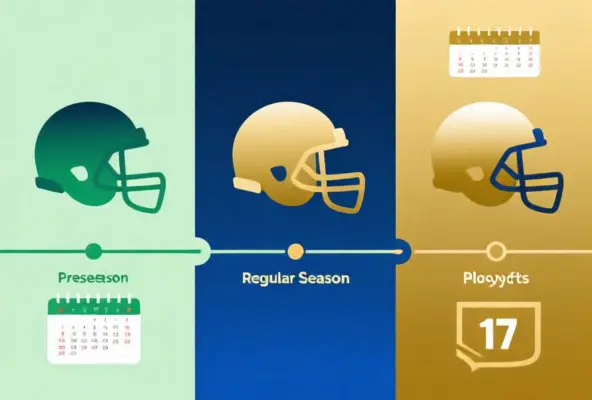
Editorial illustration of NFL season timeline showing preseason, regular season, and playoff betting opportunities
NFL betting strategies change between preseason, regular season, and playoffs

Season-Long NFL Betting Considerations

How to bet on NFL games changes significantly between preseason, regular season, and playoffs. Understanding these differences matters for year-round success.

Preseason Betting: Unique Opportunities

Preseason Unique Aspects:

  • Coaches reveal gameplans (unlike regular season)
  • Uncertainty about playing time for starters
  • Limited historical data for new players/rosters
  • Lines typically range from 1-3 points (key number 3 less significant)

Preseason Strategies:

Research Playing Time: Find out how many snaps the first-teamers will get, what the focal point of the offseason is—offense or defense—and wager accordingly.

Quarterback Depth is Critical: Finding a team with depth at quarterback is the key to success during the exhibition schedule. Look for teams with an experienced backup under center.

New Coaches and Schemes: New head coaches often feel pressured to win in the preseason to impress the front office and fan base, giving some teams added betting value.

Focus on Week 2-3: Week 2 and Week 3 of the preseason hold more weight in terms of prep for the first-teamers. That's when starting players log the most time, working most of the first half and sometimes into the third quarter.

Regular Season: Primary Focus

Characteristics:

  • Full intensity from all teams
  • Extensive data and statistics available
  • Efficient markets with sharp line movement
  • Key numbers (3, 7) become critical
  • Coaching strategies and game planning fully deployed

Best Opportunities:

  • Early season lines based on previous year performance
  • Bye week preparation spots
  • Divisional games (familiarity creates close contests)
  • Primetime games (often overvalued favorites)

Playoff Betting: Different Game Entirely

Unique Factors:

  • All teams are quality (no weak opponents)
  • Coaching advantages magnified
  • Weather conditions more relevant (January games)
  • Rest and preparation time becomes critical
  • Momentum and confidence factors amplified

Playoff Strategies:

  • Emphasize quarterback play (most important position)
  • Consider coaching experience and pedigree
  • Account for travel and rest disparities
  • Factor in weather for outdoor stadiums
  • Look for situational spots (teams with "nothing to lose")

Building Your NFL Betting Strategy

We've covered major bet types and strategies. How do you put it all together? Here's a framework for building your personalized NFL betting strategy.

Step 1: Define Your Bankroll and Unit Size

Determine your total bankroll—the amount of money you're comfortable risking. Set your unit size at 1-3% of this total. Commit to never exceeding these limits regardless of how confident you feel about any single bet.

Step 2: Choose Your Bet Types

Focus on 1-2 bet types initially rather than spreading yourself across spreads, totals, props, and live betting all at once. Master point spreads and totals first. Then expand into props and live betting as you gain experience.

Step 3: Establish a Research Routine

Set aside dedicated time for research:

  • Monday-Tuesday: Review upcoming lines, identify early value
  • Wednesday: Monitor line movements, track sharp action
  • Thursday-Saturday: Final analysis, injury updates, weather forecasts
  • Game Day: Execute live betting strategy if watching

Step 4: Track and Analyze Results

Maintain a detailed spreadsheet tracking:

  • Date, bet type, teams, odds
  • Result and profit/loss
  • Rationale for the bet
  • Lessons learned

Review this data weekly to identify what's working and what isn't.

Step 5: Keep Learning

The NFL betting market evolves constantly. Stay current with:

  • Advanced analytics (DVOA, EPA, success rate)
  • Coaching trends and schematic changes
  • Injury impacts and recovery timelines
  • Market efficiency changes

Gamble Responsibly

Key Reminder: Sports betting should be entertaining, not a source of financial stress. Set limits on your time and money spent. Never bet more than you can afford to lose.

If you find yourself chasing losses, betting emotionally, or experiencing negative impacts from gambling, seek help from responsible gambling resources.

Key Principles:

  • Never borrow money to bet
  • Set deposit and loss limits at your sportsbooks
  • Take breaks when betting stops being fun
  • Prioritize real-life responsibilities over gambling
  • Recognize that losing is part of the process

The Path to Profitable NFL Betting

Successful NFL betting requires discipline, patience, and a systematic approach. The strategies outlined in this guide—from understanding key numbers in point spread betting to exploiting NFL prop bets inefficiencies—provide a foundation for making informed decisions rather than emotional guesses.

Remember these core principles:

  1. Bankroll Management is Non-Negotiable: Never risk more than 1-3% per bet. Maintain consistent unit sizes. Track all results.

  2. Key Numbers Matter: Understanding that 3 and 7 are the most critical margins in NFL betting provides an edge over casual bettors.

  3. Line Shopping is Essential: Maintaining accounts at multiple sportsbooks to find the best odds can transform break-even results into profitable seasons.

  4. Value Over Emotion: Remove biases by betting based on mathematical edges, not team loyalty or gut feelings.

  5. Continuous Learning: The market evolves constantly. Track your results, analyze your mistakes, and refine your strategies.

The NFL betting market is highly efficient but offers opportunities for bettors who combine quantitative analysis with situational awareness. Success isn't about winning every Sunday—it's about making +EV (positive expected value) decisions over the long term.

Start small. Stay disciplined. Focus on process over results. With time, experience, and the strategies outlined in this guide, you can join the minority of NFL bettors who consistently turn a profit.


Professional headshot of Caleb Harrington, Senior Football & Betting Analyst

Caleb Harrington

Senior Football & Betting Analyst

Caleb Harrington is an experienced sports analyst and writer with over 8 years of expertise in football betting markets and tennis predictions. A graduate of Sports Journalism, Caleb combines deep statistical knowledge with an engaging writing style to make complex betting concepts accessible to all readers. He's particularly known for his data-driven approach to Premier League analysis and his insightful coverage of major tennis tournaments. When he's not analyzing odds or writing match previews, Caleb enjoys exploring emerging trends in sports betting technology and strategy.