Player Shot Markets: How to Profit from Shots on Target
Strategy

Player Shot Markets: How to Profit from Shots on Target

Jump to section

Introduction

Player shot markets have become one of the more interesting edges in football betting. Instead of predicting match outcomes, you're betting on individual player performances—something that actually responds to research and analysis. While match results can swing on a single deflection or bad refereeing decision, shooting patterns tend to be more consistent.

The appeal of shots on target betting is simple: you can find an edge through data. Most casual punters just back their favorite striker without looking at the numbers. That creates opportunity for anyone willing to do the work.

This guide covers the strategies profitable bettors use for player shot markets.

Understanding Player Shot Markets

You need to know what you're actually betting on. Player shot markets usually come in three flavors:

Player Shots on Target – Your player needs at least one deliberate attempt to score that would have gone in but for a goalkeeper save or last-ditch block. This is the most common market.

Player Total Shots – Counts every shot attempt, accurate or not. Higher volume, shorter odds. Good for midfielders and attacking fullbacks who get forward a lot.

Team Shots Markets – Betting on a team's total shots on target or which team gets the first shot on target.

The terminology trips people up. "Over 0.5" and "1+" mean the same thing—your player needs one shot on target. "Over 1.5" and "2+" both mean two shots on target.

One rule that saves a lot of bets: goals always count as shots on target. Doesn't matter how it went in, if it's a goal, it counts.

What Actually Counts as a Shot on Target?

This is where shots on target betting confuses people. Opta (Stats Perform), the data provider most bookmakers use, defines it as "a deliberate attempt to score that would have gone into the net but for being saved by the goalkeeper or stopped by a player who is the last-man with the goalkeeper having no chance of preventing the goal."

The stuff that doesn't count catches people off guard:

  • Shots hitting the post or crossbar (unless they bounce in)
  • Crosses that go near goal and get saved
  • Blocked shots that aren't by the last defender
  • Shots taken after the whistle's already blown

The "was it a shot or a cross" judgment has caused some controversy. During the 2022 World Cup, Lionel Messi had a free kick saved against Mexico that Opta recorded as a cross, not a shot on target. Sky Bet refused to payout on boosted odds promotions.

These definitions matter. A shot rattling the post feels like it should count, but unless it goes in, your bet loses.

Visual diagram showing the difference between total shots and shots on target in football betting
Understanding Shots on Target vs Total Shots

Data Provider

It's about intent — a shot or shot on target has to be a 'deliberate attempt at goal,' meaning the player does have to be making a clear effort to shoot at the net.

Opta/Stats Perform Definition

The Numbers: Shot Benchmarks That Matter

Successful player shot betting comes down to data. Here's what you need to know:

Top strikers average 1.2-1.7 shots on target per 90 minutes across a season. Mohamed Salah led the Premier League with 1.71 SOT per 90 in 2021/22. Harry Kane posted 1.45, Cristiano Ronaldo 1.41.

Here's the reality: it's rare for any player to have more than 2 shots on target in a single game. When you see a line of 2.5+ SOT, you're betting on something that doesn't happen often.

For football player props to be profitable, look for players averaging 0.75+ SOT per game. That gives you roughly a 75% hit rate, which is usually the minimum when odds are around 1.30-1.50.

Attacking teams against weak defenses might generate 7-10+ team shots on target, but that volume gets spread among multiple attackers. Sometimes focusing on one player beats betting team totals.

Statistical comparison visualization showing player shot rates and benchmarks
Player Shot Benchmarks and Statistics

Finding Value Beyond the Big Names

Erling Haaland might be priced at 1.20 for a shot on target. What are you actually making there?

Real value in player shot markets comes from players the market misprices.

Wing-Backs in Attacking Systems

Modern formations, especially 3-5-2, create opportunities for wing-backs who play like wingers but are priced as defenders. During Euro 2020, Joakim Maehle was 4.2 for a shot on target in Denmark's early matches—defender odds for a player effectively playing as a winger.

He got shots on target in all three group games and scored, causing his odds to drop to 1.73 by later matches. That's the market inefficiency that exists before bookmakers catch on.

Players like Denzel Dumfries, Robin Gosens, or Trent Alexander-Arnold regularly get forward but often carry defender prices.

Set-Piece Specialists

James Ward-Prowse type players offer consistent value. Their low open-play shot volume keeps SOT odds attractive, but one foul in the final third guarantees them a shooting opportunity. Find a dead-ball specialist facing a team that concedes fouls in dangerous areas.

Positional Anomalies

Oleksandr Zinchenko's a good example. Listed as a defender for Arsenal, he often plays in midfield. Still priced as a defender, has midfielder shooting opportunities—classic value before the market adjusts.

Players like Trent Alexander-Arnold (who also takes free kicks), and Oleksandr Zinchenko all spring to mind. Headers count as well, so what about someone like Virgil Van Dijk? The scope is endless.

Betting Industry Expert

How to Research Player Shot Markets

Good shot betting strategy follows a process. Here's the framework:

Step 1: Check Player SOT Stats

Look at the last 5-10 games, not season averages. Recent form matters more than what happened six months ago. Check shots per 90, shots on target per 90, and home/away splits—some players are completely different at home versus away.

Step 2: Check the Opponent's Defense

Great attacker against great defense equals few chances. A mid-table striker facing a relegation battler with a bad defense often offers better value than a superstar against a top-four defense.

See how many shots on target the opponent concedes per game. FBRef, WhoScored, and Understat have this data for major leagues.

Step 3: Make Sure They're Playing

Nothing kills a player shot bet like your guy starting on the bench. Check team news, manager interviews, and predicted lineups. Some bookmakers void bets if the player doesn't start—know your book's rules.

Step 4: Compare Odds to Probability

If a player averages 0.80 SOT per game and the bookmaker offers 1.50 (implied 66.7% probability), you've found value. Tools like StatsHub's PropHunter automate this by highlighting winning stats against current odds. Understanding how bookmakers create football betting markets can help you better assess when odds represent genuine value.

Implied Probability Calculation:
Decimal Odds = 1 / Implied Probability
Implied Probability = 1 / Decimal Odds

Example:
Odds: 1.50
Implied Probability = 1 / 1.50 = 66.7%

If player SOT rate is 80%, you have positive expected value

Step 5: Shop Around

Different bookmakers offer different odds on the same selection. Hany Mukhtar was available at 2.00 for Over 1.5 SOT on one platform while Bet365 offered 1.61. That 25% difference matters a lot over time.


Tactical Analysis for Player Shot Betting

Good shot market bettors think like managers. They understand how tactical matchups affect shooting opportunities.

Favorable Game Scripts

Home favorites against weak defenses consistently generate more shots. Teams that need to win—chasing promotion, fighting relegation, hunting a crucial European result—will increase shot volume as they chase goals.

Avoid matches where neither team has much to play for, or finals where teams might start cautiously.

Formation Considerations

Possession teams like Manchester City, Bayern Munich, and Liverpool generate more shots through sustained pressure. Their players get more opportunities than players from counter-attacking teams who might create fewer but higher-quality chances.

Check if your player's team plays a high defensive line—creates space for shots from distance. See if your player has a free role or strict positional duties.

Opposition Weaknesses

Aggressive tackling teams concede more free kicks—good for set-piece specialists. Teams with slow defensive line recovery give attackers more time to shoot. High presses create turnovers in shooting positions.

Research opponent shot concession stats, fouls conceded in the final third, and goalkeeper distribution.

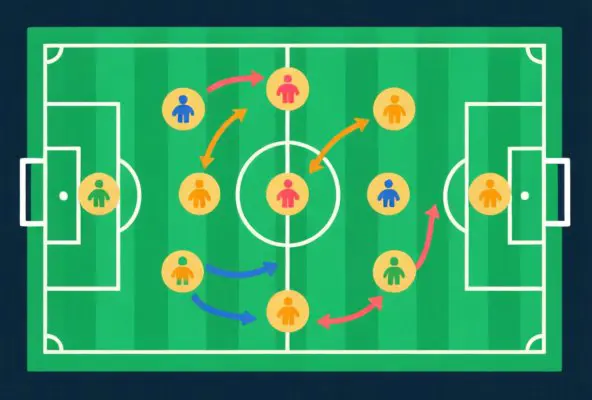
Tactical formation diagram showing how wing-backs create shooting opportunities in attacking systems
Tactical Formations and Shooting Opportunities

Common Mistakes in Player Shot Markets

Even experienced bettors make these errors.

Definition Misunderstandings

Assuming blocked shots count as shots on target when only goal-line blocks by the last outfield player qualify. Expecting shots hitting the woodwork to count when they don't. These basic errors cost money.

Betting Only on Famous Names

Star strikers have incredibly short odds—sometimes as low as 1.01 for a single shot. The risk isn't worth the return. You need a higher hit rate to profit at these odds, and variance will still wipe you out during cold streaks.

Ignoring Opposition Quality

Backing your favorite player regardless of matchup is a recipe for losses in football player props. Even the best strikers struggle against elite defenses. Consider the defensive matchup first, player second.

Poor Bet Builder Strategy

Adding multiple short-odds selections (1.05-1.15) in your bet builder massively increases risk while barely improving your return. If you're combining selections, look for odds in the 1.3-1.8 range where each leg actually contributes to your payout.

Chasing Past Results

Your player had 3 shots on target last game, so you back them today—ignoring they're now facing a much stronger defense or coming off an injury. Sample size matters. One game proves nothing.

In-Play Strategies for Shots on Target Betting

Sophisticated shot market bettors don't stop at pre-match.

Game State Exploitation

Teams trailing at halftime typically increase shot volume in the second half. Tactical substitutions often see attackers introduced for defenders. Live odds might not immediately reflect these changes—brief windows of value appear.

First Half vs Second Half

Some teams are fast starters who test the keeper immediately. Others build into games and create more chances after halftime. Understanding these patterns helps you time in-play bets. For a deeper dive on live wagering, check out our complete live betting guide.

Fatigue Factors

Tired defenders create more space as matches progress. Late substitutions often introduce fresh attackers against exhausted defenses. These dynamics create shot opportunities that weren't obvious pre-match.


Real-World Examples in Player Shot Markets

The Mukhtar Value Bet

StatsHub's PropHunter tool identified Hany Mukhtar of Nashville SC with Over 1.5 SOT at 2.00 odds. Toggling "Highlight winning stats" showed 10/10 in recent home matches. Clear statistical edge. Bet365 later offered the same market at 1.61—shows the value of early research and odds shopping.

The Haaland vs Dias Differential

In one Man City match, Erling Haaland was 1.01 for any shot and 1.20 for a shot on target, while defender Ruben Dias was 1.83 for a shot and 3.5 for SOT. Haaland averages 4.0 shots and 2.5 SOT per game, Dias averages 0.33 shots. But in weaker fixtures when Dias gets forward for set pieces, that 1.83 shot price offers genuine value.

Value Comparison Example:
Haaland: 1.20 for SOT (avg 2.5 SOT/game) - minimal edge
Dias: 3.50 for SOT (avg 0.33 SOT/game) - set piece potential creates value in specific matchups

Key Insight: Market mispricing occurs when role doesn't match listed position

The International Tournament Edge

During international tournaments, players often play different roles for their national teams than their clubs. Zinchenko, listed as a defender for Arsenal, frequently plays midfield for Ukraine. The market sometimes prices him as a defender when he'll have midfielder opportunities. These positional anomalies create edges for bettors who follow team news.

Value betting concept illustration showing market mispricing opportunities in player shot markets
Finding Value in Player Shot Markets

Data Provider Disputes

Bookmakers rely on a single data provider (usually Opta/Stats Perform) whose decisions are final. Bettors have limited recourse when they disagree with a settlement.

High-profile disputed cases:

  • Messi's World Cup free kick (ruled a cross, not a shot)
  • Kevin De Bruyne's free kick against Bournemouth
  • Chris Wood's shot that disappeared from live data
  • Mason Mount's saved shot that went unrecorded

The UK Gambling Commission has met with operators about these issues. Trials are underway for AI-powered verification systems. But settlement disputes rarely get overturned, and no independent appeals process exists.

Player shot markets carry additional variance beyond normal betting risk. Factor this into your bankroll management.

The definition of a 'clear attempt to score that would have gone into the net but for being saved' appears to be stretched when judgment calls are made about power or crossing intent.

Industry Analyst

Responsible Gambling

Before trying any of these strategies:

  • Set a Budget – Only bet what you can afford to lose. Never chase losses by increasing stakes beyond your limits. Proper bankroll management is essential for long-term survival.
  • Treat as Entertainment – Shot markets offer engagement, but they're not a reliable income source. Settlement controversies and variance make consistent profit difficult.
  • Understand the Risks – Data provider disputes add unpredictability. Good research can't guarantee outcomes when subjective definitions determine results.
  • Seek Help if Needed – If gambling stops being fun and starts causing stress, financial problems, or relationship issues, reach out to GamCare or Gamblers Anonymous. Learn more about responsible gambling practices.

Professional bettors approach shot markets as one tool in a diversified portfolio. Edge is small, variance is high, long-term thinking is essential.

Editorial illustration showing key betting concepts and strategy takeaways
Key concepts for successful player shot market betting

Key Takeaways

Player shot markets offer opportunities for informed bettors who do the work.

  1. Look Beyond Strikers – Wing-backs, set-piece specialists, and positional anomalies often provide better value than famous forwards with minimal odds.

  2. Master the Definitions – Knowing exactly what counts as a shot on target prevents costly misunderstandings.

  3. Research Systematically – Develop a consistent process for analyzing player stats, opponent defensive quality, and tactical matchups. Trust data over gut feelings.

  4. Shop for Value – Compare odds across bookmakers and use tools like PropHunter to identify statistical edges.

  5. Think Like a Manager – Consider formations, game states, and tactical adjustments that affect shot volume.

  6. Manage Your Bankroll – Avoid overbetting on short odds, construct sensible bet builders, maintain long-term perspective through variance. Our beginner's guide to football betting covers bankroll management in detail.

  7. Accept the Risks – Data provider disputes and subjective settlements add unpredictability.

Shot markets reward research and understanding. They punish casual betting and following the crowd.

Professional headshot of Caleb Harrington, Senior Football & Betting Analyst

Caleb Harrington

Senior Football & Betting Analyst

Caleb Harrington is an experienced sports analyst and writer with over 8 years of expertise in football betting markets and tennis predictions. A graduate of Sports Journalism, Caleb combines deep statistical knowledge with an engaging writing style to make complex betting concepts accessible to all readers. He's particularly known for his data-driven approach to Premier League analysis and his insightful coverage of major tennis tournaments. When he's not analyzing odds or writing match previews, Caleb enjoys exploring emerging trends in sports betting technology and strategy.