Prediction Markets

Prediction Markets Explained: Kalshi, Polymarket and the New Way to Bet on Sport

Americans are trading sport like stocks, and the courts can't agree on whether it's betting. Here's how event contracts work, how they stack up against a bookmaker or Betfair, and what it all means if you bet from the UK.

Prediction Markets Explained: Kalshi, Polymarket and the New Way to Bet on Sport
On this page

The bet that calls itself a trade

While the rest of us were glued to the 2026 World Cup this summer, an American trading app was having the time of its life. Kalshi, a company that insists it isn't a bookmaker, says 3 million new users signed up during the tournament, and traders put more than $1.2bn into its World Cup winner market alone. That's what prediction markets look like now. Sport is doing the driving.

Nobody on Kalshi "places a bet". They buy a contract. Pay 30 cents for "Yes" on a team, and if that team wins the contract pays out $1. If it doesn't, you get nothing. It looks, walks and quacks like a bet, but in the US it's regulated as a financial derivative. That one distinction has turned sports prediction markets into the most fought-over corner of betting anywhere in the world.

Kalshi is now valued at $22bn. Polymarket has the backing of the company that owns the New York Stock Exchange. A string of US states have dragged them into court, and UK regulators have left nobody in any doubt about where they stand.

So let's get into it: how an event contract actually works, how the pricing compares with a bookmaker and a betting exchange, the legal war in America, whether the "wisdom of crowds" really makes these prices sharp, and why a smart UK punter already has access to nearly everything that's good about them.

The short version

Kalshi and Polymarket sell Yes/No contracts that pay $1 if you're right, so a price in cents reads straight as a probability. In the US they're regulated as derivatives and fighting state gambling laws in court, while in Britain the Gambling Commission treats them as betting and both platforms block UK users. A licensed UK betting exchange already gives you the same peer-to-peer pricing and early exit.

How sports event contracts work

Strip away the fintech gloss and a prediction market is about as simple as betting gets. Every question has two contracts, Yes and No. Whichever turns out to be right pays $1, and the wrong one pays zero. Prices sit anywhere between 1 cent and 99 cents, and you read the price as the market's probability.

If "Yes" on a team to win is trading at 63c, the market rates it at roughly a 63% chance. You risk 63c to collect $1, so your profit is 37c. No bookmaker sets that number. Kalshi and Polymarket both run an order book, which means you only get matched when somebody else disagrees with your price and takes the other side.

Turning a contract price into the odds you're used to takes one line:

Decimal odds   = 100 / price in cents

80c  ->  100 / 80 = 1.25   (1/4)
63c  ->  100 / 63 = 1.59   (roughly 4/7)
50c  ->  100 / 50 = 2.00   (evens)
25c  ->  100 / 25 = 4.00   (3/1)
10c  ->  100 / 10 = 10.00  (9/1)

Yes and No in the same market should add up to about $1. Picture a match where "Team A to win" costs 62c and "Team A not to win" costs 39c. That's 101c for a guaranteed $1, and the 1c gap is what it costs you to trade. Call it the prediction-market cousin of a bookmaker's overround.

The bit that makes it feel more like trading than betting is that you can sell your contract before the event finishes. Buy at 40c, watch the price climb to 70c by half-time, and you can bank the difference without waiting for the final whistle. Anyone who has traded out on an exchange will recognise the move straight away.

Smartphone showing green Yes and red No contract buttons priced in cents beside a football and coins
Each contract pays $1 if right and nothing if wrong, and the price is the probability.

Bookmaker, exchange or prediction market?

If you've used Betfair, most of this will feel familiar, and that's no accident. The mechanics are very close to a betting exchange. What changes is the wrapper, the currency and the regulator.

Bookmaker Betting exchange Prediction market
Who sets the price The bookmaker Other customers Other customers
How you pay for it Margin built into odds Commission on net winnings Trading costs per contract
Price shown as Decimal or fractional odds Decimal odds Cents (= % probability)
Can you exit early Cash out, if offered Trade out any time Sell contract any time
UK regulator Gambling Commission Gambling Commission Not available to UK users

Most punters know the bookmaker model best. Prices of 2.40, 3.20 and 3.40 on a home, draw, away market look harmless enough. Convert them to probabilities, though, and you get 41.67% + 31.25% + 29.41% = 102.33%. That extra 2.33% is the bookmaker's cut, baked in before a ball is kicked.

On an exchange you back and lay against other punters, and the operator takes a low single-digit percentage of your net winnings instead. A prediction market runs on the same peer-to-peer idea, with prices quoted in cents rather than odds. We go through the exchange side properly in our guide to bookmakers vs betting exchanges.

Kalshi and Polymarket in plain English

You'll hear these two names more than any others, and they got to the top by completely different routes.

Kalshi: the regulated one

Tarek Mansour and Luana Lopes Lara founded Kalshi in 2018, and it's based in Manhattan. In November 2020 the US Commodity Futures Trading Commission (CFTC) licensed it as a designated contract market, making it the first regulated platform to trade directly on the outcome of events. It opened to the public in July 2021.

Kalshi plays the establishment card hard. In 2025 it became the engine behind Robinhood's Prediction Markets Hub and signed media deals with CNN and CNBC, with Fox News following in 2026. A May 2026 funding round led by TCV valued it at $22bn.

Polymarket: the crypto one

Polymarket came up the other way. Shayne Coplan founded it in June 2020 as a crypto product: users deposit through the Polygon network, trades are matched off-chain and settled on the blockchain, and the company's legal home is Panama.

That approach earned it a $1.4m CFTC fine and a cease-and-desist order in January 2022 for running an unregistered facility. It blocked US users from 2022 until 2 December 2025, after the CFTC and Department of Justice closed their investigation in July 2025. Then the big money turned up. Intercontinental Exchange, owner of the New York Stock Exchange, committed up to $2bn in October 2025 at an $8bn valuation. Around 63% of Polymarket's trades are on sport. If the crypto side is your thing, our crypto sports betting guide covers that world.

Why sport ate the prediction markets

Prediction markets were pitched as a way to forecast elections, interest rates and the weather. Then sport walked in and took over the building.

"The long-term vision is to financialize everything and create a tradeable asset out of any difference in opinion."
— Tarek Mansour, Kalshi co-founder

He wasn't exaggerating the appetite. Sport now accounts for more than 90% of activity on Kalshi and 89% of its 2025 revenue, which was estimated at around $260m. NFL games alone have generated a reported $3bn–$5bn of volume, and the World Cup gave the platform its biggest shop window yet.

The legal key that unlocked all this came from an election case. In September 2023 the CFTC blocked Kalshi's contracts on which party would control Congress. Kalshi sued, and in 2024 a federal court in Washington DC ruled the regulator had overstepped. Kalshi relisted, and that win opened the door to a much wider range of contracts, sport included.

Why does that matter so much? In America, sports betting is licensed state by state, each with its own rules, taxes and age limits. A product regulated federally as a derivative could, in theory, sidestep the lot and run nationwide off a single licence. Critics argue it also effectively drops the age for sports wagering from 21 to 18. The states were never going to let that slide.

It all comes down to one question. Are sports event contracts federally regulated derivatives, where the CFTC has exclusive say, or are they unlicensed sports betting under state law? Right now the answer depends on which courtroom you're standing in.

State What happened
Massachusetts Attorney general sued in September 2025; a state judge granted a preliminary injunction in January 2026 requiring Kalshi to geofence its sports markets in the state
Ohio A federal judge ruled in March 2026 that Kalshi's products amounted to gambling; Kalshi said it would appeal
Nevada A March 2026 restraining order barred sports contracts without a gaming licence; in July 2026 the Gaming Control Board announced an agreement with Kalshi to halt its operation in the state
Arizona 20 criminal charges filed in March 2026 were dismissed in May 2026 by a federal judge, who ruled the CFTC has exclusive jurisdiction
Minnesota The state passed a law banning prediction markets from 1 August 2026; the Department of Justice sued, and in July 2026 a federal judge ruled against Minnesota, saying the CFTC has exclusive jurisdiction
New York The attorney general sued in July 2026 for unlicensed gambling; the CFTC moved to halt the case

That's a patchwork, not a verdict. The federal side has won in Arizona and Minnesota, while Kalshi has lost in Ohio and Massachusetts. Michigan and Wisconsin have sued too, with Wisconsin also naming Polymarket and Coinbase. Tribal nations, including California tribes and the Ho-Chunk Nation, have brought their own cases over gaming on tribal land.

Washington has picked its side. CFTC chair Michael S. Selig declared that "states cannot circumvent the clear directive of Congress", and the regulator has sued seven states, including New York, Massachusetts and Minnesota. Donald Trump has publicly backed exclusive federal authority. Where it ends is anyone's guess. Outside the US the scepticism runs deeper still: by June 2026, 55 jurisdictions around the world had taken steps to restrict Kalshi.

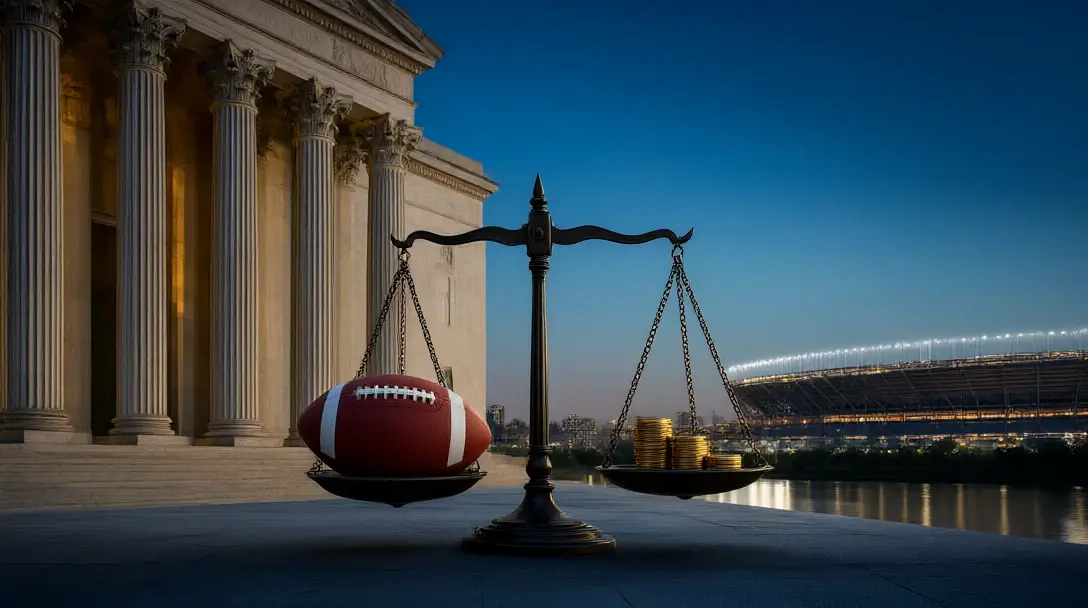
US courthouse at dusk with scales of justice holding an American football and coins
States and federal regulators are fighting in court over whether event contracts are betting.

Wisdom of crowds: how sharp are the prices?

The big intellectual selling point goes back to Friedrich Hayek's 1945 essay The Use of Knowledge in Society and James Surowiecki's 2004 book The Wisdom of Crowds. Put lots of people with scattered scraps of information into a market, give them a financial reason to be right, and the price should pull it all together into a better forecast than any one of them could manage alone.

Sometimes it works brilliantly. After the US presidential debate on 27 June 2024, Polymarket's odds on Joe Biden withdrawing jumped from around 20% to 70% within days, weeks before he actually stepped aside. The crowd smelled it early.

Where the crowd gets it wrong

Crowds miss as well. The day before Kamala Harris named her running mate, Polymarket had Josh Shapiro at 68% and Tim Walz at 23%. Walz got the job. On 7 October 2024, Polymarket showed Trump at 53.3% for the presidency while the leading forecasting models had Harris narrowly ahead. With no cap on how much one trader can stake, a handful of very large trades can drag a price a long way.

Economists Justin Wolfers and Eric Zitzewitz showed the price only matches the average trader's belief under fairly tidy assumptions. Outside those, it's usually close but can be biased. We think that's the right way to see it: a prediction-market price is a strong opinion, not gospel. And the favourite-longshot bias doesn't vanish just because the odds are quoted in cents.

The most humbling number comes from Kalshi itself: 2.9 unprofitable users for every profitable one. A slicker interface doesn't change the maths of who wins and who loses.

Can UK punters use Kalshi or Polymarket?

No. Both platforms block UK users, and neither is open here.

"If a prediction market operator was to launch here in Great Britain, we do not believe they would be able to classify themselves as non-gambling products."
— Brad Enright, Director of Strategy, Gambling Commission (February 2026)

The Gambling Commission spelled it out in February 2026. In its view, current prediction-market products fall under the definition of a betting intermediary, and while the presentation is different, the core is "akin to what in the UK would be described as a 'Betting Exchange'". Any operator wanting to take British customers on sport would need a Gambling Commission licence, and operating without one is a criminal offence. Unlicensed operators are expected to make sure they aren't targeting or transacting with people in Great Britain.

The Commission also made a sharp point about motive. The commercial forces that made prediction markets explode in America probably don't apply here, because sports betting is already legal across Great Britain under one framework. There's no state-by-state maze to route around.

Finance adds a twist. Contracts on financial events, such as interest rates or stock levels, come under the Financial Conduct Authority rather than the Gambling Commission, much like the split covered in our spread betting vs fixed odds guide. The FCA has treated the financial products it examined as binary options, which have been banned for retail customers since 2 April 2019. On 6 October 2026 the FCA confirmed it is in talks with prediction-market operators, and both Kalshi and Polymarket are exploring UK entry, with Polymarket pushing to be treated as a financial exchange. Those are talks, not launches. For sport, the Gambling Commission's line is the one that counts.

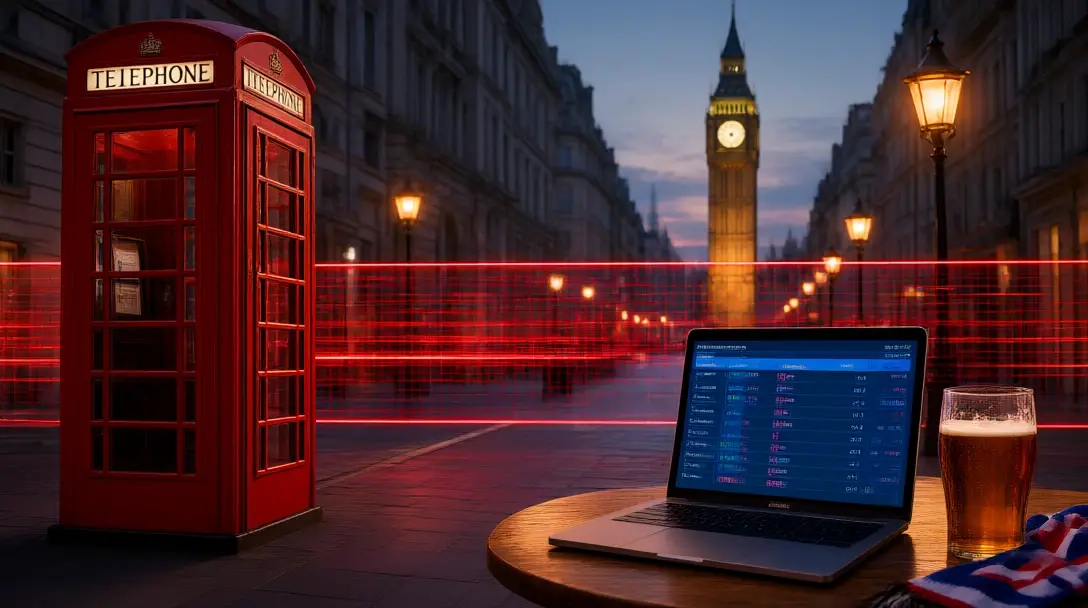
Laptop with a back and lay price ladder on a pub table, London skyline behind a glowing red barrier
UK punters are shut out of US platforms, but licensed British exchanges offer similar pricing.

How to use this when betting

Britain has had the thing American traders are queuing up for since 2000. Our betting exchanges are fully licensed, run in pounds and come with UK consumer protection behind them. Betfair, Smarkets, Matchbook and BETDAQ give you peer-to-peer pricing, the option to lay as well as back, and the freedom to trade out before the final whistle.

What you can borrow from prediction markets is the mindset. Quoting prices in cents forces you to think in probabilities, and that's the most useful habit a punter can build. Next time you see 2.50 on an away win, read it as "40c" and ask whether you'd buy that contract. If your honest estimate is 45%, it's a bet. If it's 35%, walk away.

The same thinking makes the cost of betting visible. On a prediction market you can see the gap between Yes and No. On an exchange it's the commission. With a bookmaker it's the overround spread across the market. Knowing what you pay on every pound staked is half the battle, and it's why so many sharp UK punters live on the exchanges for the big markets. To put that into practice, start with our guide to lay betting and trading on Betfair.

Our angles on prediction markets

  • Think in cents, bet in odds. Turning every price into a probability (100 divided by the decimal odds) is the most valuable habit prediction markets can teach you.
  • The UK already has the best version. A licensed exchange gives you the same peer-to-peer pricing and early exit, with Gambling Commission protection and pounds in your account.
  • Don't chase US platforms from here. Kalshi and Polymarket block UK users, and the Gambling Commission has been crystal clear that sport is gambling whatever the wrapper.
  • Treat crowd prices as opinions, not oracles. The Biden call was brilliant, the Walz call was wrong, and one whale can move a thin market a long way.
  • Respect the 2.9 to 1. Kalshi's own numbers say most traders lose. A new format doesn't hand you a new edge.
  • Always know your cost. Overround, commission or spread, find it before you stake. A small cost repeated over hundreds of bets can decide whether you have a good year or a bad one.

Whatever the platform, the discipline doesn't change: a fixed staking plan, a clear idea of the probability you're buying, and the patience to pass when the price is wrong.

Topics