Premier League

Premier League Relegation Betting 2026/27

Spurs prop up the table, Coventry are off the mark and a Manchester City verdict hangs over everything. Here's how to bet on the Premier League's survival race this season.

Premier League Relegation Betting 2026/27
On this page

The fight at the bottom starts here

Three weeks without Premier League football feels like a lifetime when your club is in the bottom three. Spurs fans have spent the international break stewing on a 3-2 home defeat by Aston Villa, Fulham are still waiting for a first win, and Coventry City finally have one, a gritty 1-0 at Nottingham Forest just before the league stopped.

That's the beauty of the relegation market. It's a ten-month story with a twist most weekends, and it rewards punters who do their homework while everyone else is fixated on the title race. Five games in, the bottom of the table already looks nothing like most pre-season predictions: Tottenham are propping everyone up, and three clubs playing European football this season sit between 14th and 16th.

There's a wildcard too. Manchester City were found guilty of breaching the Premier League's financial rules during the break, and the sanction is still to come.

Below we look at how last season's survival race finished, how the promoted clubs are getting on, who's in trouble, how the markets work, and where we think the value lies as the season restarts on 10 October.
Quick verdict

Fulham look the most vulnerable established side right now: winless, with a new manager still finding his feet. Tottenham are the obvious pick to go down, but we think the squad is too strong, so they're one to trade rather than marry. And don't rush to oppose the promoted clubs, because Hull and Ipswich have already banked a useful cushion.

How last season's survival race ended

Arsenal took the 2025/26 title, but the drama at the other end went right to the wire. Burnley (22 points) and Wolves (20) finished well adrift, while West Ham (39) went down on the final day. Tottenham beat Everton that afternoon to finish 17th and survive, a neat reminder that no relegation bet is truly safe until the last whistle in May.

Last season also showed that promoted clubs can do far more than make up the numbers. Burnley went straight back down, but Leeds stayed up and Sunderland finished seventh to earn a Europa League place. The lazy assumption that all three new boys are doomed simply didn't hold.

One more thing worth remembering: Spurs have now finished 17th in each of the last two seasons. Survival is survival, but that's a club that has been living dangerously for a while.

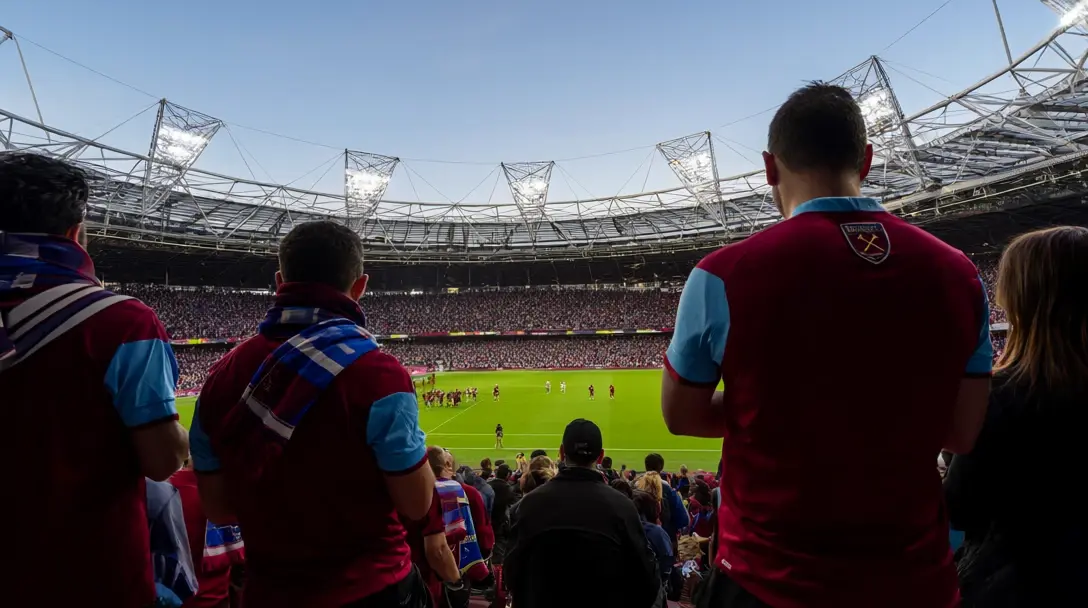
West Ham fans in claret and sky-blue shirts and scarves watch from the stands at London Stadium, roof and floodlight masts above.
West Ham finished on 39 points and went down on the final day of 2025/26, while Tottenham beat Everton to survive.

The new boys: Coventry, Ipswich and Hull

Coventry City are back after 25 years away, and they came up in style: Championship champions with 95 points and 97 goals. The top flight has been a rude awakening. Frank Lampard's side had no points and no goals after four games, including a 5-0 home defeat by Brighton, before Jay Dasilva's second-half winner at the City Ground earned their first Premier League victory in a quarter of a century.

Ipswich Town bounced straight back after one season away, finishing second in the Championship on 84 points. Gary O'Neil, who replaced Kieran McKenna in June, already has two wins on the board and Ipswich sit 11th.

Hull City took the scenic route, finishing sixth and then beating Middlesbrough 1-0 in the play-off final at Wembley, with Oli McBurnie scoring in the fifth minute of stoppage time. Under Sergej Jakirović they've been the surprise package so far: eighth, with two wins and only one defeat.

Two of the three promoted sides are currently above Manchester United, Aston Villa and Crystal Palace. That won't necessarily last, but points banked in August and September count exactly the same as points in April, and Hull and Ipswich have given themselves a real cushion. Our guide to betting on newly promoted teams digs into how the new boys tend to fare over a full season.

After the 1-0 win at Nottingham Forest

“The reality in football is you have to fight for it, you have to work for it, you have to have organisation.”

— Frank Lampard, Coventry City manager

The table at the international break

No league games have been played since 20 September, so this is exactly where things stand going into Matchweek 6. Here's the bottom half:

Pos Club P W D L GD Pts
11 Ipswich Town 5 2 0 3 -4 6
12 Manchester United 5 1 2 2 0 5
13 Nottingham Forest 5 1 2 2 -1 5
14 Sunderland 5 1 1 3 -4 4
15 Crystal Palace 5 1 1 3 -5 4
16 Aston Villa 5 1 1 3 -5 4
17 Bournemouth 5 0 3 2 -2 3
18 Coventry City 5 1 0 4 -9 3
19 Fulham 5 0 2 3 -3 2
20 Tottenham Hotspur 5 0 2 3 -6 2

Premier League table after Matchweek 5.

Look how tight it is. Just four points separate 11th-placed Ipswich from Tottenham at the bottom, and a single point covers everyone from Sunderland in 14th down to Coventry in 18th. One good weekend can lift a side four or five places.

Goal difference is worth keeping an eye on. Coventry's -9 is comfortably the worst in the division, largely thanks to that Brighton defeat, and it could cost them a place if things go to the wire. Bournemouth's -2 is the healthiest in the bottom six, which tells you they've been closer to winning games than their points suggest.

The line that jumps out for relegation punters, though, belongs to Manchester United: five points from five is their joint-worst start since Sir Alex Ferguson retired.

The clubs in the firing line

Tottenham Hotspur (20th, 2 pts)

Roberto De Zerbi arrived in March and steered Spurs to safety, but the new campaign has started badly: no wins from five and just two goals, both in that 3-2 home defeat by Villa. Fail to win at Old Trafford on Saturday and it will be the first time since 2008/09 they've gone six without a win at the start of a league season. Spurs will be a popular relegation pick, but there's genuine quality in that squad, and we see them as a classic overreaction candidate.

Coventry City (18th, 3 pts)

One goal scored, ten conceded: the numbers make grim reading. But the win at Forest showed a side learning fast, and a team that won the Championship by eleven points knows how to grind out results. Monday night's home game against Newcastle is a proper test of where they are.

Fulham (19th, 2 pts)

Álvaro Arbeloa replaced Marco Silva over the summer, and the transition has been bumpy: two draws and three defeats. Saturday's trip to fast-starting Ipswich is a big chance to get going, and a big warning sign if it goes wrong.

Bournemouth (17th, 3 pts)

Marco Rose is still waiting for a first league win since replacing Andoni Iraola, now at Liverpool. Three draws and a tidy goal difference suggest they're not far off, and a Europa League win away at Real Sociedad showed what this group can do. The Thursday-Sunday rhythm is the main concern.

The European contingent: Villa, Palace and Sunderland

Aston Villa (16th) are in the Champions League, while Crystal Palace (15th) and Sunderland (14th) are in the Europa League with Bournemouth. Villa have had the fewest shots in the division so far, and Palace are still chasing a first home win under Pierre Sage. We'd expect quality to tell for all three, but a heavy autumn and winter of midweek football can make life hard work.

After the 3-2 home defeat by Aston Villa

“Football is tactical but it is blood, it is fighting, it is first one on the ball. Without that it is tough to win the game.”

— Roberto De Zerbi, Tottenham Hotspur head coach

The wildcard: Manchester City's verdict

During the international break, an independent commission found Manchester City guilty of breaching the Premier League's financial rules between 2009/10 and 2017/18, in a case league chief executive Richard Masters called the most significant in Premier League history. What punishment follows is still to be decided.

That matters to relegation punters even if you never go near a City bet. A points deduction is among the possible sanctions, and a big one could reshape the table in a way no market can price with confidence today. If City were ever docked enough to finish in the bottom three, that's one fewer relegation place for everyone else, which would knock value off every other club's 'to go down' price.

It's an outside scenario, but a real one. Until the sanction lands, we'd keep long-range relegation stakes modest and check how each bookmaker settles bets affected by points deductions.

How the relegation markets work

The headline market is simple: pick a team to finish in the bottom three once all 38 games are played. Only the final table counts, so a club that's bottom at Christmas and climbs to 17th is a losing bet, and one cruising in mid-table that collapses in spring is a winner.

Around it you'll usually find:

  • To stay up: the flip side, and often the smarter way to back a big club you think has been dragged into the conversation by a slow start.
  • To finish bottom: a bigger price for picking the side that ends up 20th.
  • Name the relegated trio: pick all three clubs that go down for a much bigger return, and a lot more that can go wrong.
  • Match betting in six-pointers: when two strugglers meet, the result swings the table twice over, and the market doesn't always price the pressure.

A quick word on prices. Decimal odds of 4.00 are the same as 3/1 and imply a 25% chance. If you rate a side's chances of going down higher than the price suggests, that's value. If not, leave it. Relegation prices move all season, so it pays to shop around before you commit.

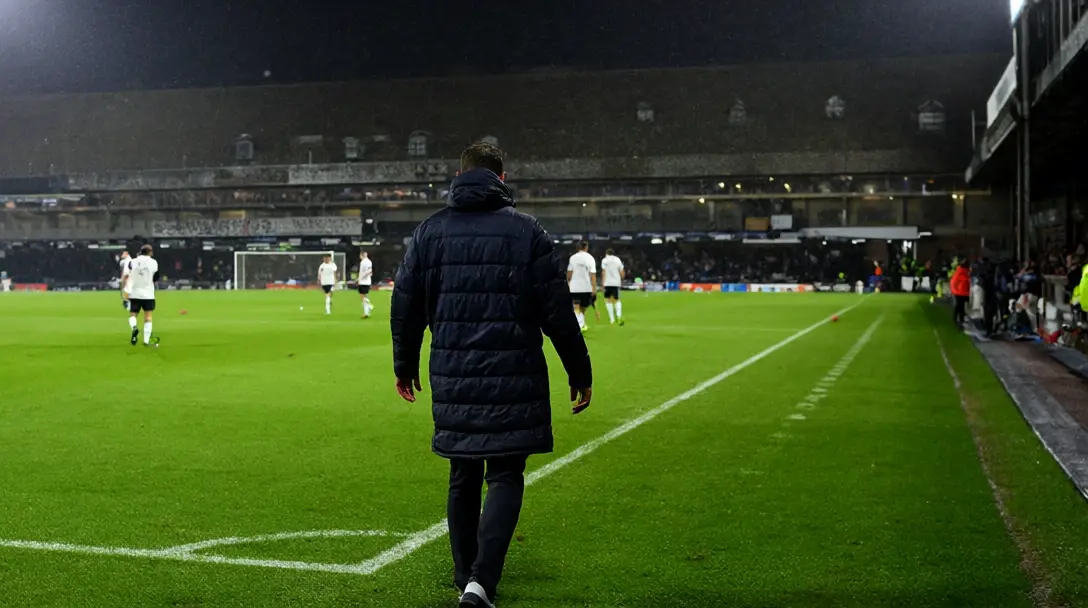
Manager in a dark padded coat seen from behind on the touchline of a floodlit pitch, players in white shirts warming up beyond.
Fulham are winless after five games under Álvaro Arbeloa, the kind of slow start that drags a club into relegation markets.

When to bet, and what moves the prices

Early tables are noisy, and that's exactly what makes them interesting. Five games is a small sample, but prices react to it, and big names on a bad run can get dragged into relegation markets at a point where the 'stay up' side looks generous.

Here's what we keep an eye on through the season:

  • Manager changes. Nine of the 20 clubs started the season with a new manager, and with so many coaches still bedding in, the first sacking of the campaign could move prices sharply for the club involved.
  • The winter window. It opens on 1 January and closes at 11pm on 1 February 2027. A struggling club that recruits well in January can transform its outlook, as our transfer windows guide explains.
  • European fixture load. Villa, Palace, Bournemouth and Sunderland are all playing midweek, and squad depth gets tested hardest in the winter. Our fixture congestion guide covers how fatigue shows up in results.
  • Six-pointers. Circle the games between clubs in the bottom eight. They're where the table moves most, and where in-running prices can overreact.
  • The City sanction. Whenever it arrives, expect the whole relegation market to be repriced.

For the bigger picture, read our guide to relegation betting and football's cruellest market.

Desk by a rain-streaked window with an open notebook, calculator and mug of tea for planning a betting approach.
Notebook out: the best relegation bets tend to be struck before the crowd catches on.

Matchweek 6 and the key dates

Date What's happening
Sat 10 Oct The Premier League returns: Man Utd v Tottenham, Aston Villa v Brentford
10–12 Oct Matchweek 6 also includes Ipswich v Fulham, and Chelsea against Bournemouth
Sun 11 Oct Crystal Palace v Nottingham Forest, Oliver Glasner's return to Selhurst Park
Mon 12 Oct Coventry v Newcastle
1 Jan 2027 Winter transfer window opens
1 Feb 2027 Winter window closes (11pm GMT)
30 May 2027 Final day of the season

That opening weekend back is a big one at the bottom. Spurs go to Old Trafford needing to stop the rot, Fulham face a promoted side that has started well, and Coventry get a Monday-night stage at home to Newcastle.

Our betting angles for 2026/27

  • Don't write off the promoted sides. Hull are eighth and Ipswich 11th, and last season Leeds and Sunderland proved new boys can do more than survive. We'd look at 'to stay up' prices for both before reflexively backing them to go down.
  • Give Coventry time. The goal difference is ugly, but a team that won the Championship with 95 points has more in it than one goal in five games suggests. Monday against Newcastle will tell us plenty.
  • Treat Tottenham's start with caution, both ways. Bottom of the table after two 17th-place finishes makes them the obvious relegation pick. We think the squad is too strong for that to be the likeliest outcome, so they're a side to trade rather than marry.
  • Fulham look the most vulnerable established side. Winless, a new manager still settling in, and level with Spurs on the fewest points. If Saturday at Ipswich goes badly, expect the market to move quickly.
  • Watch the European clubs through the winter. Villa, Palace, Bournemouth and Sunderland are all juggling midweek football. Quality should tell, but a congested December can drag a club towards the scrap.
  • Keep stakes modest until the City sanction is known. A big points deduction would change the maths for every club near the bottom.
  • Keep some powder dry for January. The winter window is a natural moment to reassess, once you've seen who strengthens and who stands still.

Whatever you back, set a budget for the season before you place a long-range bet, and stick to it. Relegation markets tie your money up until May.

Topics